


Why Stain‑Free Patios and Driveways Matter
A spotless patio or driveway instantly boosts curb appeal, making a strong first impression that can raise a home’s market value and attract potential buyers. Choosing eco‑friendly cleaners—such as diluted white vinegar, baking‑soda pastes, or biodegradable detergents—protects local soil and groundwater, aligning property upkeep with environmental stewardship. Regular maintenance, including sweeping, prompt spill treatment, and seasonal pressure‑washing, prevents deep‑set stains, mold, and oil penetration, extending the lifespan of concrete, pavers, and stone. Goleta Home Services brings community‑focused expertise, using low‑impact soft‑wash techniques and reclaimed water to safeguard neighboring gardens while delivering professional results that keep outdoor surfaces pristine year after year.
Everyday Cleaning Techniques for Concrete and Cement Patios
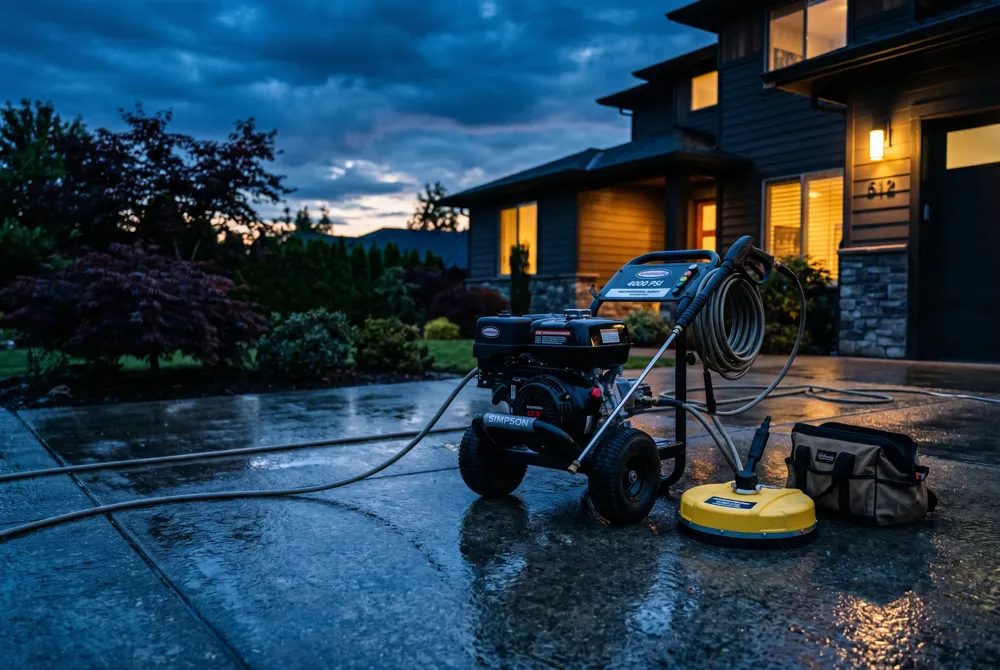
Sweep leaves, dust and grit that can grind into concrete and cause stains. Follow with a wash: mix warm water with a few drops of dish soap or mild detergent and apply with a mop or spray bottle; this lifts grime, harming plants. For tougher spots, use natural acids and abrasives—spray a 1:1 vinegar‑water solution on rust or mineral stains, or spread a baking‑soda paste on oil stains, let sit 10‑15 minutes, scrub with a brush and rinse. Hand‑scrubbing works on areas; washer rinses surfaces.

DIY patio stain removal: sweep, blot spills, scrub with dish‑soap water, treat oil or rust with baking‑soda or vinegar paste, rinse and seal.
How to clean patio slabs naturally: sweep, apply vinegar‑water or baking‑soda paste, scrub, rinse, dry.
Cleaning without a pressure washer: sweep, soak with dish‑soap solution, scrub, use vinegar‑water or baking‑soda paste for stubborn spots, rinse thoroughly.
Home remedy concrete stain remover: equal parts vinegar‑water, baking‑soda paste, or dish soap, scrub, rinse, test.
Pressure‑Washing Essentials and Safety Tips
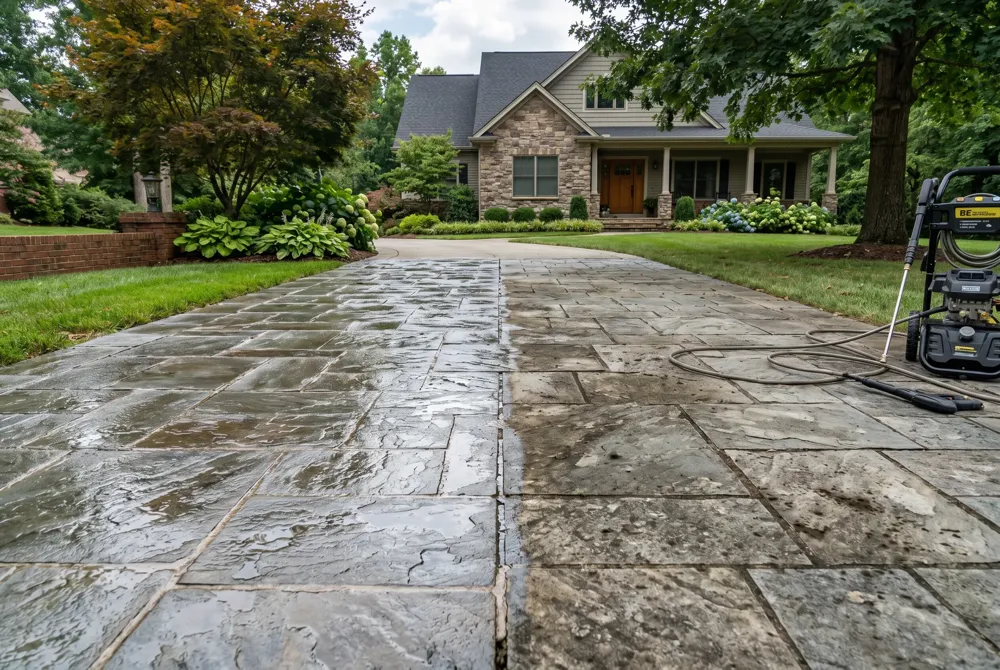
Before you start, clear the patio of furniture, plants and loose debris. Choose a pre‑treatment that matches the stain: an alkaline degreaser for oil, an acidic cleaner for mineral deposits, a pH‑neutral solution for light dirt, or a bacterial/enzyme cleaner for organic growth. Spray, let it dwell 5‑10 minutes, then rinse before the main wash.

Select the right nozzle and pressure: a 25° wide‑angle tip (≈1500‑2000 PSI) is safe for most concrete and pavers; reserve a 0° or turbo tip for stubborn spots only. Keep the wand 12‑18 inches from the surface and move in smooth, overlapping strokes to avoid etching.
For first‑time use, read the manual, assemble the hose, check for leaks, start on the lowest pressure, test on an inconspicuous area, then work the whole patio in overlapping passes.
When using detergent, dilute a biodegradable, pressure‑washer‑safe soap (e.g., 1 cup per 100 gal), apply with the low‑pressure “soap” setting and a black nozzle, let it sit 5‑10 minutes, then switch to the 25° nozzle and rinse thoroughly.
Eco‑friendly practices include using plant‑based cleaners, protecting nearby vegetation with covers, and finishing with a breathable, UV‑stable sealant to prolong cleanliness and curb appeal.
Driveway Defense: Preventing and Treating Stains
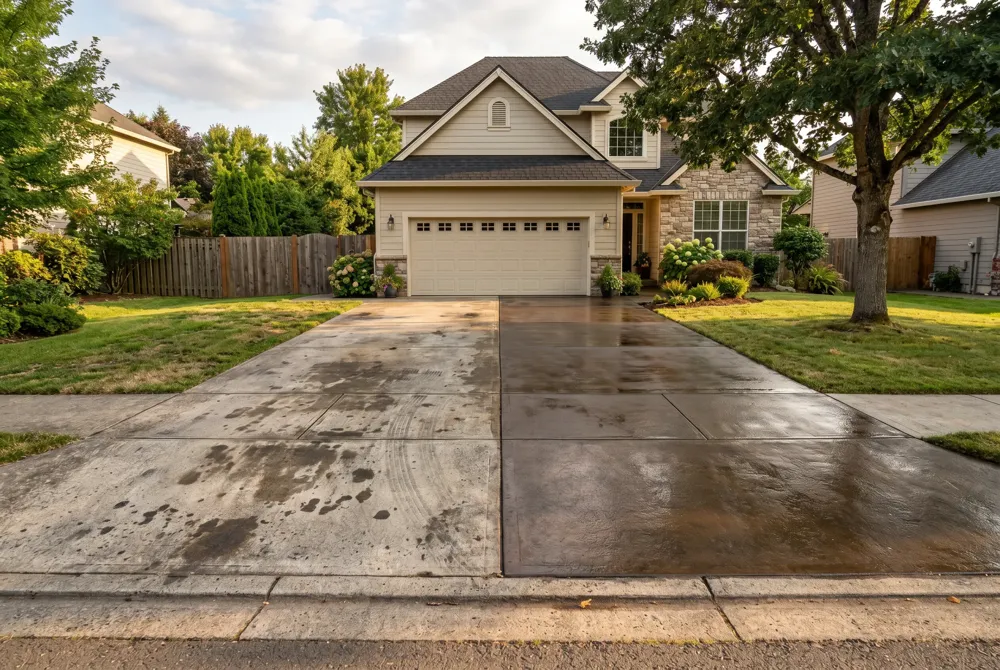
A well‑maintained driveway stays stain‑free when you combine a solid sealant plan with quick spill response and routine debris control. Choose a breathable, UV‑stable penetrating sealer (polymer‑based epoxy, polyurethane, or acrylic) and re‑apply every 2–3 years; this creates a non‑porous skin that blocks oil, grease, and moisture. Immediately blot fresh spills, then cover the area with an absorbent such as cat litter, baking soda, or cornstarch before sweeping and rinsing with a mild detergent‑water mix. Sweep or blow leaves, sand, and pine needles daily, and hose the surface weekly to prevent grit from grinding into micro‑cracks and encouraging organic growth. Schedule a professional pressure‑wash with a low‑impact, eco‑friendly detergent at least once a year; the deep clean removes embedded algae, mold, and old stains, allowing the next sealant coat to bond properly.

How can driveway staining be prevented? Seal every 2–3 years, clean spills promptly, sweep regularly, use entry mats, and arrange annual pressure‑washing inspections.
Can I seal my driveway without cleaning it first? No—cleaning removes barriers that impede sealer penetration; a thorough wash and full drying (24‑48 hrs) are essential.
How to clean a dirty concrete patio? Remove furniture, sweep, apply an eco‑friendly soap or 1:1 vinegar‑water solution, scrub with a stiff brush, rinse, dry, then seal.
How to get tough stains off a patio? Use baking‑soda paste for grease, vinegar‑water for rust, scrub, then low‑pressure fan‑spray rinse; reseed joint sand if displaced.
Home remedy concrete stain remover? Equal parts white vinegar and water for light stains; baking‑soda paste or dish‑soap for oil; undiluted vinegar or lemon juice for rust; absorbents for fresh spills—always test hidden areas first.
Eco‑Friendly and Chemical‑Free Cleaning Strategies
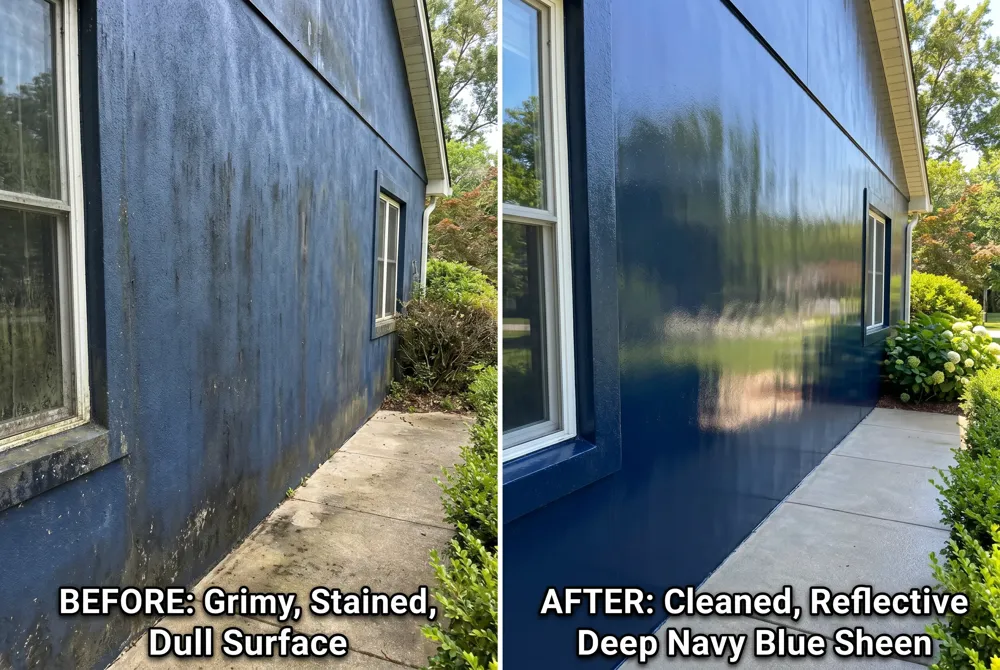
Vinegar, baking soda and hydrogen peroxide are versatile, non‑toxic staples for patio care. A 1:1 vinegar‑water spray loosens mineral deposits, rust and light mildew; a sprinkle baking soda adds gentle abrasion for oil or food stains; a hydrogen peroxide solution disinfects garden tools and curbs fungal plant diseases. Enzyme‑based cleaners break down organic grime without harsh chemicals, making them ideal for pet‑urine or food‑based stains. Low‑impact pressure‑washing uses a wide‑angle fan nozzle (25‑30°) at 1500‑2000 PSI, preserving delicate pavers while still removing algae and grime. Always wet surrounding plants, use eco‑friendly detergents and keep runoff away from waterways to protect wildlife.

DIY patio stain removal with vinegar – Spray equal parts white vinegar and water, let sit 5‑10 min, scrub with a stiff brush, rinse. For stubborn spots, sprinkle baking soda on the damp area before scrubbing. Test on an inconspicuous spot first.
How to clean a patio without chemicals – Sweep, then mop with warm water and a few drops of liquid castile soap or vinegar; sprinkle baking soda for extra lift, scrub, rinse, and let dry.
Does Dawn dish soap clean a concrete patio? – Yes. Mix Dawn with warm water, scrub grease or light grime, rinse thoroughly. For deep mold or heavy oil, a professional soft‑wash or pressure‑washing with eco‑friendly detergents yields better results.
Can I use Dawn to clean my driveway? – Yes; a quarter‑cup Dawn in hot water tackles grease spots. Apply, let sit 10‑15 min, scrub and rinse. Test on sealed surfaces first to avoid softening low‑quality sealers.
How to clean outdoor tiles without a pressure washer – Sweep, then wash with warm water, dish soap and optional vinegar for mildew. Scrub grout with a soft brush, rinse completely, and consider a water‑based sealer for protection.
Professional Edge: When to Call Goleta Home Services
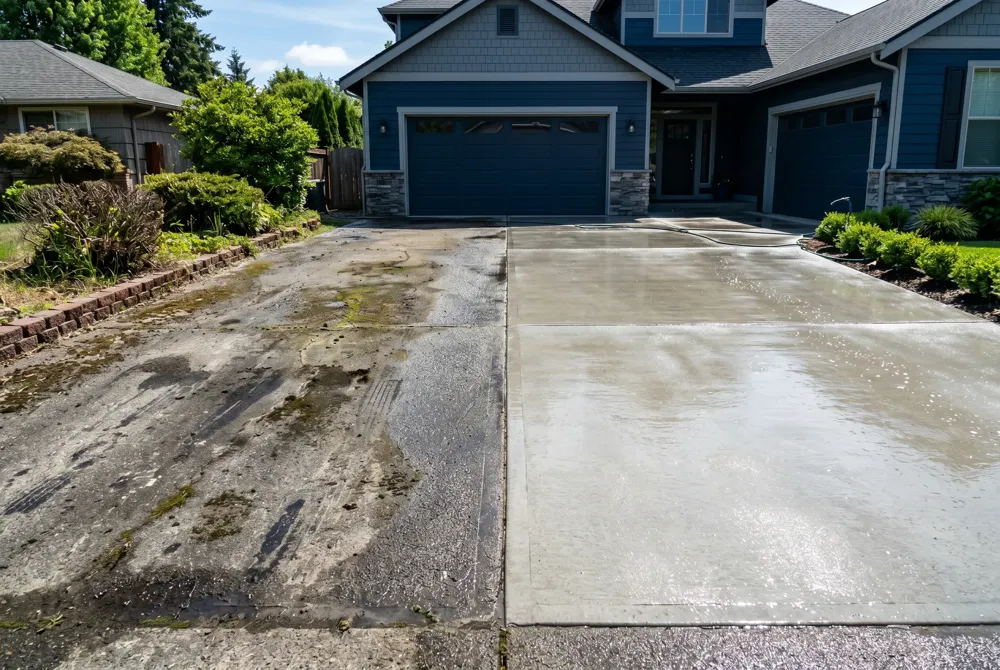
Soft‑washing uses low‑pressure water and biodegradable detergents to safely clean delicate stone, stamped concrete, or tiled patios, while high‑pressure washing (1500‑2000 PSI) quickly removes stubborn grime on sturdy surfaces such as plain concrete or brick. Goleta Home Services offers eco‑friendly detergents (plant‑based or citrus‑based) that break down algae, oil, and mildew without harming nearby plants. After cleaning, their crew applies breathable, UV‑stable sealants or polymer‑based coatings that protect against moisture, oil penetration, and the intense Santa Barbara sun, extending curb appeal and property value.

How to clean a dirty concrete patio: Sweep, pre‑wet, apply a warm‑water‑dish‑soap or 1:1 vinegar‑water solution, scrub with a stiff brush, treat oil stains with baking soda paste, rinse, dry, then seal.
How to use a pressure washer with detergent: Dilute a biodegradable detergent (≈1 cup/100 gal), fill the tank, foam with a wide‑angle nozzle, dwell 5‑10 min, then rinse with a 25° green tip.
How to clean outdoor tiles without a pressure washer: Sweep, pre‑soak with warm water‑dish‑soap (add ½ cup vinegar for mildew, scrub with a soft brush, rinse thoroughly, and seal if desired.
How to get tough stains off a patio: Use baking soda paste for grease, vinegar solution for rust, scrub, low‑pressure fan spray to lift remaining grime, rinse, and reseed joints.
DIY pressure washing patio tips: Use 1500‑2000 PSI with a 25° nozzle, pre‑treat with eco‑friendly detergent, keep the wand moving, protect plants, wear safety gear, and finish with a sealant.
Enjoy a Stain‑Free Outdoor Space Year‑Round
Keeping a patio or driveway spotless is easier when you pair regular DIY upkeep with occasional professional help. Sweep or blow away leaves and debris weekly, and spot‑clean fresh oil or rust stains with a vinegar‑water or baking‑soda paste before they set. Schedule a professional pressure‑wash every spring and fall; experts use eco‑friendly detergents and low‑impact soft‑washing to protect nearby plants while removing deep grime. After cleaning, apply a breathable sealant every one to two years to lock out moisture, oil and UV damage, preserving color and structural integrity. A well‑maintained exterior not only boosts curb appeal but also reflects community pride, helping property values stay strong year‑round.