


Introduction: Why Proper Cleaning Matters
Core Benefits of Regular Cleaning
Maintaining clean driveways and patios is about more than just good looks. Regular cleaning provides four fundamental advantages that protect your investment. First, it significantly enhances your property’s curb appeal. A clean, well-maintained exterior creates a strong first impression. Second, it prevents surface damage by removing moisture-trapping debris, abrasive grit, and corrosive substances that can weaken materials over time. Third, this preventative care directly increases the longevity of your concrete, asphalt, pavers, or natural stone. Finally, by safeguarding the material and improving appearance, proper cleaning can have a positive impact on your property’s overall market value.
Overview of Primary Cleaning Techniques
Three main approaches form the foundation of effective exterior cleaning, each suited to different surfaces and goals. Understanding these options helps you choose the right method.
Manual Cleaning is the simplest starting point. It involves using a broom and shovel to remove loose debris like leaves and dirt. For stains, a scrub brush with a mixture of water and mild detergent can be effective. This method is low-cost and ideal for routine upkeep and addressing small, fresh spills before they set.
Pressure Washing uses high-pressure water blasting to quickly remove stubborn dirt, grime, and built-up stains. It is highly effective for concrete, block paving, and other durable surfaces. The key to safe pressure washing is using the correct equipment settings, such as a 25-degree or 40-degree nozzle, and maintaining a consistent distance of 6-12 inches from the surface to avoid etching or damage.
Soft Washing is a gentler, chemical-based alternative. It uses low-pressure water (similar to a garden hose) combined with specialized, often biodegradable, cleaning solutions to break down organic growth like algae, mold, and mildew. This technique is safer for delicate surfaces such as natural stone, aged concrete, roofs, and siding, as it kills growth at the root without the abrasion of high-pressure water.
Choosing the Right Method for Your Surface
The material of your driveway or patio dictates the safest and most effective cleaning approach. Using the wrong technique can cause lasting damage.
| Surface Type | Recommended Primary Method | Key Considerations & Alternatives |
|---|---|---|
| Concrete | Pressure Washing | Use medium pressure (2000-3000 PSI). Can use soft wash for mild organic stains. |
| Asphalt / Tarmac | Soft Washing or Low-Pressure Wash | High pressure can strip the top layer. Use asphalt-safe detergents. |
| Block Paving / Pavers | Medium-Pressure Washing | Follow with re-sanding of joints. Manual brushing for joints. |
| Natural Stone (Slate, Limestone) | Soft Washing | Avoid acidic cleaners on limestone/marble. Doff steam cleaning is also effective. |
| Resin-Bound | Soft Washing | Very low-pressure rinse is crucial to maintain permeability. |
| Imprinted/Stamped Concrete | Low- to Medium-Pressure Washing | Use a sealer-safe cleaner; re-sealing may be required after. |
Fundamental Goals of Each Technique
Each cleaning method serves a specific purpose in a comprehensive maintenance plan. Manual cleaning is for daily and weekly upkeep. Pressure washing is for deep, periodic cleaning of durable surfaces. Soft washing is for gentle, long-lasting eradication of biological growth on delicate materials. Combining these methods appropriately based on your surface type and soil level ensures a clean, protected, and long-lasting outdoor space.
Essential Cleaning Gear: From Simple Brooms to Power Tools
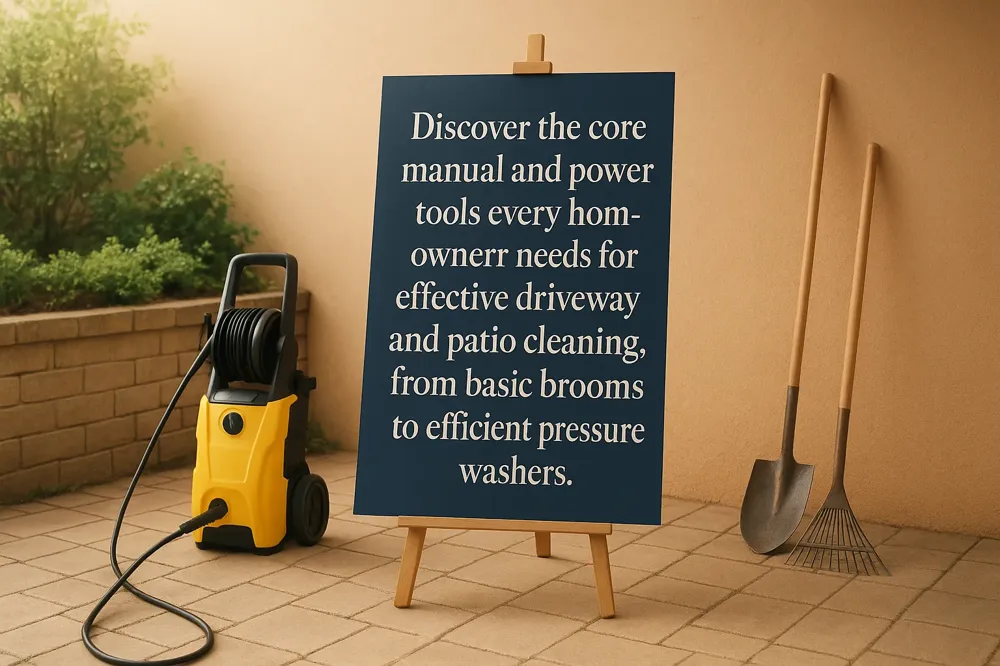
What tools do you need to effectively clean a driveway?
For an effective driveway cleaning, you’ll need a few key tools. Start with a stiff outdoor broom to clear loose debris and a scrub brush with soft bristles for ingrained dirt. For stubborn oil or grease stains, a dedicated degreaser for oil stains on driveways and an absorbent like kitty litter are essential. A garden hose or sprayer is necessary for applying cleaners and rinsing, while a pressure washer provides the most thorough clean for removing deep-seated grime. Having the right combination of these tools will restore your driveway’s appearance and protect your investment.
The Core Toolbox for Patio and Driveway Cleaning
Effective cleaning begins with a straightforward set of manual tools that every homeowner should have on hand. A stiff-bristled outdoor broom is the first line of defense for sweeping away leaves, dirt, and stones that can scratch surfaces and trap moisture. For more hands-on scrubbing, a stiff-bristled brush for stubborn dirt is ideal for tackling ground-in grime, black spots, and stains.
A garden hose with a spray nozzle is indispensable for wetting surfaces, applying cleaning solutions, and performing a final rinse. For tasks requiring a chemical cleaner, a handheld sprayer or a simple bucket allows for targeted application. When using any chemical, safety is paramount; always wear protective gloves and goggles.
Why a Pressure Washer is the Most Effective Tool
The pressure washer is often the most powerful tool in your arsenal for deep cleaning driveways and patios. It is exceptionally effective at blasting away embedded dirt, algae, moss, and built-up grime that manual cleaning methods can’t easily remove. Using a pressure washer not only restores the original appearance of your concrete, pavers, or asphalt but can also help extend the lifespan of these surfaces by preventing long-term damage from contaminants.
For general cleaning process, professionals typically recommend using a nozzle with a 25-degree or 40-degree spray pattern. It is crucial to maintain a consistent distance of 6 to 12 inches from the surface and use steady, even strokes. This pressure washing techniques prevents etching or damaging the material, ensuring a thorough yet safe clean.
Accelerate Your Work with Surface Cleaner Attachments
Cleaning a large driveway or patio with a standard pressure washer wand can be time-consuming. A Pressure Washer Surface Cleaners dramatically speeds up the process, allowing you to clean outdoor surfaces up to three times faster. These Surface cleaners for pressure washers are designed specifically for clean flat surfaces, using multiple high-pressure jets under a protective housing to clean without streaking.
surface cleaners come in various sizes, with clearing path widths from 10 inches up to 24 inches for professional models. They are rated for specific maximum pressure ranges, so it’s important to match the attachment to your machine’s capabilities. Popular models from brands like RYOBI surface cleaner, DEWALT surface cleaner, and Simpson surface cleaners often include features like caster wheels for maneuverability across your property.
| Essential Manual Tool | Primary Use | Key Benefit |
|---|---|---|
| Stiff-Bristled Broom | Removing loose debris | Prevents scratches and stains |
| Scrub Brush | Scrubbing stubborn stains | Targets ingrained dirt effectively |
| Garden Hose & Sprayer | Applying cleaners and rinsing | Provides essential water flow |
| Bucket & Sprayer | Mixing and applying solutions | Allows for controlled chemical use |
| Absorbents (e.g., kitty litter) | Soaking up oil spills | Prevents stains from setting |
| Pressure Washer Accessory | Recommended Use | Surface Compatibility |
|---|---|---|
| 25-Degree Nozzle | general cleaning process & rinsing | Concrete, asphalt, pavers |
| Surface Cleaner Attachment | Fast cleaning of large flat areas | driveways and patios |
| Foam Cannon | Applying biodegradable non-toxic cleaning solutions | All surfaces; reduces runoff |
| Low-Pressure Nozzle (for soft washing technique) | Gentle cleaning of delicate materials | Roofs, wood decking, natural stone |
| Chemical Injector | Applying recommended cleaning solutions accurately | Effective for mold and algae treatment |
Choosing Your Method: The Science of Pressure vs. Soft Washing
What are the primary differences between pressure washing and soft washing for driveways and patios?
The choice between pressure washing and soft washing hinges on how they clean and what they clean best. Pressure washing uses a forceful stream of high-pressure water, typically between 1,500 and 4,000 PSI (pounds per square inch), to physically blast away grime, dirt, and stains from surfaces. It’s highly effective for durable, non-porous materials like concrete driveways, block paving, and many stone patios.
Soft washing, by contrast, is a gentle, chemical-based cleaning method. It applies low-pressure water, similar to a garden hose, combined with specialized, often biodegradable and eco-friendly cleaning solutions. These chemicals break down and kill organic growth like algae, mold, and mildew at the root. The primary goal is to clean without damaging delicate surfaces such as natural stone, wood decks, aged concrete, or roofs.
The cleaning mechanism is a key differentiator. Pressure washing relies on mechanical force, while soft washing relies on chemical action. This difference impacts result longevity; because soft washing solutions kill spores and roots, they often prevent regrowth longer than pressure washing alone. For most concrete driveways, pressure washing is the standard choice. However, for many patios and surfaces where abrasion is a concern, soft washing is the safer, more effective method.
How do you properly soft wash a patio?
Proper soft washing requires a systematic approach to ensure thorough cleaning without harming your patio or the surrounding environment.
Begin by clearing the patio of all furniture and loose debris. Protect nearby plants by pre-wetting them with a garden hose and consider covering delicate vegetation with tarps. Mix your cleaning solution; a common soft wash mix for patios includes sodium hypochlorite for soft washing (like bleach) combined with a surfactant to help the solution stick and penetrate.
Apply this solution using a pump sprayer or a low-pressure water delivery system, ensuring even coverage. Let the solution dwell on the surface for 10 to 15 minutes, allowing it to break down the organic matter. Do not let it dry.
For stubborn stains, you can lightly agitate the surface with a soft-bristled broom or brush. Finally, rinse patio after cleaning thoroughly with a gentle spray of water, ensuring all cleaning residue is washed away. This process cleans effectively without the risk of eroding or etching delicate patio materials.
What are the different ways to perform soft washing?
Soft washing can be performed using several methods, each suited for different scales and types of cleaning jobs.
For smaller residential patios, a simple manual cleaning method can be sufficient. This involves applying a cleaning solution with a handheld pump sprayer and using a soft brush for agitation before rinsing with a garden hose.
For larger or more efficient applications, professionals use specialized soft wash equipment for patios. A pressure washer set to a very low PSI, often equipped with a foam cannon or a chemical injector system, applies the cleaning mixture uniformly. This equipment ensures the solution penetrates deeply into the surface for more effective cleaning.
An emerging and highly efficient method utilizes a cleaning drone. This technology allows professionals to safely apply soft wash chemicals for patios to hard-to-reach areas like high walls or expansive roofs from the ground, combining safety with thorough coverage.
Ultimately, the chosen method depends on the surface area, the type and severity of organic growth, and the need for efficiency. Professional soft washing services utilize the right combination of equipment and biodegradable non-toxic cleaning solutions to deliver lasting results while protecting your property.
| Cleaning Method | Primary Mechanism | Best For | Typical Pressure Range | Key Advantage |
|---|---|---|---|---|
| Pressure Washing | High-pressure water blasting | Durable surfaces: concrete driveways, sidewalks, brick patios | 1,500 – 4,000 PSI | Quickly removes tough, built-up grime and stains |
| Soft Washing | Low-pressure water + specialized cleaning agents | Delicate surfaces: natural stone, wood, composite decking, roofing | Under 500 PSI | Kills organic growth at the root for longer-lasting cleanliness |
| Manual Soft Wash | Hand-applied solution, brush, hose | Small patios, spot treatments for mold/algae | Garden hose pressure | Low-cost, targeted cleaning for minor issues |
| Professional Soft Wash | Specialized low-pressure equipment, injectors | Large areas, persistent organic growth, hard-to-reach surfaces | Precisely controlled low PSI | Efficient, uniform coverage with commercial-grade results |
Pressure Washer Setup: PSI, Cleaners, and Best Practices
How Much Pressure (PSI) is Needed to Clean a Driveway?
For effectively cleaning a driveway, a pressure washer with a PSI range of 2,500 to 3,000 is typically recommended. This level of pressure is powerful enough to remove embedded dirt, grime, oil stains, and mildew from concrete or asphalt surfaces. Using the correct PSI is crucial to ensure thorough cleaning without causing damage, and adjustable nozzles can help tailor the pressure for specific stains. For tough oil or grease, hot water pressure washers may enhance cleaning efficiency by dissolving residues more effectively.
The Right Pressure Washer Setup
Achieving the best results requires more than just a powerful machine. The setup involves selecting the correct nozzle and attachments for pressure washers. A 25-degree or 40-degree spray tip nozzle is often recommended for general driveway cleaning, providing a gentle, wide fan pattern for safe, efficient coverage. A Surface cleaners for pressure washers attachment is a valuable addition. This tool accelerates cleaning time and ensures an even, streak-free finish by using multiple nozzles to distribute pressure uniformly. Surface cleaners come in various sizes and are rated for specific PSI ranges. For example, a popular 12 inch surface cleaner might be rated for up to 2,300 PSI, while a heavy-duty 20-inch industrial surface cleaner could handle up to 4,500 PSI. Always match the attachment to your pressure washer’s output to avoid damage and ensure efficiency.
What is the Best Cleaner to Use When Pressure Washing a Driveway?
While there isn’t a single ‘best’ cleaner for every driveway, professionals typically choose a concentrated, biodegradable non-toxic cleaning solutions designed for concrete and asphalt. The choice depends on the stain type.
| Stain Type | Recommended Cleaner Solution | Application Notes |
|---|---|---|
| Oil & Grease | Commercial Degreaser | Apply first, let dwell to break down oils. Use hot water if available for better results. For more details, see methods on how to effectively remove oil stains from a driveway. |
| General Dirt & Grime | Alkaline Cleaner | Works well on organic matter and everyday dirt. Often available in eco-friendly formulas. |
| Rust or Mineral Deposits | Acidic Cleaner (e.g., muriatic acid) | Use with extreme caution, proper safety precautions for chemical cleaners, and ensure full rinsing afterward. |
| Mold, Mildew & Algae | Bleach-based or Hypochlorite Solution | Often used in soft washing or mixed for pressure washing. Dilute properly to avoid surface damage. |
Eco-friendly, biodegradable options are becoming standard. Look for cleaners with plant-derived surfactants or citrus-based solvents that meet U.S. EPA’s Safer Choice program standards. These are gentler on local ecosystems and safer for pets and plants. For comprehensive eco-friendly pressure washing tools and tips, explore sustainable practices.
Can You Use Dish Soap Like Dawn in a Pressure Washer?
If you choose to use Dawn in your pressure washer, proper dilution is crucial. A general recommendation is to mix no more than a few ounces of Dawn with a gallon of water to prevent excessive foaming and reduce the risk of pump damage. While dish soap can be effective for light-duty cleaning or organic stains, it may lack the strength for heavy oil and grease that dedicated commercial degreasers provide. For optimal performance and equipment safety, it’s often best to use specialized patio cleaners for mold or recommended cleaning solutions specifically formulated for pressure washers.
Key Best Practices for Effective Results
Proper pressure washing technique is as important as the right equipment. Always clear the area of furniture, toys, and loose debris before starting. Pre-rinse the entire surface with a garden hose to loosen dirt. During washing, maintain a consistent distance of 6 to 12 inches from the surface and use even, overlapping strokes. Work in manageable sections to ensure the cleaning solution doesn’t dry before rinsing. Finally, rinse the surface thoroughly, ensuring no soap residue remains, which can attract new dirt. These steps ensure a deep clean, protect your driveway surface, and enhance your property’s curb appeal. For long-term maintenance for driveways, consider incorporating these practices into your regular maintenance for concrete walkways and patios.
Surface-Specific Cleaning and Maintenance: From Concrete to Pavers
Concrete Cleaning and Maintenance
Regular maintenance is essential for preserving the appearance and longevity of your concrete surfaces. Begin by sweeping weekly to prevent stains. For a deeper clean, pressure wash concrete annually with 2,000-2,500 PSI. When pressure washing concrete, keep the nozzle 6 to 12 inches from the surface and use consistent, overlapping strokes to avoid etching.
Addressing stains promptly prevents them from becoming permanent. For oil or grease, sprinkle baking soda or kitty litter to absorb the spill, then scrub with a degreaser. Rust stains can be treated with a concrete-specific rust remover. Mold and mildew respond well to a diluted vinegar and water solution. After cleaning, it is crucial to apply a high-quality penetrating sealer for outdoor concrete every two to three years to guard against water damage, UV rays, and chemical stains. For more comprehensive concrete driveway cleaning tips, consider professional advice.
Asphalt Cleaning and Maintenance
Asphalt surfaces require careful cleaning due to their softer composition. A key technique is soft washing or using a pressure washer on a low-pressure setting to avoid stripping the binder and top layer. High-pressure washing can cause significant damage, so it’s best reserved for professionals who can adjust equipment appropriately. After cleaning, seal coating is the most critical maintenance step.
Apply a fresh seal coat every three to five years. This acts as a protective barrier against moisture, oil spills, and oxidation. Regular inspections for small cracks are vital; repair them immediately with a flexible crack filler to prevent water infiltration and more extensive damage like potholes. Ensuring proper drainage away from the surface also prevents water-related deterioration. Learn more about maintaining asphalt driveways with sealing.
Paver and Block Paving Cleaning and Maintenance
Cleaning block paving or concrete paver driveways requires a balanced approach. Use a pressure washer on a medium setting, taking care not to dislodge the pavers or blast away the joint sand. Focus on removing moss and algae from paving. The most important post-cleaning step is re-sanding the joints with kiln-dried sand to lock the pavers in place and prevent weed growth.
Applying a sealant designed for pavers is recommended for enhanced protection. A quality sealant helps prevent stains from oil or dirt, locks in the joint sand, and can enhance the color of the pavers. Choose a matte or natural finish sealant to maintain slip resistance. Resealing is typically needed every three to five years, depending on exposure and wear. For best results, consider proper pressure washing techniques for block paving.
Gentle Care for Delicate Surfaces
Natural stone, resin-bound, and imprinted concrete driveways demand gentler cleaning methods to preserve their integrity. For these materials, high-pressure washing is often too aggressive and can cause permanent damage. Instead, opt for soft washing, which uses low-pressure water combined with biodegradable cleaning solutions to break down dirt and organic growth without abrasion.
Use stone-specific driveway cleaners for natural stone like granite or limestone. For resin and imprinted concrete, asphalt-safe detergents and very low-pressure rinsing are key to maintaining permeability and the decorative surface. Always avoid harsh chemicals, acidic cleaners, and abrasive scrubbing tools on these delicate materials to prevent etching, fading, or damage to the sealant.
Is it safe to pressure wash concrete paver driveways?
No, pressure washing concrete paver driveways is generally not safe and can cause significant damage. The high-pressure stream can erode the smooth surface finish, expose the underlying aggregates, and wash out the fines that hold the paver’s color, leading to a permanently faded and rough appearance. Additionally, pressure washing can dislodge the joint sand between pavers and potentially damage any existing sealer. For a safe and effective clean that preserves your driveway’s beauty and longevity, we recommend professional soft washing or specialized low-pressure steam cleaning methods instead. These gentler, eco-friendly techniques used by experts thoroughly remove dirt, mold, and stains without risking harm to your investment.
Should you seal your driveway pavers?
Yes, sealing your driveway pavers is a worthwhile investment for enhanced protection and curb appeal. While quality pavers don’t require it for basic performance, a good sealant helps lock in jointing sand, reducing weed growth and washout. Be mindful that sealing involves future maintenance, typically reapplication every 3-5 years, and for safety, a matte finish is recommended over a high-gloss to maintain slip resistance. Ultimately, sealing extends the life and beauty of your driveway, helping protect your property investment.
Maintenance Summary for Different Surfaces
| Surface Type | Cleaning Method | Key Process | Crucial Maintenance Step |
|---|---|---|---|
| Concrete | Pressure Wash (2-2.5K PSI) | Treat stains promptly with specific solutions. | Apply penetrating sealer every 2-3 years. |
| Asphalt | Soft Wash / Low-PSI Wash | Clean gently to avoid surface damage. | Seal coat surface every 3-5 years. |
| Block Pavers | Medium-Pressure Wash | Re-sand joints after washing to stabilize. | Seal with paver-specific sealant every 3-5 years. |
| Natural Stone | Soft Wash / Special Cleaners | Use pH-neutral, stone-safe cleaning products. | Regular inspection; seal with appropriate product. |
| Resin/Imprinted | Soft Wash / Gentle Detergents | Low-pressure rinse to preserve surface. | Avoid high pressure; re-seal as needed post-clean. |
Protecting Your Investment: Eco-Friendly Practices and Maintenance
The Importance of Eco-Friendly Cleaning Practices
Eco-friendly cleaning is essential for protecting local ecosystems in Santa Barbara County. Traditional power washing can send polluted runoff, containing soap, oil, and debris, directly into storm drains and local waterways. This harms aquatic life and violates increasingly strict municipal regulations. The core of green power washing involves using biodegradable non-toxic cleaning solutions that are phosphate-free. Look for products that meet standards like the U.S. EPA’s Safer Choice program.
Effective ingredients include citrus-based degreasers from orange or lemon peels, plant-derived surfactants, and hydrogen peroxide as an alternative to bleach. These products are gentler on surfaces like wood, vinyl siding, and decorative concrete, potentially extending material lifespan. Equally important is protect vegetation during soft washing. Pre-wetting plants and grass, using tarps to cover delicate areas, and applying a neutralizing rinse afterwards helps safeguard your landscape.
Water Conservation Techniques for Exterior Cleaning
Responsible water use is a key part of sustainable exterior maintenance. Pressure washing can consume significant water, but several water conservation techniques can minimize waste. Using a spray gun with a shut-off trigger allows you to pause water flow when moving between sections, preventing unnecessary runoff. Limiting rinse cycles to only what is necessary also conserves water.
Pre-soaking surfaces with a thick foam from a foam cannon is another effective strategy. The foam clings to surfaces, allowing cleaning agents to dwell and work longer. This method often requires less soap and water overall to achieve excellent coverage. For the most water-conscious approach, consider collect rainwater for cleaning, or using a broom and bucket for preliminary cleaning instead of a hose.
Managing and Containing Cleaning Runoff
Preventing contaminated water from leaving your property is a critical environmental and regulatory step. Simple measures can effectively manage runoff. Using pressure washing containment methods or absorbent catch mats around the cleaning area helps capture wastewater for responsible wastewater disposal. In some cases, temporarily blocking nearby storm drains with a mat or plug is advisable.
Always avoid cleaning on slopes that direct water toward streets or drains. Instead, work on level ground or direct runoff toward planted areas where it can be filtered naturally. Choosing the right time for cleaning is also important; avoid windy or rainy days that can spread contaminants. When hiring an eco-friendly service, verify they have a responsible wastewater disposal plan and follow compliance with exterior cleaning regulations.
Regular Maintenance Tasks for Longevity
Consistent, simple upkeep is the most effective way to preserve your driveway, patio, or walkway. Sweep concrete weekly to prevent stains like leaves, dirt, and stones weekly to prevent scratches, stains, and moisture trapping. Address spills and stains immediately; for oil, absorb excess with baking soda or kitty litter within the first hour, then clean with a gentle, surface-appropriate solution.
Seasonal care is crucial. In autumn, clear fallen leaves promptly to prevent staining and fungal growth. During winter, avoid chemical de-icers and salt on concrete or asphalt, as they cause surface scaling and cracking. Use gentler alternatives like sand, kitty litter, or crushed stone for traction. In spring, perform a thorough routine inspections and general cleaning process to address any freeze-thaw cycles damage. Summer is an ideal time for sealing projects, as materials cure faster in warm, dry conditions.
How do you maintain a driveway to extend its lifespan?
To extend your driveway’s lifespan, start by promptly sealing cracks to prevent water infiltration and freeze-thaw damage. Regular gentle cleaning with methods like soft washing technique removes harmful debris without damaging the surface. Avoid using chemical de-icers and salt, which can cause spalling and scaling, and ensure proper drainage to eliminate standing water. For small issues, use appropriate fillers for potholes and cracks, but consult a professional driveway services for widespread damage, as solutions like resurfacing may be needed for a long-term fix. Ultimately, consistent maintenance and timely professional driveway cleaning services protect your investment and maintain your property’s curb appeal in Santa Barbara County.
| Maintenance Task | Frequency | Key Benefit | Eco-Friendly Tip |
|---|---|---|---|
| Sweeping Debris | Weekly | Prevents stains & surface damage | Use a stiff broom; organic debris into compost bin. |
| Prompt Stain Treatment | As spills occur | Stops stains from setting | Use baking soda paste or citrus-based degreasers. |
| Annual Deep Cleaning | Once a year | Removes ingrained grime & growth | Use biodegradable cleaners & manage runoff. |
| Applying Sealant | Every 2-5 years | Protects from moisture & UV damage | Choose low-VOC sealants for driveways. |
| Seasonal Inspection | Spring & Fall | Catches early damage | Check drainage and clear organic matter. |
DIY vs. Professional Services: When to Call the Experts
Situations Ideal for DIY Cleaning
For basic maintenance, DIY methods are often perfectly adequate. This includes tasks like simple sweeping with a coarse-bristled brush to remove leaves, dirt, and debris. A regular sweep prevents material from becoming ingrained and reduces slippery surfaces.
A basic hose-down with mild detergent and a stiff scrub brush can refresh the appearance of concrete, pavers, or asphalt. Using eco-friendly solutions like a 1:1 mixture of vinegar and water is effective for light mildew or algae. These simple tasks require minimal equipment and are excellent for keeping surfaces tidy between deeper cleans.
How Can You Clean a Driveway or Patio Without a Pressure Washer?
If you just want to give your patio or driveway a quick clean, start with a stiff-bristled brush to sweep away surface dirt. For stubborn stains, mix warm water with a mild, biodegradable dish soap. Scrub the affected area thoroughly with the brush, then rinse with a garden hose. For organic growth like moss or light algae, a solution of equal parts white vinegar and water can be applied, left to dwell for 10-15 minutes, scrubbed, and rinsed.
This manual cleaning methods approach is gentle, eco-friendly, and suitable for small areas or delicate surfaces where pressure washing might be too aggressive. It is a practical method for routine upkeep without investing in specialized equipment.
When DIY Might Suffice
DIY cleaning without a pressure washer is often sufficient for smaller, well-maintained areas. Using stiff brushes, soapy water, and vinegar solutions effectively tackles mild stains and organic growth. Regular tasks such as sweeping after autumn leaf fall or rinsing off spills from summer barbecues are ideal for homeowners to handle independently.
These methods are cost-effective and allow for immediate attention to minor issues. They form the cornerstone of preventative maintenance, helping to avoid the buildup that leads to more severe problems.
Clear Signs You Need a Professional
Certain situations clearly call for professional expertise. Persistent stains from oil, grease, or rust often require industrial-grade degreasers, acidic cleaners, or specialized treatments that are hazardous to handle without proper training and protective gear.
Large surface areas, such as long driveways or expansive patios, are time-consuming to clean manually. Professionals use equipment like rotary surface cleaners, which can clean up to three times faster than a standard pressure washer nozzle, ensuring uniform results.
Delicate materials like natural stone, aging concrete, or resin-bound surfaces can be damaged by incorrect pressure or chemicals. Professionals employ soft washing techniques, using low-pressure application of biodegradable solutions to safely clean without erosion.
Safety concerns, such as working at heights on second-story patios or handling high-pressure equipment, are significant reasons to hire experts. Professionals also possess the knowledge to properly apply sealants, a crucial step for long-term protection that is often overlooked in DIY projects.
Benefits of Professional Services
Professional cleaners bring expertise with a wide variety of surfaces, from asphalt and block paving to imprinted concrete and natural stone. They understand the specific pressure settings and recommended cleaning solutions required for each material to avoid damage.
They utilize industrial-grade equipment, including high-PSI pressure washers, adjustable surface cleaners, and specialized injectors for chemical application. This ensures a thorough, efficient clean that is difficult to replicate with consumer-grade tools.
Proper chemical handling is a major benefit. Professionals are trained in the safety precautions for chemical cleaners. They also prioritize eco-friendly practices, using biodegradable, phosphate-free solutions and managing wastewater runoff to protect local ecosystems.
Hiring professionals saves considerable time and effort while delivering guaranteed, longer-lasting results. Their work often includes pre-treatment, precise application, and proper rinsing, which can extend the lifespan of your surfaces and enhance your property’s curb appeal and value.
| Cleaning Scenario | Recommended Approach | Key Considerations & Equipment |
|---|---|---|
| Light Debris & Basic Upkeep | DIY Sweeping & Hose Rinse | Stiff broom, garden hose, mild soap. Eco-friendly. |
| Moderate Stains & Organic Growth | DIY Manual Scrubbing | Stiff brush, bucket, vinegar/water or baking soda paste. Apply, dwell, scrub, rinse. |
| Persistent Oil/Grease/Rust Stains | Professional Service | Industrial degreasers, rust removers. High-pressure or soft wash with surface cleaners. Safety gear required. |
| Large Area or Delicate Material | Professional Service | Commercial pressure washer, rotary surface cleaner, soft wash system. Material-specific expertise. |
| Post-Cleaning Sealing Application | Professional Service | Knowledge of penetrating vs. acrylic sealers. Proper surface prep and application for longevity. |
| Eco-Conscious Cleaning Requirement | Professional Service | Biodegradable cleaners, water reclamation tools, runoff management per local regulations. |
Conclusion: Invest in Curb Appeal and Longevity
Choose the Right Tool and Technique
The foundation of effective driveway and patio care is matching the cleaning method to the surface material. High-pressure washing with a surface cleaner attachment is excellent for standard concrete, but softer materials like asphalt, resin, natural stone, or aged pavers require the gentler approach of soft washing or low-pressure rinsing with appropriate cleaners. Using the wrong technique can cause etching, strip sealants, or damage the structural integrity of your pavement.
Prioritize Eco-Friendly Methods
Adopting green cleaning practices protects your local environment in Santa Barbara County. This means using biodegradable, phosphate-free cleaners, managing runoff to prevent contaminants from reaching storm drains, and employing water-saving techniques. Soft washing, which uses low-pressure water and specialized solutions, is often a more sustainable choice that safely removes organic growth without surface abrasion or harmful chemical residue.
Commit to Regular Maintenance
A consistent maintenance schedule prevents minor issues from becoming major expenses. Sweep debris regularly, clean spills immediately, and perform a thorough deep clean at least once a year. Applying a quality sealer every few years protects against moisture, stains, and UV damage, significantly extending the lifespan of your investment. Seasonal inspections help you spot cracks or drainage problems early.
The Value of Professional Services
For complex stains, delicate materials, or simply to save time and ensure optimal results, hiring a professional service is a wise investment. Experts possess the knowledge, industrial-grade equipment like adjustable pressure washers and surface cleaners, and access to professional-strength yet eco-friendly solutions. They can tailor their approach to your specific surface and local regulations, delivering a deeper clean that enhances curb appeal and property value.
A Call to Action for Your Property
Your driveway and patio are significant investments that define your home’s first impression. By choosing the correct cleaning methods, using environmentally responsible products, and maintaining a regular care routine, you protect that investment and contribute to a healthier community. For guaranteed results that blend effectiveness with sustainability, consider partnering with a professional exterior cleaning service in Santa Barbara County to unlock the full potential and longevity of your outdoor surfaces.
| Key Decision | Recommended Action | Primary Benefit |
|---|---|---|
| Tool Selection | Use pressure washers with surface cleaners for concrete; opt for soft washing for delicate surfaces. | Prevents surface damage and ensures effective cleaning. |
| Cleaning Solutions | Choose biodegradable, plant-based degreasers and cleaners. | Protects local waterways and surrounding vegetation. |
| Maintenance Routine | Sweep weekly, deep clean annually, and seal every 2-5 years based on material. | Extends surface life and prevents costly repairs. |
| Stain Treatment | Address oil, rust, or organic stains immediately with appropriate solutions. | Prevents permanent discoloration and material degradation. |
| Professional Help | Hire experts for large jobs, stubborn stains, or unfamiliar surfaces. | Ensures safety, efficiency, and optimal, long-lasting results. |