


Why Proper Pressure Washing Matters in Santa Barbara County
Santa Barbara’s Mediterranean climate—mild, wet winters, dry, warm summers, and frequent marine fog—creates a perfect environment for mold, algae, salt‑air corrosion, and mineral buildup on exterior hard surfaces. Regular, professionally‑executed pressure washing removes these contaminants before they can penetrate porous materials such as concrete, brick, stucco, or wooden decks, thereby extending the lifespan of the façade. Eco‑friendly detergents and low‑impact washing methods protect native landscaping and comply with California water‑conservation regulations, reducing runoff and chemical exposure. A clean, well‑maintained exterior dramatically improves curb appeal; studies show that well‑kept homes in Santa Barbara County can command up to 5‑10 % higher resale values. By pairing the right PSI and nozzle for each surface with biodegradable cleaning solutions, homeowners safeguard their investment while keeping the local ecosystem healthy.
Preparing Your Hard Surfaces for Pressure Washing
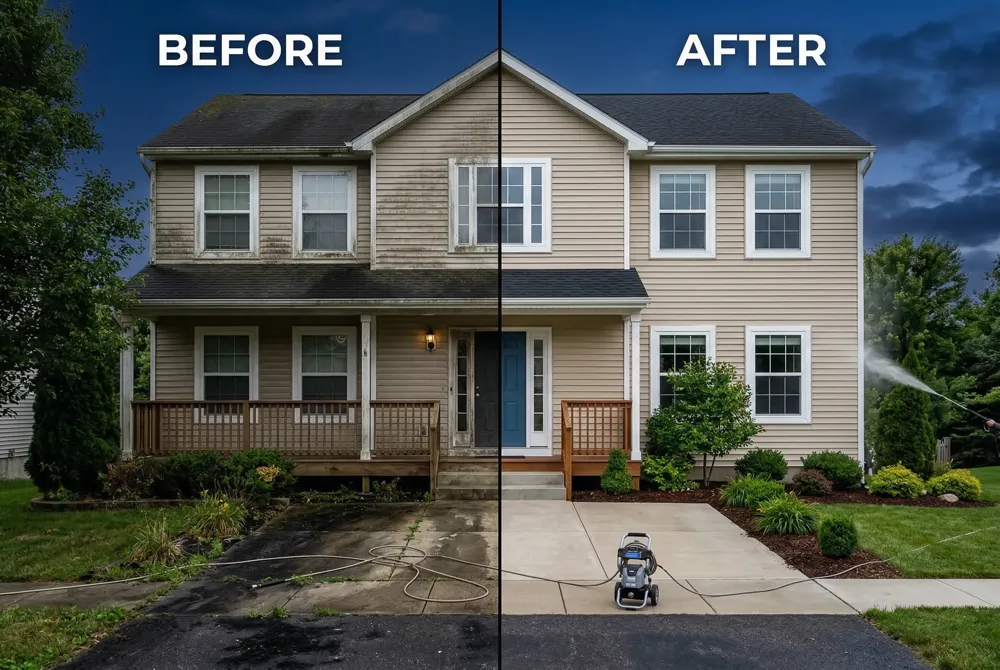
Proper preparation is the key to a flawless pressure‑washing job and a longer‑lasting exterior. In Santa Barbara’s mild climate, wait until concrete is fully dry after rain—typically 24‑48 hours—before washing; a wet surface can trap water in the pores, making stains harder to remove and increasing damage risk.
How to connect pressure washer to tap – Install a faucet‑to‑garden‑hose adapter, add a Y‑connector with a hose‑lock non‑return valve, tighten all fittings, and turn on the tap slowly to check for leaks. Ensure the tap’s pressure meets the washer’s minimum requirement and keep safety glasses on.
First‑time electric pressure washer setup – Read the manual, wear gloves, goggles, and sturdy shoes. Attach the garden hose, plug into a grounded 120 V outlet, snap on a 25° nozzle, turn on water before power, then work 12 inches away in smooth, overlapping strokes. Release pressure and store dry after use.
Using a gas pressure washer – Clear the area, connect water and high‑pressure hoses, check fuel and oil, set choke and throttle, start the engine, then choose the correct nozzle and spray at a 45° angle while moving steadily. Shut off the engine, release pressure, and drain hoses before storage.
Handling the pressure‑washer gun – Assemble the wand, attach hoses, select the appropriate tip, power up, and keep the gun 12‑18 inches from the surface. Sweep in overlapping motions, then release the trigger and disconnect when finished. Always wear protective gear and keep by clear of the work zone.
Choosing the Right Equipment and Pressures
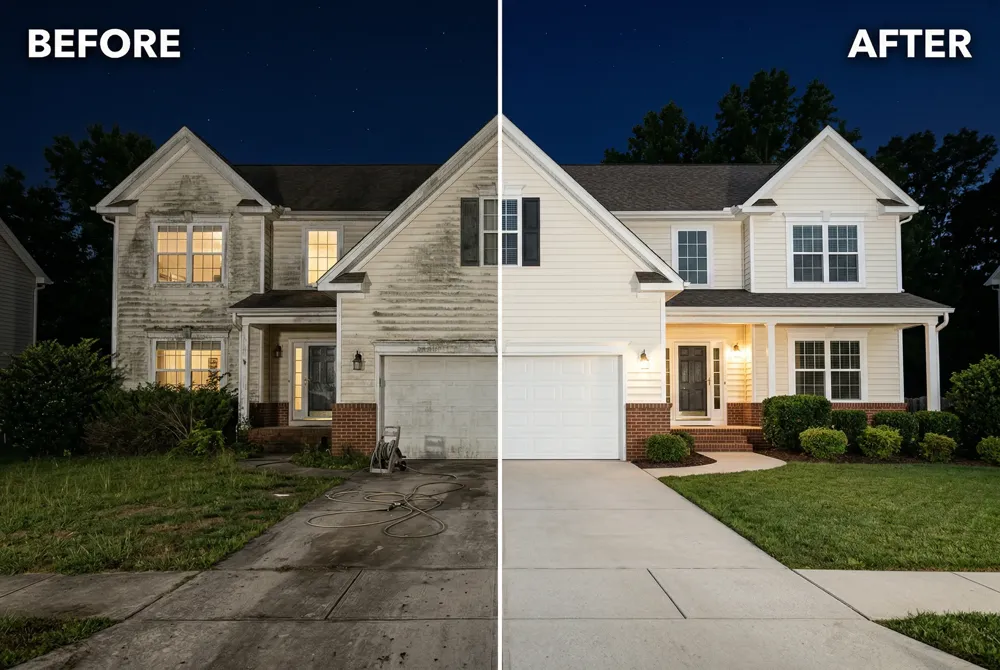
Choosing the correct PSI and nozzle is essential for a safe, effective clean of concrete, brick, vinyl, stone, and other hard surfaces.
PSI ranges – Concrete driveways and floors need 2,500‑3,500 psi; brick siding performs best at 1,500‑2,000 psi with a gentle 25° tip; vinyl siding tolerates 500‑800 psi using a 40° nozzle; stone patios and pavers require 1,200‑2,000 psi with a 25‑40° fan tip to avoid sand loss.
Nozzle selection – 0° (red) for stubborn stains on concrete, 15° (yellow) for general driveways, 25° (green) for most siding and decks, 40° (white) for delicate wood or painted surfaces.
Attachments – Rotary surface‑cleaner heads or turbo nozzles spread water evenly, speed cleaning of large flat areas, and reduce gouging risk.
Eco‑friendly options – Use electric units for low‑pressure jobs, biodegradable detergents, and low‑flow models that meet Santa Barbara water‑conservation rules.
Best pressure washing techniques for concrete driveway
Sweep debris, pre‑treat stains with a concrete‑safe degreaser, then use a 3,000 psi washer with a 25° nozzle held 12‑18 inches away. Work overlapping side‑to‑side strokes, rinse thoroughly, and seal after drying.
What do professionals use to clean patio slabs?
High‑capacity commercial washers (2,000‑4,000 psi) equipped with a rotary surface‑cleaner, acid‑based degreaser for concrete, or pH‑neutral cleaner for stone, followed by a protective sealant.
How to pressure wash different surfaces?
Test a small area, select PSI (500‑800 psi for vinyl/wood, 1,200‑1,500 psi for brick/stone, up to 2,000 psi for tough grime), choose the proper nozzle angle, keep the wand 12‑24 inches away, apply a biodegradable detergent, then rinse from top down.
Driveway pressure washing equipment
A 2,500‑3,000 psi washer with 2.5‑3 GPM, a 24‑inch rotary surface‑cleaner, and a detergent‑injection system for eco‑friendly cleaning.
How to pressure wash a driveway with a surface cleaner
Clear debris, pre‑treat stains, attach the surface cleaner, set the washer to ≥1,500 psi, pull the cleaner in overlapping passes, rinse, and let dry before resealing.
Best pressure washing techniques for concrete floors
Pre‑wet, apply a concrete degreaser, use a 3,000 psi washer with a 25‑40° nozzle or surface‑cleaner, work from far to exit, rinse with low pressure, and seal once dry.
Best pressure washing techniques for concrete patio
Remove debris, pre‑treat with biodegradable detergent, use 1,500‑2,500 psi and a 25° nozzle, spray at 12‑18 inches, work downhill in overlapping strokes, rinse, dry, and seal.
Professional Techniques for Specific Surfaces

Keeping a home’s exterior in top shape means using the right pressure‑washing method for each material.
Concrete driveways and floors – Clear debris, protect plants and nearby outlets, then select a 3,000 psi washer with a 25° or rotary surface‑cleaner nozzle. Apply a concrete‑specific detergent, let it dwell 5‑10 minutes, and rinse from the highest point downward. Keep the wand 8‑12 inches away and overlap strokes by a few inches for even coverage. Finish with a low‑pressure rinse to remove residue.
Brick, vinyl siding, and patio doors – Brick tolerates up to 1,500‑3,000 psi with a 15°‑25° nozzle; vinyl is safer at 1,500‑2,000 psi using a 25° fan tip. Test a hidden spot. Then spray detergent bottom‑up, let it work 5‑10 minutes, and rinse top‑down, maintaining a 12‑18‑inch distance. For patio doors, use a 25° or 40° nozzle at 1,200‑1,500 psi, protect the frame with drop‑cloths, and finish with a gentle wipe of glass and hardware.
Granite, metal fences, and outdoor fabrics – Granite can be cleaned at 1,200‑1,800 psi with a wide‑angle nozzle, spraying at a slight angle to avoid etching; follow with a thorough rinse and consider a breathable sealant. Metal fences handle higher pressures (up to 3,000 psi) but a 25° nozzle reduces splash. Outdoor fabrics require the lowest pressure (40° tip) and a soft‑brush scrubbing motion to prevent tearing.
Cars and delicate window seals – Begin with a light pre‑rinse from 3‑4 feet away. Use a ≤1,500 psi nozzle or soap‑lance, apply a car‑safe detergent bottom‑up, let foam dwell, then rinse top‑down while keeping the wand a few inches from paint. Dry with microfiber towels to avoid water spots.
Across all jobs, wear goggles, gloves, and non‑slip shoes; cover electrical outlets; use biodegradable detergents; and inspect for missed spots before the surface dries. Proper technique protects materials, extends lifespan, and boosts curb appeal—especially in the salty, Mediterranean climate of Goleta.
Detergents, Eco‑Friendly Solutions and Pre‑Treatment
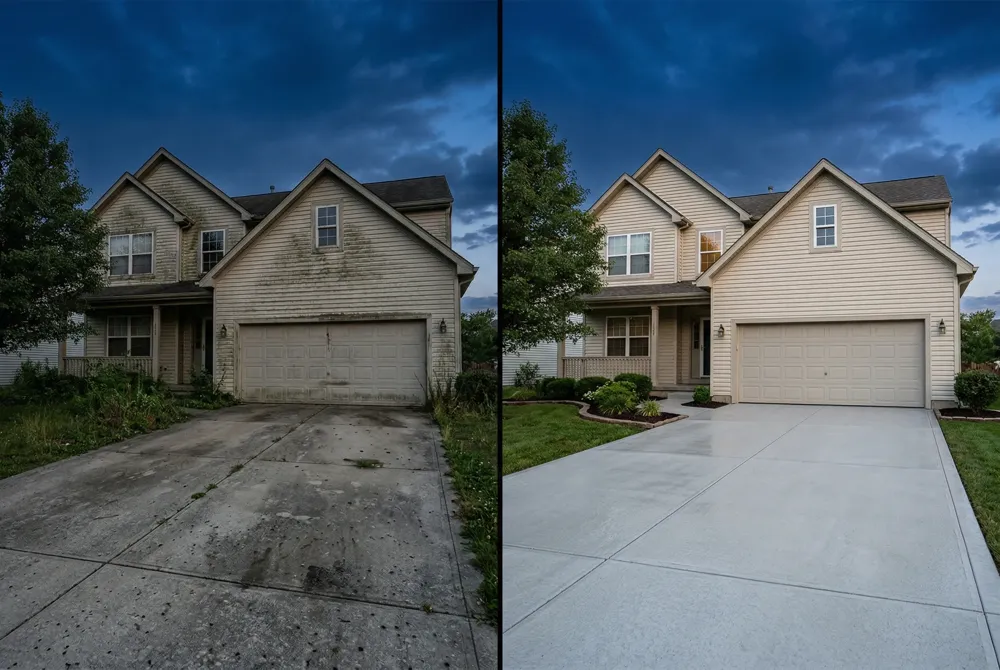
Eco‑friendly options include phosphate‑free, biodegradable detergents or DIY blends such as a few drops of Dawn dish soap mixed with warm water and a cup of white vinegar. This mixture works on unsealed driveways and patios, but always spot‑test a hidden area and limit contact to 10‑15 minutes to avoid etching sealers. For light dirt, a pH‑neutral biodegradable cleaner provides effective cleaning without harming the substrate.
Before pressure washing a patio or slab, spray the chosen solution evenly, let it sit 5‑10 minutes, then give a light hose rinse to remove excess suds. Professionals often use a rotary surface‑cleaner attachment to deliver even pressure and reduce streaks. After the wash, a thorough rinse removes any residue, and a sealant can be applied once the surface is completely dry to protect against future stains.
Using the correct detergent, respecting dwell times, and testing on a small area ensures a deep clean while preserving the integrity of concrete, brick, stone, or decking, and aligns with Santa Barbara’s eco‑friendly water‑conservation standards.
Safety, Gear and Risk Management
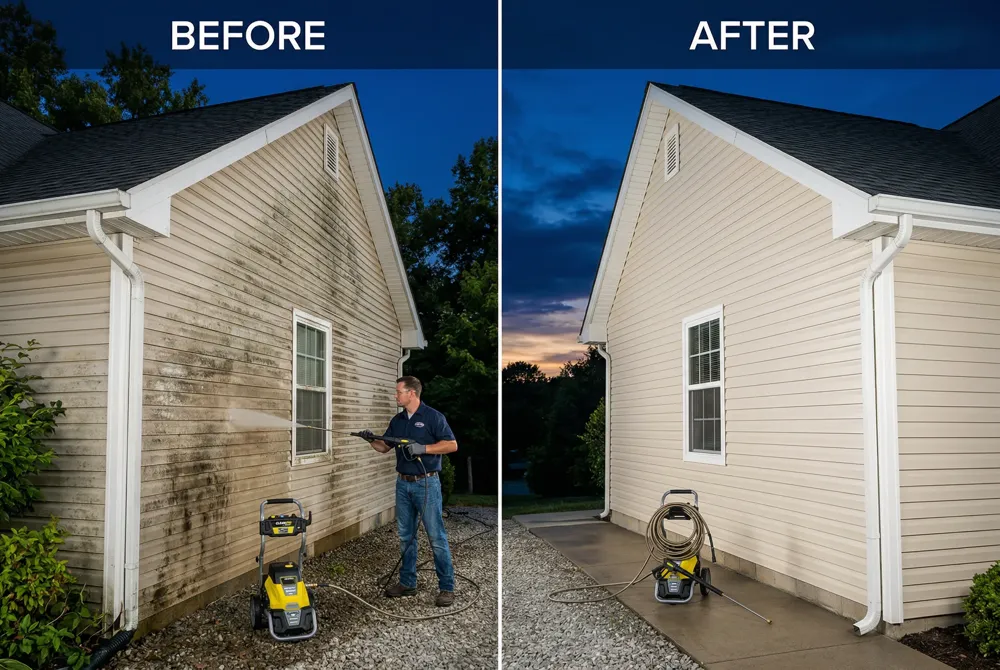
Protective equipment and clothing – Always wear safety goggles, waterproof gloves, long pants, and non‑slip boots. Gas‑powered units also require ear protection. Use a grounded extension cord for electric washers and keep the area clear of debris.
Hazards of high‑pressure streams – The jet can cause deep lacerations, puncture skin, and inject contaminants into tissue. It also creates slippery surfaces and can fling debris. Keeping the wand 12‑18 inches from most surfaces and testing a small hidden spot first dramatically reduces these risks.
Window seal damage prevention – High pressure can force water past seals, fogging panes or breaking weather‑stripping. Use a 40° wide‑angle nozzle, keep pressure below 2,000 PSI, and spray at a 45‑degree angle rather than directly at glass. Soft‑washing or hand‑cleaning is safest for delicate frames.
Surfaces that should be avoided – Do not pressure‑wash plants, delicate furniture, painted wood, or any surface with electrical components. Vinyl siding, roof shingles, and new concrete (under three years) are best cleaned with low‑pressure or biodegradable‑wash methods.
Is pressure washing dangerous? Yes—improper use can cause serious injury or property damage. Following safety protocols or hiring a trained professional such as Goleta Home Services ensures a safe, effective clean.
Can pressure washing damage window seals? Absolutely. High‑pressure jets can breach seals, leading to drafts and water intrusion. Use low pressure, a wide nozzle, and a 45‑degree angle, or opt for Soft‑washing.
What surfaces should you avoid power washing? Living plants, delicate furniture, painted surfaces, and any electrical fixtures should be cleaned by gentler methods.
What to spray on concrete before pressure washing? Apply a biodegradable, pH‑neutral detergent for everyday dirt, an alkaline degreaser for oil/grease, or an acidic cleaner for mineral stains. Let it dwell 5‑10 minutes before rinsing with the pressure washer.
Cost, Pricing and Value for Homeowners
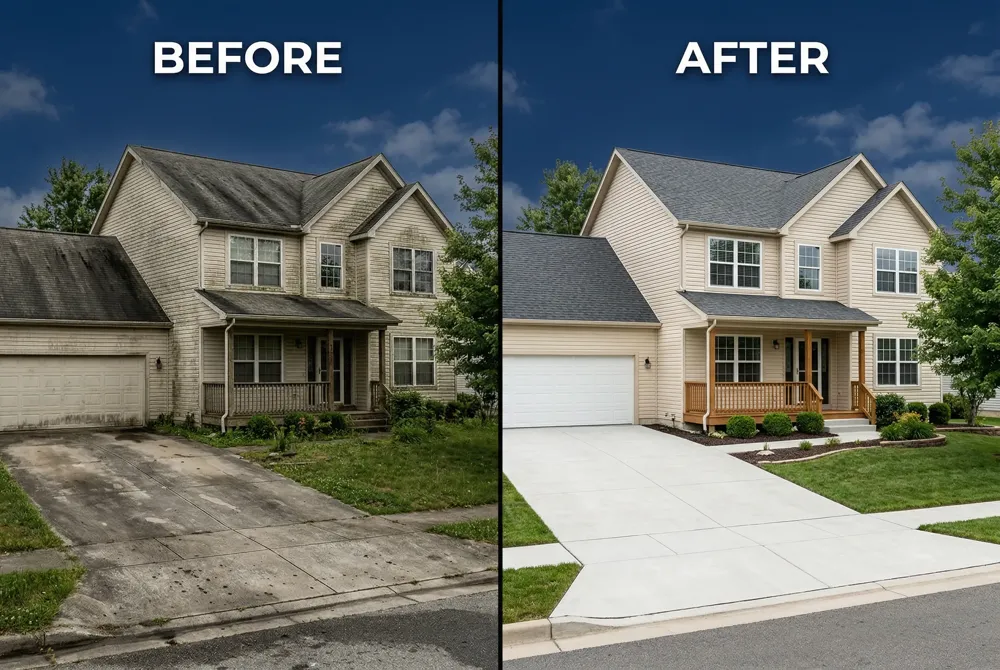
Professional pressure‑washing in Santa Barbara County is priced per square foot, per hour, or per job, and the final cost reflects surface type, grime level, and any special treatments.
Typical price ranges per square foot – Most local firms charge $0.08 – $0.50 / sq ft. A 1,500‑sq‑ft home therefore costs roughly $120 – $750 for a full‑sided wash, while a 2,000‑sq‑ft house falls in the $200 – $1,000 bracket (average $310‑$350). Concrete driveways or patios run $0.25 – $0.40 / sq ft, so a 2,000‑sq‑ft slab is $500‑$800.
Factors influencing quotes in Santa Barbara County – Height and roof pitch, multi‑story access, steep driveways, and the need for biodegradable detergents or hot‑water cleaners add $50‑$150. Eco‑friendly runoff‑capture and protective covering of plants or electrical outlets are standard practice and may affect labor time.
Goleta Home Services reviews and reputation – Trustindex and Yelp list Goleta Home Services with a perfect 5‑star rating from 46 reviews. Customers cite punctual, professional crews, thorough cleaning of patios, sidewalks, and roofs, and the use of low‑impact, biodegradable solutions that protect the coastal ecosystem. This reputation supports the higher end of the price range, as homeowners receive reliable, curb‑appeal‑boosting results.
Commercial vs. residential pricing – Commercial jobs often involve larger areas, more frequent service contracts, and stricter runoff‑management plans, leading to higher per‑square‑foot rates ($0.30‑$0.60) but lower hourly labor costs due to economies of scale. Residential jobs prioritize detailed,‑service cleaning and may include additional services such as gutter cleaning or soft‑wash roof treatment.
Overall, a well‑quoted pressure‑washing service in Goleta delivers value by extending surface lifespan, preventing mold and salt damage, and enhancing property value—often a worthwhile investment for coastal homeowners.
Time Management and Scheduling
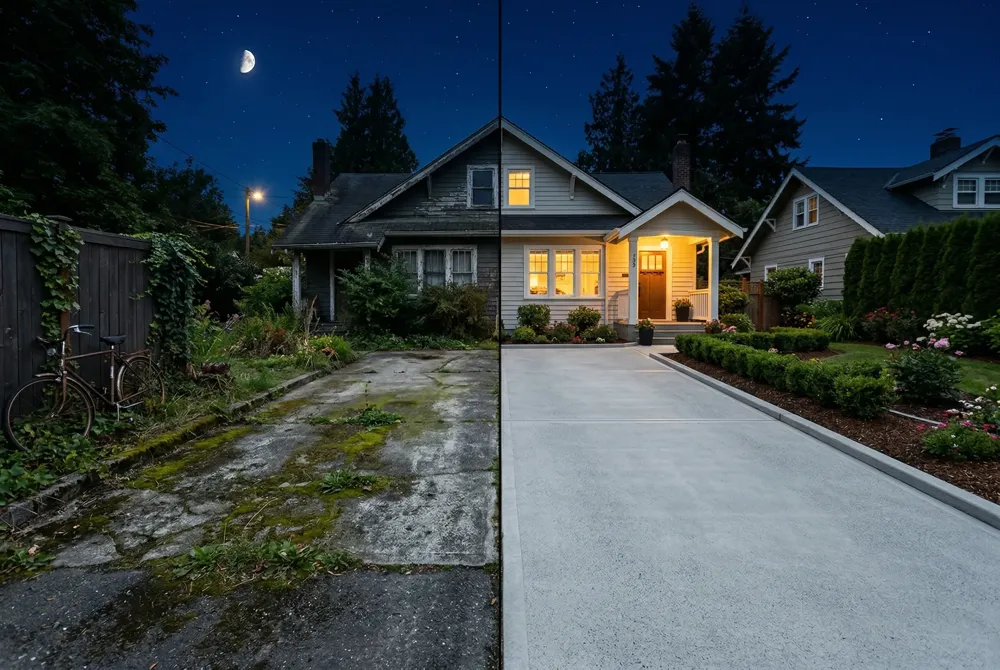
Typical duration for patios and driveways varies with size, material and soil level. A 200‑500 sq ft residential patio usually takes 1‑2 hours, including setup, pre‑treatment and rinse; heavily soiled surfaces may push the time toward the upper end, while a lightly‑dirtied patio can be done in 30‑45 minutes. Larger driveways or concrete areas require a comparable 1‑2 hour window, especially when a professional crew uses 1,500‑4,000 PSI equipment.
Seasonal timing for Goleta’s coastal climate is key. The best months are late spring through early fall when temperatures are mild and rain is minimal. After any rain, wait 24‑48 hours for the concrete to dry completely; washing a wet surface can drive water into pores, making stains harder to remove and risking damage.
Frequency recommendations differ by material: concrete and pavers benefit from an annual wash, wood decks and vinyl siding every 1‑2 years, and brick or masonry twice a year in salty, humid conditions. Regular cleaning prevents mold, algae and salt‑air corrosion, preserving curb appeal and extending the lifespan of exterior surfaces.
Eco‑Friendly Practices and Local Regulations
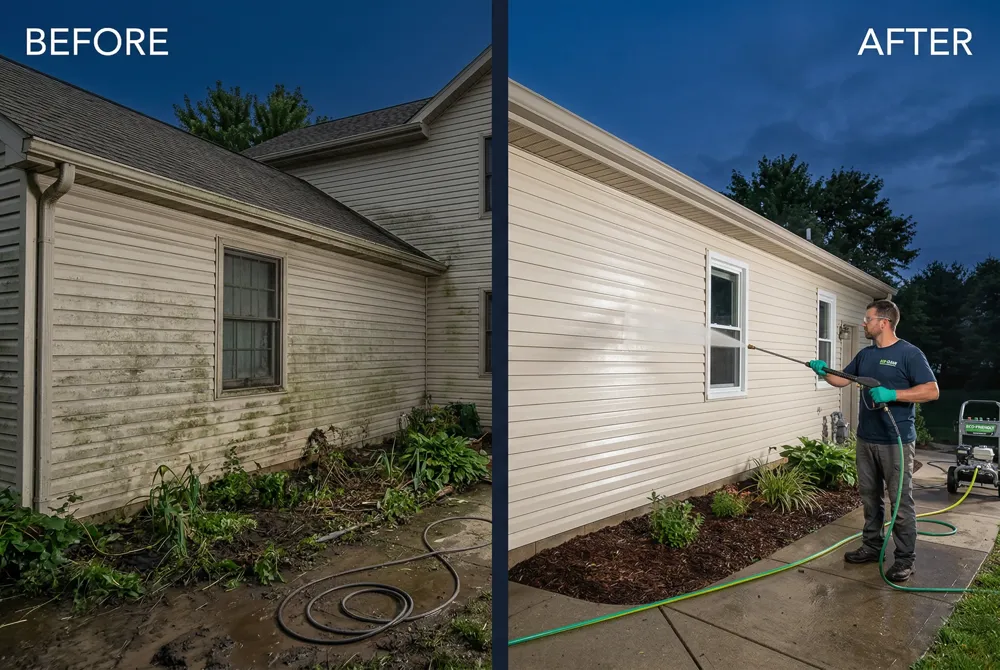
Professional pressure‑washing in Goleta and the broader Santa Barbara County should balance cleaning power with environmental stewardship. Biodegradable detergents—such as Hotsy’s Verde All‑Purpose or the eco‑friendly cleaners used by Goleta Home Services break down organic grime without harming native vegetation or contaminating storm drains. Combine these low‑impact soaps with low‑flow equipment (1,500‑3,000 psi models that draw less water than a garden hose) to meet county water‑conservation ordinances. Runoff management is essential on coastal properties; protect plants and landscaping with tarps, direct spray away from storm‑drain in, and capture excess water in berms or absorbent socks for reuse or proper disposal. Many local contractors recycle water on‑site, using reclaimed‑water tanks and recirculating pumps to further reduce demand.
How to pressure wash different surfaces – Test a hidden spot, choose PSI (500‑800 psi for vinyl/painted trim, 1,200‑1,500 psi for concrete/brick, up to 2,000 psi for stubborn grime) and the proper nozzle (40° for delicate, 25° general, 15° heavy). Keep the wand 12‑18 inches from delicate material, work from bottom‑up, and rinse top‑down.
Will Dawn and vinegar clean concrete? – Yes for unsealed concrete: mix a few drops of Dawn with warm water and a cup of white vinegar, apply, scrub, then rinse. Spot‑test first and limit contact to 10‑15 minutes to avoid etching sealers.
Can you pressure wash granite? – Yes, but use low‑to‑moderate pressure (1,200‑1,800 psi) with a wide‑angle nozzle, keep the spray at an angle, and rinse thoroughly. Seal afterward for protection.
How to pressure wash a car – Rinse lightly, apply a car‑safe detergent with a low‑pressure nozzle (≤1,500 psi) from bottom‑up, rinse top‑down, brush wheels if needed, then dry with microfiber to prevent water spots.
Keeping Your Goleta Home Pristine Year‑Round
Seasonal maintenance checklist
- Spring: Remove debris, pre‑treat mold or algae with biodegradable detergent, and pressure‑wash decks, pavers, and driveways.
- Summer: Spot‑clean high‑traffic areas, inspect for salt‑air corrosion, and re‑seal concrete or stone after a full dry‑out.
- Fall: Clean gutters, roofs, and siding before winter rains; apply a low‑pressure soft‑wash on delicate surfaces.
- Winter: Inspect for ice‑damage, clear snow‑melt residue, and schedule a quick touch‑up on the most used walkways.
Long‑term benefits of professional pressure washing
- Removes entrenched mold, mildew, and salt deposits that accelerate material decay.
- Extends the life of concrete, brick, wood, and vinyl by preventing erosion and staining.
- Boosts curb appeal, which can raise resale value by 5‑10 % in Santa Barbara’s coastal market.
- Reduces slip hazards and improves safety for families and visitors.
Choosing Goleta Home Services for eco‑friendly results
- Uses biodegradable detergents and low‑flow equipment that meet California water‑conservation rules.
- Trained technicians test pressure on a hidden spot, select the proper nozzle (15°‑40°), and protect plants and electrical fixtures.
- Offers a 24‑hour response window, transparent pricing, and a CSLB‑licensed crew that delivers consistent, high‑quality cleaning while safeguarding the local ecosystem.