


Introduction to Comprehensive Roof Maintenance and Cleaning
Importance of roof maintenance
Maintaining your roof is vital for its longevity and your property’s protection. Regular inspections, typically twice a year and after major storms, detect minor issues early, saving substantial repair costs. Keeping gutters clean, trimming overhanging branches, and ensuring proper attic ventilation all play important roles in preventing water damage and structural problems.
Overview of roof cleaning benefits
Routine roof cleaning removes harmful moss, algae, and debris that trap moisture and accelerate material deterioration. This upkeep extends the roof’s lifespan, prevents leaks, and mitigates the risk of mold growth that can affect indoor air quality. Professionally cleaned roofs also deter pests and maintain the warranty validity.
Connection between roof condition and property value
A clean, well-maintained roof significantly boosts curb appeal, enhancing a property’s market value. It also reduces the risk of costly repairs and helps lower insurance premiums. Investing in regular professional cleaning and maintenance is a smart financial choice that preserves your home’s appearance, structural integrity, and overall value.
Why Cleaning Your Roof Matters for Longevity and Efficiency
Why is it important to clean your roof?
Cleaning your roof is essential to prevent damage caused by accumulated dirt, debris, moss, and algae. These organic materials retain moisture and can lead to shingle deterioration, leaks, and even structural damage if left untreated. By regularly removing these elements, you avoid water pooling and rot that weaken roofing materials over time. For more on this topic, see Benefits of Regular Roof Cleaning.
Prevention of damage from debris and moss
Leaves, twigs, and moss not only trap moisture but can also cause physical harm to shingles by lifting or curling them. This exposes underlying layers to weather elements and accelerates wear. Clearing these regularly reduces the risk of mold and pest infestations, ensuring your roof remains structurally sound. Refer to Moss and algae growth on roofs for more detailed guidance.
Role of cleaning in maintaining roof warranties
Many roofing manufacturers require regular maintenance, including cleaning, to keep warranties valid. Neglecting to remove moss and algae buildup can void your warranty, leaving homeowners vulnerable to costly repairs. Professional cleaning using gentle methods like soft washing preserves the integrity of roofing materials and protects warranty coverage. Learn about Safe roof cleaning methods and Preventing moss and algae growth on roofs.
Energy efficiency benefits from reflective clean roofs
Algae and black streaks darken roof surfaces causing them to absorb more heat. A clean roof reflects sunlight more effectively, reducing heat absorption and thereby lowering cooling costs during hot weather. Maintaining a clean roof enhances energy efficiency, contributing to comfortable indoor temperatures and lower utility bills. Check out Roof maintenance tips and Energy Efficiency Through Roof Cleaning.
Regular roof cleaning is a practical investment that prolongs your roof’s lifespan, protects your home’s structural integrity, and improves energy efficiency. Combining professional inspections with eco-friendly cleaning methods helps homeowners maintain their property’s value and curb appeal while avoiding costly repairs and premature roof replacement. For a complete overview consult the Roof Maintenance Checklist and Yearly Roof Maintenance Checklist.
Extending Your Roof’s Lifespan Through Proactive Maintenance
How can roof cleaning extend the lifespan of your roof?
Regular Roof Cleaning and Roof Lifespan plays a crucial role in extending your roof’s life by removing moss, algae, and lichen. These organisms trap moisture against the roofing materials, which accelerates wear and causes damage such as staining, discoloration, and material deterioration. Removing them prevents these damaging effects and helps maintain roof integrity.
Impact of regular inspections and prompt repairs
Scheduling Regular Roof Inspections at least twice a year and promptly repairing issues like damaged shingles or faulty flashing can stop minor problems from escalating. Early detection of leaks or damage protects the roof structure and prevents costly repairs.
Importance of gutter maintenance and debris removal
Clean gutters ensure proper water drainage, preventing water backup that can damage shingles and the home’s foundation. Removing organic debris such as leaves and twigs twice a year reduces moisture retention and the associated risk of rot, mold, and shingle damage. Gutter Cleaning Tips and Roof Maintenance Checklist highlight these practices.
Protective coatings and seasonal care strategies
Applying protective coatings or sealants shields roofing materials from UV rays and harsh weather, extending their durability. Performing maintenance in spring or early fall avoids damage during extreme temperatures or rainy seasons. Additionally, Trimming Overhanging Branches reduces physical damage and debris accumulation.
Overall, professional Roof Maintenance Checklist combining Benefits of Regular Roof Cleaning, inspections, repairs, and seasonal care is a cost-effective approach that preserves your roof’s appearance, prevents damage, and extends its useful life.
Comprehensive Roof Maintenance Checklist: Beyond Cleaning
What maintenance should be done on a roof and when?
Regular maintenance is crucial to extend your roof’s lifespan and avoid costly repairs. A biannual inspection schedule is recommended, ideally in spring and fall, to catch damage early and prepare for seasonal weather changes. See Roof Maintenance Checklist for comprehensive guidance.
Biannual inspection schedule and seasonal timing
Inspect your roof twice a year and especially after severe storms. These inspections help identify damaged shingles, loose flashing, or signs of moss and algae buildup. Inspecting in spring prevents damage from winter ice, while fall inspections prepare for the winter season. Refer to Regular Roof Inspections for more details.
Gutter cleaning and debris removal
Keep gutters and downspouts clear of leaves, twigs, and other debris to prevent water backup which can damage shingles and foundations. Clearing organic debris at least twice yearly helps reduce moisture retention that leads to rot and mold. For more information, review Gutter Cleaning for Roof Care and Regular gutter cleaning.
Trimming branches and vegetation management
Trim overhanging tree branches at least 10 feet from your roof to prevent physical damage from rubbing and falling debris. This also reduces organic material buildup that fosters moss and algae growth. Guidance on this can be found under Trimming Overhanging Branches and Preventing moss and algae growth on roofs.
Checking flashings, vents, and attic ventilation
Inspect flashing around chimneys, vents, and skylights to ensure a watertight seal. Proper attic ventilation is essential year-round to prevent moisture buildup, mold growth, and ice dams, maintaining roof integrity in all seasons. See Inspecting roof flashings and vents and Roof Ventilation Importance.
Ice dam prevention and runoff management
In colder climates, ice dams from melting and refreezing snow can cause leaks. Proper attic insulation and ventilation mitigate these risks. Ensure that downspouts discharge water away from your foundation and roof to prevent shingle damage and premature aging. Detailed advice is available in Preventing ice dams and Proper attic ventilation methods.
Safe and Effective Roof Cleaning Methods
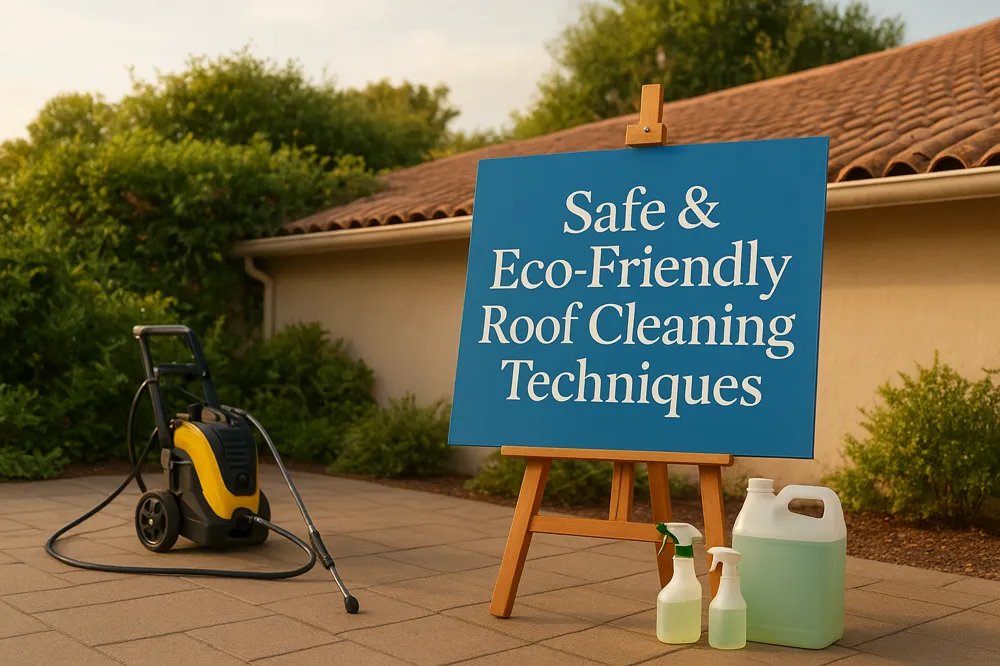
What are the best methods and products for cleaning a roof safely?
Soft washing is the preferred safe method for roof cleaning. This technique involves using a low-pressure spray combined with specialized cleaning agents that contain algicides to effectively remove algae, moss, and lichen without damaging the roof surface. For more information on How to clean your roof and Safe roof cleaning methods, see this detailed guide.
Avoid the use of high-pressure washing, which can damage shingles by lifting granules or causing leaks. Harsh chemicals, especially strong bleach, should also be avoided since they can deteriorate roofing materials and harm surrounding plants and landscaping. Learn about Avoiding pressure washing damage and Avoiding harsh chemicals on roofs for roof care.
For gentle cleaning, oxygen bleach-based products such as 30 Seconds Cleaner are effective and environmentally friendly. These can be applied with a garden sprayer on dry shingles and rinsed gently using low-pressure water, minimizing risk to the roof. Consider Benefits of Regular Roof Cleaning to understand the importance of using safe products and methods.
Manual removal techniques involving gentle brushing and careful debris clearing can complement chemical treatments, especially for stubborn moss patches. This method prevents physical damage that may occur with aggressive cleaning tools. For tips on Removing Moss and Algae Safely and Manual moss and debris removal, consult expert recommendations.
It is crucial to protect nearby plants and landscaping by thoroughly wetting them and using plastic covers before applying cleaning solutions. Cleaning should be performed on calm, cloudy days to prevent rapid evaporation of chemicals and ensure safer application conditions. See best practices on Protecting Plants During Roof Cleaning and Best Weather for Roof Cleaning.
By adopting soft washing, using mild cleaning agents, and timing the cleaning appropriately, homeowners can maintain their roofs effectively while preserving their property’s aesthetic and structural integrity. For comprehensive Roof Maintenance Tips and advice on Roof Maintenance Checklist, refer to these trusted resources.
Professional Roof Inspections: What to Expect
What is typically included in a professional roof inspection?
A professional roof inspection involves a comprehensive visual examination of all critical roof components to ensure integrity and functionality. Inspectors assess shingles for damage, flashing around chimneys and vents for proper sealing, gutters for blockages, and check the condition of skylights and vents. They also evaluate the underlayment and structural elements to identify signs of wear or deterioration.
Advanced technologies are often employed to enhance inspection accuracy. Drones allow for safe aerial views, infrared cameras can detect hidden moisture or heat loss, and satellite imagery helps identify broader roofing trends or damage patterns. These tools reveal issues that may not be visible during a standard walk-around inspection.
Inspecting attic and interior spaces is also essential. Professionals check insulation quality, ventilation effectiveness, and look for water stains or mold growth on ceilings, which can indicate leaks.
Upon completion, the inspector provides a detailed report with clear photographs and actionable repair recommendations. This documentation can guide timely maintenance, help preserve warranties, and support insurance claims.
Regular inspections, especially after storms or severe weather, are vital for early detection of damage. Homeowners who schedule Regular Roof Inspections protect their investment by extending the roof’s lifespan and preventing costly repairs.
Risks and Considerations in Roof Cleaning and Maintenance
What are the cons of roof cleaning?
Roof cleaning, while beneficial, comes with several risks and considerations. For more details, see the Pros and Cons of Roof Cleaning.
Safety hazards of DIY roof cleaning
DIY roof cleaning is often discouraged due to the inherent safety risks. Climbing and working on a roof can lead to falls and serious injury. Proper safety equipment and training are essential but often lacking in DIY attempts. For safer roof cleaning methods, refer to Safer Roof Cleaning Alternatives and Safe roof cleaning methods.
Potential damage from improper cleaning methods
Using high-pressure washers can damage roof shingles, especially asphalt ones, by lifting granules or causing cracks. Improper chemical application, such as strong bleach solutions, may also harm roofing materials and surrounding plants. These mistakes can lead to premature roof deterioration and costly repairs. For guidance, see Shingle roof cleaning tips and Cleaning Asphalt Shingles.
Environmental and material considerations
Certain cleaning agents may jeopardize nearby vegetation and the environment if not carefully managed. Green roofs with live plants generally should avoid mechanical cleaning to prevent plant damage. Soft washing with gentle solutions is typically safer. Related content includes Using gentle roof cleaning techniques and Eco-Friendly Roof Cleaning Methods.
When to hire a professional
Due to safety concerns and the need for specialized techniques like soft washing, hiring professional roof cleaners ensures effective and safe maintenance. Professionals can also inspect and identify early damage, potentially saving money on repairs. See Reasons to Hire a Professional Roof Cleaner and Cost-Effectiveness of Professional Roof Cleaning.
Limitations on roof cleaning for certain roof types
Fragile roofing materials, such as slate or tile, require careful approaches to avoid breakage. Some roofs, especially those with an active vegetative layer, should not be cleaned with high-pressure or harsh chemicals. Following manufacturer guidelines and professional advice is crucial to preserve roof integrity. For more information, see How to Maintain Your Roof and Roof Maintenance Checklist.
Protecting Your Home with Regular Roof Care
Essential Role of Roof Cleaning and Maintenance
Regular roof cleaning and maintenance are crucial for preserving the lifespan and appearance of your roof. Removing moss, algae, and debris prevents moisture retention that can accelerate roof deterioration and cause leaks. Scheduled inspections, especially in spring and fall, help identify damage early, reducing costly repairs.
Encouraging Scheduled Inspections and Cleanings
Following a consistent maintenance schedule is vital. Cleaning gutters and trimming overhanging branches complements roof cleaning efforts by preventing water backup and physical damage. Seasonal checks ensure flashing, vents, and other components remain sealed and functional, protecting your home from infiltration and structural harm.
Benefits of Professional Roof Care Services
Professional roof cleaning offers safe, effective methods like soft washing, avoiding damage from high-pressure techniques. Experts provide thorough inspections and use eco-friendly products to protect your roof and surrounding landscape. Investing in professional services supports warranty preservation, enhances curb appeal, deters pests, and ultimately saves money by extending roof durability.