


Why Solar Panel Cleaning Safety Matters
The Critical Role of Clean Solar Panels
Maintaining clean solar panels is essential for maximizing their energy production efficiency. Dirt, dust, pollen, and bird droppings can reduce solar panel output by as much as 7% or more, directly impacting energy savings and return on investment. Especially in dry or dusty regions like Goleta, regular cleaning ensures panels absorb maximum sunlight.
Risks of Improper Cleaning Practices
Cleaning solar panels without proper precautions poses several risks. Unsafe DIY efforts can lead to falls from ladders or rooftops and electrical shocks from live components. Using harsh chemicals, abrasive brushes, or high-pressure washers can damage the delicate panel surface, leading to cracks or seal failures that degrade performance and may void warranties.
Safeguarding Your Solar Investment
Adhering to safety best practices protects both your property and solar equipment. Professional cleaning services employ trained technicians who follow safety protocols such as system shutdown and use of appropriate gear. They use gentle, eco-friendly cleaning solutions and equipment that preserve panel integrity, ensuring longevity and sustained performance. Safe, regular maintenance preserves your solar investment, reduces repair costs, and maintains property value and curb appeal in the long term.
Safe Home Cleaning Practices for Solar Panels
How should solar panels be safely cleaned at home?
To safely clean solar panels at home, the first essential step is to shut down the solar system following the manufacturer’s instructions. This system shutdown is crucial to avoid electrical hazards during the cleaning process. Cleaning should ideally take place on cool days—early morning, evening, or overcast weather—to prevent rapid evaporation that can leave streaks or cause thermal shock to the panels.
Use non-abrasive tools such as soft brushes or sponges paired with mild, eco-friendly soaps and water to gently remove dust, dirt, pollen, and bird droppings. Avoid abrasive scrubbers, harsh chemicals, and pressure washers, as these can scratch or damage the protective coatings on the panels, reducing their efficiency and potentially voiding warranties. After cleaning, rinse the panels thoroughly using low-pressure water, preferably rainwater if accessible, to avoid mineral deposits or residue buildup. Drying with a squeegee or lint-free cloth is recommended to prevent streaking and retain panel clarity.
When panels are mounted on rooftops, it is safest to perform cleaning from the ground using long-handled tools. Climbing onto roofs without proper safety gear significantly increases the risk of falls or damage to the panels. For steep or difficult-to-access roofs, hiring professional solar cleaning services is strongly advised as they use specialized equipment and adhere to safety standards.
Should solar panels be turned off before cleaning?
Absolutely. Turning off the solar panel system before cleaning is a fundamental safety measure. It eliminates the risk of electric shock from live components and protects sensitive equipment such as inverters and anti-reflective coatings from potential damage during cleaning. Performing the system shutdown in accordance with the owner’s manual ensures the process is safe and preserves the integrity of the solar installation.
Cleaning should also be scheduled during periods of low sunlight—like early mornings, late evenings, or cloudy days—to reduce the chances of heat-related damage and maintain the coating quality. Especially for rooftop installations, professional technicians are often needed to manage the shutdown and cleaning procedures safely, minimizing risks to both property and persons.
Adopting these safe home cleaning practices for solar panels not only maximizes solar energy efficiency but also prolongs panel lifespan and protects your investment. In locations such as California’s Goleta area, where environmental dust and debris can be prevalent, regular, safe maintenance aligns with sustainable home care and enhances property value and curb appeal.
Effective and Safe Cleaning Materials for Solar Panels
What is the best solution or material for cleaning solar panels?
When cleaning solar panels, the priority is to use materials and solutions that gently remove dirt without harming the surface. The most recommended cleaning solution is a mild soap combined with water, which effectively breaks down grime while being safe for panel coatings (how to clean solar panels safely).
Using a soft sponge or a non-abrasive brush ensures that the panel’s glass isn’t scratched during the cleaning process. Following the wash with a gentle rinse using a garden hose or a low-pressure water sprayer helps remove residual soap and loosened dirt without applying excessive force that could damage panels (solar panel cleaning procedure).
To prevent mineral deposits and water spots, which are common when hard tap water is used, it is advisable to utilize deionized or softened water (dangers of hard water on solar panels. Additionally, wiping excess water off with a rubber-edged squeegee can help avoid streaking, allowing sunlight to finish the drying process without leaving marks (using gentle scrubbing tools.
For long-term maintenance, applying hydrophobic coatings, like Diamon-Fusion®, creates an invisible protective layer on the panel surface. This coating repels water and dirt, minimizing residue buildup, decreasing cleaning frequency, and helping sustain optimal solar energy production (solar panel maintenance best practices).
Panels installed on rooftops or in locations that are difficult to access pose safety challenges. In such cases, hiring professional cleaning services is the safest and most effective option. Professionals have the specialized equipment and expertise to clean high or complex installations without risking damage or personal injury while ensuring the panels maintain peak efficiency (professional solar panel cleaning services).
Employing these recommended materials and cleaning methods aligns with eco-friendly practices and helps homeowners protect their solar investments, prolong panel lifespan, and maximize energy output reliably (protecting your solar panel investment).
Water Use and Techniques in Solar Panel Cleaning
Is it okay to spray water on solar panels for cleaning?
Yes, spraying water on solar panels for cleaning is generally safe and effective when done correctly. Using a garden hose or a spray nozzle with low pressure helps rinse away dirt, pollen, bird droppings, and other debris without damaging the panel surface (solar panel cleaning tips).
Safe water spraying methods
To ensure safety and protect your solar panels:
- Use gentle water sprays rather than high-pressure jets (safe solar panel cleaning).
- Rinse panels before and after cleaning to remove dust and any soap residue (solar panel cleaning procedure.
- Avoid cold water on hot panels to prevent thermal shock and glass cracking (solar panel cleaning safety tips).
- Perform cleaning during cooler parts of the day, such as early morning or late evening (Best times to clean solar panels).
Avoiding pressure washers
Pressure washers might seem efficient but are strongly discouraged for solar panel cleaning because:
- The high water pressure can crack tempered glass (pressure washing damage on solar panels).
- It can loosen seals, leading to water ingress and electrical damage (solar panel warranty and professional maintenance.
- Pressure washing can void manufacturer warranties (Why avoid pressure washing solar panels).
Use of rainwater and purified water
Rainwater can naturally wash away loose dirt in many cases but often leaves residue, especially in dry or dusty climates like Goleta (Natural cleaning by rainfall). Purified or deionized water is ideal for manual or professional cleaning as it:
- Prevents mineral deposits and hard water spots (Calcium-free water for cleaning.
- Avoids streaking and scaling that reduce panel efficiency (Solar panel cleaning safety precautions.
- Is recommended by various professional solar maintenance guidelines (solar system maintenance).
Emerging waterless cleaning technologies
Innovations include robotic cleaners and vibration-based systems that minimize or eliminate water use altogether. For example:
- Robotic cleaners use soft brushes and gentle airflow (Robotic solar panel cleaning).
- Vibration techniques shake dust off panels passively without detergents or water (new cleaning method for solar panels).
These methods are promising for water-scarce regions, helping maintain solar panel performance sustainably (solar panel cleaning techniques).
Proper water use and safe cleaning techniques ensure your solar panels remain efficient, durable, and protected—preserving your investment while supporting eco-friendly home maintenance in sunny regions like Goleta, California (Solar panel cleaning and maintenance.
Common Residential Solar Panel Cleaning Methods
What are some common residential solar panel cleaning methods?
Homeowners use several methods to keep their solar panels clean and efficient. The most widespread approach is manual washing, which involves using soft-bristle brushes, sponges, or microfiber cloths combined with mild soapy water or gentle vinegar solutions. These are applied carefully to avoid scratching the glass surface. After scrubbing, panels are rinsed gently with low-pressure garden hoses to remove soap residues and dirt without causing damage.
Specialized solar panel cleaning kits are also popular. These kits typically contain eco-friendly cleaning solutions formulated not to leave residues that could attract more dirt or reduce panel transparency. In places like California, where water conservation is crucial, waterless cleaning options are gaining traction. Techniques such as electrostatic dust removal or vibration-based systems enable dirt to be naturally shaken off or lifted without water.
Innovations in automation include robotic cleaning systems equipped with soft microfiber brushes and minimal water use. These robots are especially useful for large or hard-to-access panel arrays, providing consistent cleaning with reduced labor and safety risks.
Regarding safety, cleaning solar panels from the ground by using long-handled tools is strongly recommended for accessible installations. For rooftop or tall installations, hiring professional cleaners ensures proper safety precautions, including harnesses and fall protection equipment, are followed to mitigate risks associated with climbing and working at heights.
Overall, selecting a cleaning method depends on panel accessibility, local environmental conditions, water availability, and safety considerations. Employing professional, eco-friendly cleaning services or safe DIY methods helps protect solar investments and prolongs panel lifespan while improving energy output.
Cleaning Solar Panels Safely From the Ground
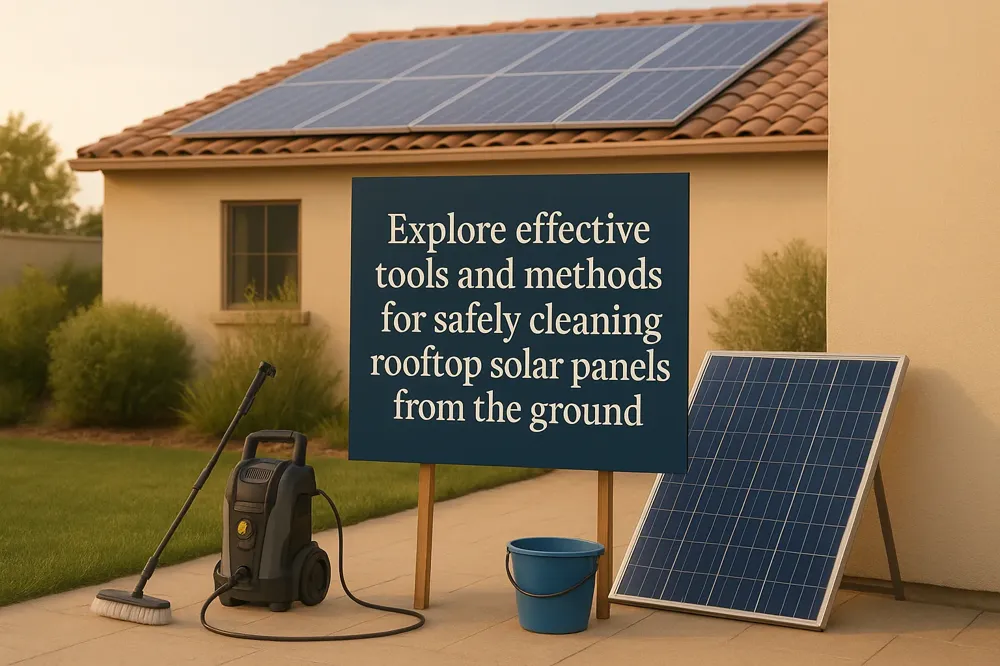
How can solar panels be cleaned from the ground without using ladders?
Solar panels can be safely cleaned from the ground using specialized extendable tools designed to reach rooftop panels without the risks associated with climbing ladders. Long-handled soft-bristle brushes or water-fed poles with gentle brush attachments are ideal for this purpose. These tools allow homeowners or maintenance professionals to remove dirt, dust, pollen, and bird droppings effectively while minimizing safety hazards (clean solar panels safely.
To maximize cleaning effectiveness, it is advisable to perform cleaning in cooler parts of the day such as early morning or late evening. This timing prevents rapid evaporation of water, which can create streaks that reduce panel efficiency (best time to clean solar panels. Using clean, preferably deionized or rainwater, avoids mineral deposits that might otherwise accumulate and impair panel performance (avoiding hard water deposits.
For especially stubborn debris or oily stains that resist gentle washing, spot cleaning with isopropyl alcohol applied carefully with a soft cloth or brush is an effective method. This can often be accomplished from the ground using extension poles with appropriate attachments, removing the need for rooftop access (solar panel cleaning procedure.
Ground-level cleaning maintains panel integrity and safety by avoiding risky rooftop work. This approach aligns with best practices promoting safety, efficiency, and preserving warranties, which often require careful handling and professional maintenance (professional solar maintenance services. Using these methods ensures that solar panels remain clean and efficient while protecting both the investment in solar technology and property owner safety (Protecting solar investment.
Automatic and Robotic Solar Panel Cleaning Systems
Are there automatic systems available for cleaning solar panels on the roof?
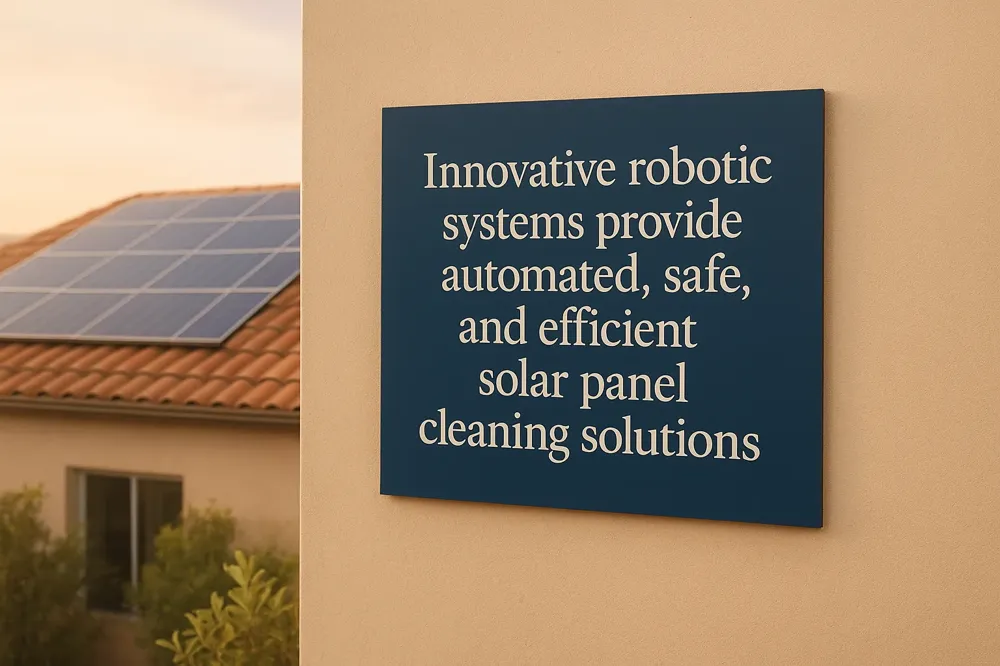
Yes, automatic cleaning systems for solar panels, including rooftop installations, are increasingly available and offer innovative options to maintain panel efficiency safely and effectively. For more information on automatic solar panel cleaning systems, see our detailed guide.
Types of Automatic Cleaning Systems
Automatic cleaning robots often employ gentle microfiber brushes combined with airflow to remove dust and debris without using water. This approach is particularly useful in dry or water-scarce environments, preventing water stains and mineral deposits. Some robots are solar-powered, making them self-sufficient and environmentally friendly. Learn about solar panel cleaning techniques and robotic solar panel cleaning.
Water-based spraying systems are another solution, delivering controlled rinsing with soft sprays to wash away grime without the risks associated with high-pressure washing. Semi-automatic robotic cleaners integrate these sprayers with cleaning brushes and are suitable for large installations. See solar panel cleaning guide for more on these technologies.
Emerging technologies include vibration cleaning methods that mechanically shake dust off panels, and nanoparticle coatings that repel dirt, thus reducing cleaning frequency. Such advanced techniques enhance sustainability by minimizing water use and chemical detergents. Explore cutting-edge research on vibration-based dust removal for solar panels.
Benefits of Automation
Automation significantly improves safety by reducing the need for manual rooftop cleaning, lowering fall and electrical hazards. It ensures consistent, thorough cleaning schedules, which helps sustain solar panel performance and maximizes energy output. For tips on safe solar panel cleaning and maintenance, this resource offers excellent advice.
Adopting robotic and automatic cleaning systems protects solar investments, extends panel lifespan, and supports eco-friendly maintenance practices aligned with property value preservation and curb appeal enhancement. Read about professional solar maintenance services and protecting solar investment.
These systems are well-suited for homeowners in dust-prone regions like Goleta, California, providing efficient cleaning solutions that accommodate local environmental challenges without compromising safety or panel integrity. Refer to solar panel maintenance in Goleta, California for more tailored advice.
Benefits and Costs of Professional Solar Panel Cleaning
What are the benefits and cost considerations of professional solar panel cleaning services?
Professional solar panel cleaning services bring significant advantages for homeowners looking to maximize the return on their solar investment. One of the primary benefits is the improvement in energy efficiency. Over time, dust, dirt, bird droppings, and other debris accumulate on panels, blocking sunlight and reducing their output by up to 7% or more in some cases. Expert cleaning removes these obstructions, ensuring your panels operate at peak efficiency, which can translate to noticeable energy savings.
Regular professional solar maintenance also helps extend the lifespan of solar systems. Accumulated grime can cause micro-damage or overheating, which may shorten panel longevity or lead to costly repairs. Cleaning coupled with professional solar panel inspection helps catch issues like cracks, pests, or inverter faults early, preserving your system’s long-term functionality.
In terms of cost, pricing varies based on system size, panel quantity, roof accessibility, and regional factors. Typically, homeowners can expect to pay between $8 and $25 per panel, or approximately $150 to $300 per cleaning visit. While this may seem like an upfront investment, the boosts in energy production and reduced repair expenses make professional solar panel cleaning cost-effective over time.
Safety is a crucial consideration, especially for rooftop installations common in residential areas. Professionals have the right equipment and training to clean panels without risking falls or electrical hazards. They also use recommended non-abrasive, eco-friendly solutions and appropriate water types to avoid damaging panels or voiding warranties.
Overall, choosing professional solar panel cleaning services ensures safe, thorough maintenance that protects your solar investment, enhances curb appeal, and supports sustainable energy production for many years.
Impact of Regular Cleaning on Solar Panel Efficiency and Maintenance
How does regular cleaning affect solar panel efficiency and maintenance?
Regular solar panel cleaning and maintenance is vital to maintaining their optimal performance. Over time, panels accumulate dust, dirt, bird droppings, pollen, and other debris that obstruct sunlight from reaching the photovoltaic cells. This buildup can cause efficiency losses ranging from 15% to 30%, diminishing the energy output and reducing the return on investment.
Cleaning panels routinely—generally once or twice a year, with more frequent cleanings in dust-prone or polluted regions like Goleta, California—not only restores energy production levels but also helps prevent long-term physical damage. Dirt and grime can cause corrosion or degrade protective coatings, potentially shortening the lifespan of the panels.
Furthermore, regular solar panel maintenance provides an opportunity to inspect electrical wiring, mounting hardware, and other components for signs of wear, corrosion, or damage. Early detection of such issues can prevent costly repairs and system downtime. For rooftop panels, professional solar panel cleaning is strongly advised to ensure thoroughness, safety, and to uphold warranty coverage.
Keeping solar panels clean and well-maintained safeguards your investment by maximizing energy generation, extending system longevity, and maintaining warranty validity—all of which contribute to sustained property value and promote sustainable energy use.
Accessing Educational Resources and Avoiding Unsafe Practices
Where can consumers find educational resources or checklists for solar panel maintenance?
Homeowners and property managers seeking to maintain solar panels effectively should consult trusted sources such as official solar energy company websites, panel manufacturers’ portals, and clean energy organizations. These platforms often provide downloadable PDFs, maintenance checklists, and instructional videos tailored to ensure proper care and safety. For instance, materials like the Solar panel cleaning and maintenance guide detail inspection steps covering system condition, installation integrity, and electrical safety. Additionally, local utilities and government renewable energy programs may supply guidance specific to regional climate factors and regulations. Utilizing such authoritative resources helps optimize solar panel performance and longevity while safeguarding warranties.
Is it safe to use Dawn dish soap to clean solar panels?
Cleaning solar panels with Dawn or similar dish soaps is generally discouraged. These soaps, designed to tackle grease and food residues, can leave behind soapy residues that are challenging to rinse completely. This residue buildup may degrade the panels’ surface coatings or hinder sunlight absorption, ultimately reducing system efficiency. Instead, homeowners should opt for mild, non-abrasive detergents specifically recommended for solar panels or eco-friendly alternatives that minimize residue. For more details on safe cleaning methods, see The dos and don’ts of solar panel cleaning.
What cleaning materials or methods should be avoided when cleaning solar panels?
Avoid abrasive or harsh cleaning tools such as hard brushes, steel wool, or scrubbing pads, as these can scratch or damage the panel’s protective glass. High-pressure water sprayers and chemical cleaners containing bleach, ammonia, or strong detergents should also be avoided because they risk degrading surface coatings and seals. Likewise, using untreated hard water can leave mineral deposits that block sunlight and reduce energy capture. Safe cleaning methods prioritize soft, non-abrasive sponges or microfiber cloths combined with mild, biodegradable soaps or deionized water to protect panel surfaces and maintain peak performance. For guidance on safe solar panel cleaning tools and techniques, visit What is the best way to clean solar panels?.
Maintaining solar panels with proper materials and by following expert-recommended guidelines not only preserves the investment but also enhances energy efficiency and durability over many years. For comprehensive maintenance and cleaning advice, see the Solar panel cleaning and maintenance guide.
Protecting Your Solar Investment with Safe Cleaning Practices
Key Safety Tips for Solar Panel Cleaning
Maintaining safety during solar panel cleaning is paramount. Always shut down the solar system before starting to prevent electrical shock hazards. Avoid climbing on rooftops without safety equipment such as harnesses and stable ladders. Use soft, non-abrasive brushes or sponges with mild soapy water and avoid harsh chemicals or high-pressure washers that may damage the panels or void warranties.
Importance of Regular Maintenance
Regular cleaning and inspection ensure the panels operate at peak efficiency by removing dust, dirt, and debris. In regions like Goleta, where dust accumulation is common, cleaning at least twice a year is recommended. Routine checks for damage, pest activity, and inverter performance protect the system from costly repairs and extend its lifespan.
Benefits of Professional Services
Hiring professionals guarantees thorough cleaning with proper safety protocols and specialized equipment like deionized water systems or robotic cleaners. Professionals also provide detailed inspections, firmware updates, and can identify issues early, preserving warranty coverage and maintaining system reliability.
Eco-Friendly and Effective Cleaning
Sustainable cleaning solutions such as biodegradable soaps and water-efficient methods help minimize environmental impact, aligning with eco-conscious values. Employing professional services that use these methods supports both the environment and long-term property investment.
Embracing safe, regular, and eco-friendly solar panel maintenance ultimately protects your investment, optimizes energy production, and enhances property value and curb appeal.