


Introduction
The Central Paradox of Pressure Washing
Pressure washing offers an undeniable benefit: it is an incredibly effective tool for maintaining the beauty and integrity of your home or business. It can strip away years of grime, mold, and algae in a fraction of the time it would take to scrub by hand, helping to preserve property value and enhance curb appeal. Yet, this powerful cleaning force presents a paradox. Without careful management, the very process that cleans your surfaces can unintentionally harm the surrounding environment. The key to unlocking this paradox lies not in avoiding pressure washing, but in understanding and controlling its most significant environmental byproduct: contaminated runoff.
Why Runoff Is the Critical Issue
For property owners in Santa Barbara County, managing runoff is not just a best practice—it’s a crucial environmental responsibility. Our local storm drains and waterways are directly connected. When pressure washing sends dirty water across a driveway or sidewalk, that water doesn’t just disappear. It flows into storm drains, which channel it, untreated, directly into creeks, rivers, and ultimately the ocean. This means any oil, grease, paint flecks, soil, or harsh chemicals washed from your property can quickly become a pollutant in our shared aquatic ecosystems. Responsible management protects these vital local resources and ensures your cleaning project doesn’t have unintended consequences.
Defining Pressure Washing Runoff and Its Journey
Pressure washing runoff is the wastewater generated during cleaning. It contains everything the high-pressure stream dislodges, which typically includes:
- Surface contaminants: Dirt, sand, pollen, and bird droppings.
- Biological growth: Mold, mildew, algae, and their spores.
- Chemical residues: Detergents, soaps, and degreasers used to boost cleaning power.
- Man-made pollutants: Motor oil drips, antifreeze, paint chips, and metals from vehicle traffic or older building materials.
From your property, this contaminated mix follows the path of least resistance, often flowing into a nearby street gutter and entering a storm drain. Unlike water that goes down your household sink or toilet, water entering a storm drain receives no treatment at a sewage plant. It travels through an underground network and discharges directly into local water bodies, carrying its pollutant load with it.
Transforming Service Through Responsible Practices
The good news is that with informed methods, pressure washing can be transformed into a truly eco-friendly service. The environmental impact is not inherent to the tool but is determined by how it is used. Professional services that prioritize sustainability adopt a proactive approach centered on three core principles: prevention, control, and mindful product selection. By sweeping surfaces first, using containment mats to catch wastewater, choosing biodegradable cleaning agents, and properly disposing of collected water, the cleaning power of pressure washing is harnessed while its environmental footprint is minimized. This responsible approach allows you to enjoy a clean, well-maintained property with the confidence that you are also protecting Santa Barbara County’s natural beauty.
Unmasking the Invisible Threat: What’s Really in Your Runoff?
The Pollutants Washed From Common Surfaces
When you pressure wash your property, you’re not just removing dirt. You’re mobilizing a complex mix of contaminants that have settled on surfaces over time. This invisible slurry includes oil and grease from vehicles, toxic chemicals from household cleaners or industrial processes, fragments of peeling paint, biological growths like mold and algae, phosphate-rich detergents, and even heavy metals. Each component poses a distinct threat to the local environment.
The Direct Path to Untreated Waterways
In our region, a critical fact is often overlooked: most storm drains provide zero to minimal water treatment. Runoff from your driveway or sidewalk doesn’t go to a treatment plant. Instead, it flows directly from the gutter through a network of storm drains that discharge, untreated, into local rivers, lakes, and ultimately, our coastal waters and groundwater. This direct pipeline means every chemical and particle washed away has an immediate pathway to sensitive aquatic habitats.
Consequences for Aquatic Ecosystems
The impact of this polluted runoff is severe and multifaceted. Sediment clouds the water, blocking sunlight and hindering aquatic plant growth while clogging the gills of fish. Nutrients from soaps and detergents trigger massive algal blooms. As these blooms die and decompose, they rob the water of dissolved oxygen, creating ‘dead zones‘ where fish and other organisms cannot survive. Oils, grease, and toxic chemicals poison aquatic life directly, entering the food chain and causing long-term ecological damage.
Special Risks: Lead Paint and PCBs
Properties built or renovated before 1978 may have exterior surfaces coated with lead-based paint. Pressure washing can dislodge toxic lead-containing paint chips, which then enter the stormwater system. Ingestion of this lead-contaminated dust or soil poses serious health risks, particularly to children. Furthermore, structures built between approximately 1950 and 1979 may contain polychlorinated biphenyls (PCBs) in caulking, grout, or sealants. PCBs are toxic, cancer-causing chemicals that persist in the environment. Disturbing these materials during cleaning creates hazardous waste that requires special handling and disposal, far beyond typical wastewater management.
| Surface Type | Common Contaminants | Primary Environmental Risk |
|---|---|---|
| Driveways & Parking Lots | Motor oil, grease, brake dust, antifreeze | Poisons aquatic life, creates oily film on water surfaces |
| Building Siding & Roofs | Mold, algae, dust, paint chips (potential lead) | Depletes oxygen, introduces toxins, clouds water |
| Decks & Fences | Mildew, dirt, cleaning solution residue | Harms plants, alters soil chemistry, pollutes groundwater |
| Gutters & Downspouts | Leaf debris, sediment, animal waste, heavy metals | Carries nutrients causing algae blooms, clogs natural systems |
The Eco-Friendly Toolkit: Products and Practices for a Safer Clean
The Science Behind Green Cleaning Solutions
Professional-grade eco-friendly detergents are engineered for powerful cleaning with minimal environmental footprintenvironmental impact of pressure washingeco-friendly pressure washingenvironmentally-friendly pressure washing solutionsustainable pressure washing serviceseco-friendly pressure washing practicesgreen pressure washing solutions. Their effectiveness hinges on several key characteristics: they are biodegradablebiodegradable pressure washing soaps, non-toxicnon-toxic cleaning solutionschemicals that are biodegradable and low in VOCsbiodegradable detergents for pressure washingenvironmentally safe detergents for pressure washingeco-friendly detergents for pressure washing, and phosphate-freephosphate-free detergents for pressure washingphosphate-free soaps for pressure washing. Many are also highly concentratedconcentrated pressure washing cleaner, requiring as little as half an ounce per gallon of water. This concentration reduces product use, minimizes packaging waste, and offers significant cost savings over less efficient alternatives. These formulations are designed to work effectively in both hard and soft water without leaving residues, ensuring a streak-free finish on surfaces ranging from concrete and siding to industrial equipment. Critically, top-tier products meet or exceed stringent health and safety standards set by bodies like the EPA and OSHApressure washing cleaner that meets OSHA and EPA standardsEPA-compliant biodegradable detergents documentation, providing peace of mind for both applicators and property owners.
Why ‘Biodegradable’ Doesn’t Mean ‘Drain-Safe’
A common misconception is that biodegradable detergents can be safely washed down storm drainsdo not discharge green detergents to storm drains. This is a dangerous assumption. While these products break down naturally over time, they can still be toxic to aquatic lifebiodegradable detergents are still toxic to aquatic lifeeco-friendly pressure washing chemicals for protecting biodiversitybiodegradable cleaners for house washing in the short term, potentially causing fish kills and depleting oxygen in waterwayseffects of pressure washing on aquatic lifepressure washing runoff harms aquatic ecosystems. The guiding principle is that storm drains are for rainwater only—’Only Rain Down the DrainOnly Rain Down the Drain principle.’ Even green soaps can pollutepressure washing soap environmental impact. Therefore, proper wastewater containment and disposalManaging pressure washing runoff to prevent water pollutionproper disposal of pressure washing wastewater are non-negotiable steps, even when using the most environmentally friendly cleaning agents. Responsible disposal typically involves capturing runoff and directing it to the sanitary sewer systemdispose of pressure washing wastewater to sanitary sewersanitary sewer discharge for wash water with proper approval, never into a storm drainprevent pollutants from entering storm drainsprevent pressure washing contaminants from entering storm drains.
Advanced Equipment for Efficiency and Protection
Modern eco-friendly pressure washing relies on specialized equipment designed to conserve resources and prevent damageeco-friendly pressure washing equipmentsustainable pressure washing equipment. Key technologies include:
- Low-Flow Systems & Variable Pressure Controls: Operating within an optimal range of 1,500 to 2,500 PSIlow-pressure systems 1500-2500 PSIpressure washing PSI explained for most residential and commercial jobs prevents surface erosion and reduces water waste. High-efficiency motors can cut energy use by up to 50%high-efficiency motors reduce energy consumption by up to 50%.
- Surface-Specific Nozzles: Nozzle selection is critical. A 15-25 degree tipnozzle selection for concrete and brick: 15-25 degrees is ideal for robust surfaces like concrete, while a wider 40-65 degree fannozzle selection for wood and vinyl: 40 degreessoaping nozzles with reduced pressure for delicate materials is necessary for delicate materials like wood, vinyl siding, or painted surfaces to avoid stripping or etching.
- Water Reclamation Systems: Closed-loop systemsClosed-loop water recycling systemwater reclamation systems for pressure washing can capture, filter, and reuse up to 90% of wastewater, slashing freshwater consumption by 60-85%reduce water consumption by 60-85% and ensuring contaminants do not enter the environmentprevent contaminated runoff.
The Gentle Power of Soft Washing
For delicate surfaces like roofs, stucco, and older siding, traditional high-pressure washing can cause significant damagesurface damage from improper pressure washing. Soft washing presents a superior, eco-friendly alternativesoft washing as an eco-friendly alternativesoft washing technique for delicate surfaces. This technique uses specialized, biodegradable cleaning solutionssoft washing with biodegradable detergents applied with low-pressure nozzles. The detergents do the work of breaking down mold, algae, and organic stains, which are then gently rinsed away. This method is highly effective at eradication and provides longer-lasting results than pressure alonegentle cleaning with eco-friendly detergents, all while using significantly less water and protecting the structural integrity of your home.
Common Eco-Friendly Practices & Product Comparison
| Practice | Key Benefit | Example Application |
|---|---|---|
| Using Biodegradable Detergents | Protects aquatic life & soil healthbenefits of eco-friendly detergents | Cleaning driveways with oil stainsenvironmentally safe degreasers for asphalt cleaning |
| Implementing Water Reclamation | Drastically reduces freshwater usagewater conservation in pressure washing | Large commercial parking lot cleaningwater reclamation systems for pressure washing |
| Employing Soft Wash Techniques | Safely cleans delicate surfacescorrect pressure settings for delicate surfaces | Removing algae from a roofpressure washing cleaner for roofs |
| Selecting Proper Nozzle Angles | Prevents surface damage and conserves waternozzle selection to prevent surface damage | Washing painted wood deckingpressure washing solution for residential and commercial use |
| Containing All Runoff | Prevents pollutants from entering waterwayspressure washing wastewater management | Cleaning near storm drains on a sidewalkblock storm drains when degreasers are requiredcontain and collect wastewater if chemicals are used |
Contain, Collect, Dispose: The Non-Negotiable Rules for Wastewater
What should be done with the dirty water from pressure washing?
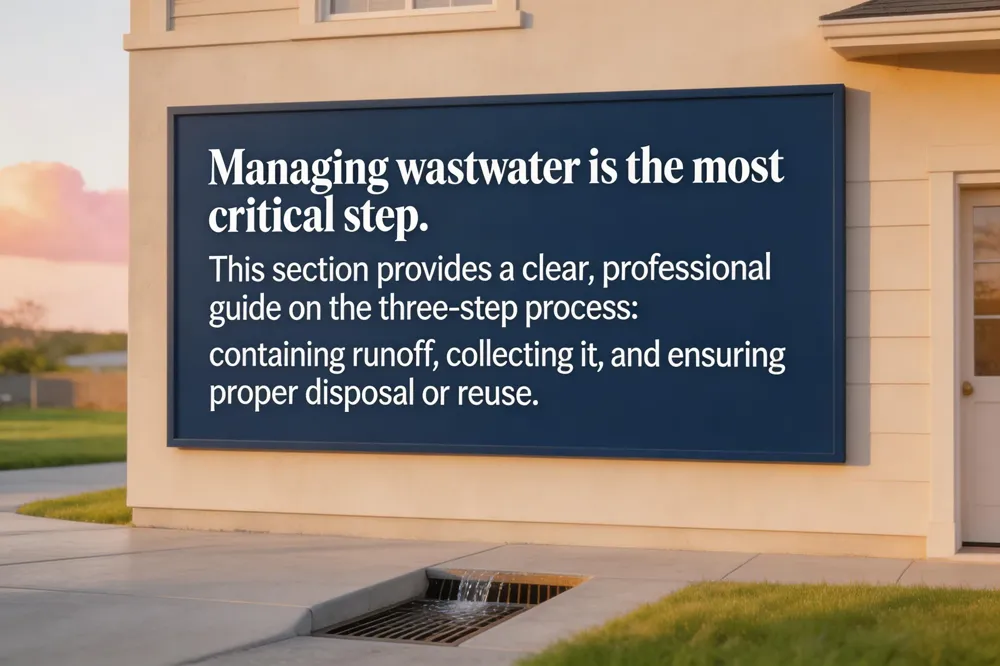
The dirty water, or washwater, from pressure washing is not just soapy water; it’s a pollutant mix containing oils, grease, chemicals, paint flecks, and sediment. Allowing this contaminated water to flow into a gutter, street, or storm drain is illegal in many municipalities. Storm drains typically lead directly, with no treatment, to local rivers, lakes, or the ocean, where these pollutants harm aquatic life and water quality.
Professional services follow a strict process to manage this wastewater responsibly. The first step is always containment. Using flexible berms, collapsible pools, or absorbent drain covers and mats prevents the water from ever reaching a storm drain. The goal is to create a controlled area where all runoff is trapped.
Once contained, the water must be collected. Wet vacuums, sump pumps, or specialized vacuum recovery systems are used to suction the water into holding tanks. This allows for proper handling and prevents the pollutants from lingering and washing away later.
The final, critical step is disposal. Acceptable methods depend on local regulations and the water’s contents. Common options include pumping the collected water into the property’s sanitary sewer system (like a cleanout or toilet) after obtaining necessary permissions. For large jobs or highly contaminated water, it may be transported by a licensed hauler to a professional treatment facility. Advanced service providers also use on-site filtration and reclamation systems to clean and reuse the water, drastically reducing waste.
How can pressure washing reduce its environmental impact?
A professional, eco-conscious pressure washing service adopts a holistic approach to minimize its environmental footprint, starting before the washer is even turned on. Thorough site preparation is a cornerstone. Sweeping or using blowers to remove dry debris like leaves and dirt prevents these materials from becoming part of the contaminated runoff. For oil or grease stains, applying absorbent materials like cat litter or pads allows for a dry cleanup first, greatly reducing the volume of polluted water generated.
The choice of cleaning agents is paramount. Using plain, high-pressure water is effective for many jobs and eliminates chemical risk. When detergents are necessary for tough grime, algae, or mold, professional services opt for certified biodegradable, phosphate-free, and non-toxic solutions. It’s important to note that even “green” or biodegradable soaps can harm aquatic life if discharged directly into waterways, so their use must still be paired with full wastewater containment.
Investing in modern, efficient technology is another key strategy. High-efficiency pressure washers and adjustable nozzles use less water per minute than a standard garden hose, targeting cleaning power precisely. Electric or battery-powered models reduce noise and eliminate on-site fossil fuel emissions. For the highest level of sustainability, leading contractors employ closed-loop water reclamation systems that filter and recycle up to 90% of the water on-site, conserving a vital resource.
Finally, responsible services are vigilant about special hazards. On older buildings, they check for lead-based paint (pre-1978) or toxic materials like PCBs in caulking. Wastewater from cleaning these surfaces is handled as potentially hazardous waste, requiring testing and disposal by licensed professionals to prevent soil and groundwater contamination.
The Professional’s Guide to Wastewater Management
Following the law means adhering to the “Only Rain Down the Drain” principle. This isn’t just a best practice; it’s a regulatory requirement to protect community water sources. The process is a clear, three-step chain: Contain, Collect, Dispose.
Containment Methods:
This creates a physical barrier between the work area and the environment. Options include rubber or PVC berms laid around the perimeter, absorbent socks placed at drain inlets, and large collapsible pools or tanks that catch runoff directly.
Collection Equipment:
Once water is pooled, it must be removed. Submersible pumps transfer water to storage tanks, while industrial wet/dry vacuums are ideal for smaller or final cleanup. Integrated vacuum recovery systems on service trucks allow for continuous collection during washing.
Disposal Pathways:
| Disposal Method | Best For | Critical Notes |
|---|---|---|
| Sanitary Sewer Discharge | Water with mild soaps, no oils/grease | Always get property owner & municipal permission first; may require pre-treatment. |
| Off-site Treatment Facility | Large volumes, oily water, unknown contaminants | Requires a licensed hazardous waste hauler; proper documentation is mandatory. |
| On-site Filtration & Reuse | Eco-focused projects, water-scarce areas | Uses multi-stage filters; can recycle most water, reducing freshwater use by over 60%. |
| Irrigation/Soakaway | Very limited cases (e.g., plain rinse water) | Never for water containing any soap, chemical, oil, or grease; check local codes. |
Handling Hazardous Wastewater:
Washwater can be classified as hazardous if testing reveals high levels of petroleum, heavy metals, or toxic chemicals from surfaces. In these cases, standard disposal is illegal. The water must be collected, documented, and transported by a licensed hazardous waste carrier to an authorized disposal facility. Professional services maintain records of such disposals for compliance audits.
Essential Pre-Washing Steps:
A clean job starts with a dry clean. Sweep loose dirt and debris into the trash. Use absorbent pads or granular absorbents on fresh oil stains. For areas like loading docks or dumpster pads, dry cleanup is often sufficient, eliminating the need for wet washing altogether. These steps are the first and most effective way to reduce the volume and toxicity of the wastewater created.
| Key Wastewater Management Concepts | Description | Why It Matters |
|---|---|---|
| “Only Rain Down the Drain” | Fundamental regulatory principle. | Storm drains flow untreated to natural waterways; compliance prevents fines and pollution. |
| Containment | Physically blocking wastewater flow. | Prevents pollutants from entering the environment at the source. |
| Professional Disposal | Using approved, permitted pathways. | Ensures contaminants are neutralized and do not harm ecosystems or infrastructure. |
| Site Preparation | Dry cleaning before any water is used. | Reduces the amount of contaminated water generated, saving time and resources. |
| Hazardous Waste Protocols | Special handling for toxic contaminants. | Protects groundwater and community health from long-term pollution risks. |
The Professional Advantage: Why Expertise Matters for the Environment
The Complexity of Local Regulations
Navigating municipal codes for wastewater disposal and cleaning practices is a complex task that varies between cities. Professionals invest significant time in understanding local washwater ordinances to ensure full compliance. This prevents potential fines and, more importantly, guarantees that all pressure washing runoff is managed according to the strictest local environmental regulations for pressure washing to protect our watersheds. For property owners, this expertise provides peace of mind and shields them from liability.
Advanced Technology in Action
Modern professional services utilize specialized equipment designed for sustainability. Closed-loop water recycling systems can capture, filter, and reuse up to 90% of wastewater, drastically cutting consumption. High-efficiency motors in newer machines reduce energy use by up to 50% compared to older models. This energy-efficient pressure washing technology not only conserves vital resources but also enhances cleaning precision and effectiveness.
The Importance of Certifications
Credentials like the Certified Professional Power Washer (CPPW) from the Power Washers of North America signify rigorous training. Technicians with this certification are educated in eco-friendly detergent use, advanced water containment methods, and surface-specific cleaning protocols. This formal training ensures every job adheres to industry best practices for environmental safety and surface preservation.
Case-Specific Knowledge
Professionals are trained to handle unique scenarios that pose significant environmental risks. This includes managing grease runoff from restaurant roofs, preventing construction site sediment from entering storm drains, and correctly identifying whether loading dock trench drains connect to sanitary or storm systems. This specific knowledge is crucial for preventing water pollution from pressure washing contaminants in complex situations.
The Long-Term Environmental Benefit
Regular professional cleaning maintains the integrity of surfaces like siding, concrete, and wood. By removing damaging mold, algae, and grime, it prevents premature erosion, paint failure, and material decay. This extends the lifespan of your property’s exterior, reducing the need for resource-intensive repairs or replacements and minimizing long-term waste.
What is eco-friendly pressure washing?
Eco-friendly pressure washing is a professional cleaning method that prioritizes environmental protection and resource conservation. It achieves a powerful clean by using biodegradable, non-toxic detergents that are safe for local plants, pets, and watersheds. The practice also incorporates water-saving pressure washing high-efficiency equipment and techniques, such as precise nozzle use, to minimize overall consumption. A critical component is the proper containment, treatment, and disposal of wastewater to prevent pollutants in pressure washing runoff from entering storm drains and local waterways. Ultimately, it delivers outstanding results for your property’s curb appeal while safeguarding the health of our Santa Barbara County community and ecosystem.
Is pressure washing environmentally friendly?
Pressure washing can be environmentally friendly when performed responsibly, but traditional methods pose risks like high water and electricity use in pressure washing and chemical runoff from pressure washing. By adopting eco-friendly practices, these impacts are minimized. Using biodegradable detergents, reclaiming and reusing water, and avoiding runoff into storm drains are key steps. Additionally, testing with plain water first or using soft-washing techniques can reduce chemical use. Ultimately, choosing a professional service that prioritizes sustainable methods protects both your property and the local Santa Barbara environment.
| Professional Advantage | Environmental Benefit | Key Practice or Technology |
|---|---|---|
| Regulatory Compliance | Prevents waterway pollution | Knowledge of local municipal codes and permits |
| Resource Conservation | Reduces water waste by 60-90% | Closed-loop water recycling and reclamation systems |
| Certified Expertise | Ensures safe chemical and runoff handling | CPPW and OSHA safety training for technicians |
| Scenario Management | Contains hazardous specific contaminants | Protocols for grease, sediment, and paint chip runoff |
| Preventative Maintenance | Lowers long-term material resource use | Regular cleaning to extend surface lifespan |
Your Action Plan: Simple Steps for Responsible Homeowner Pressure Washing
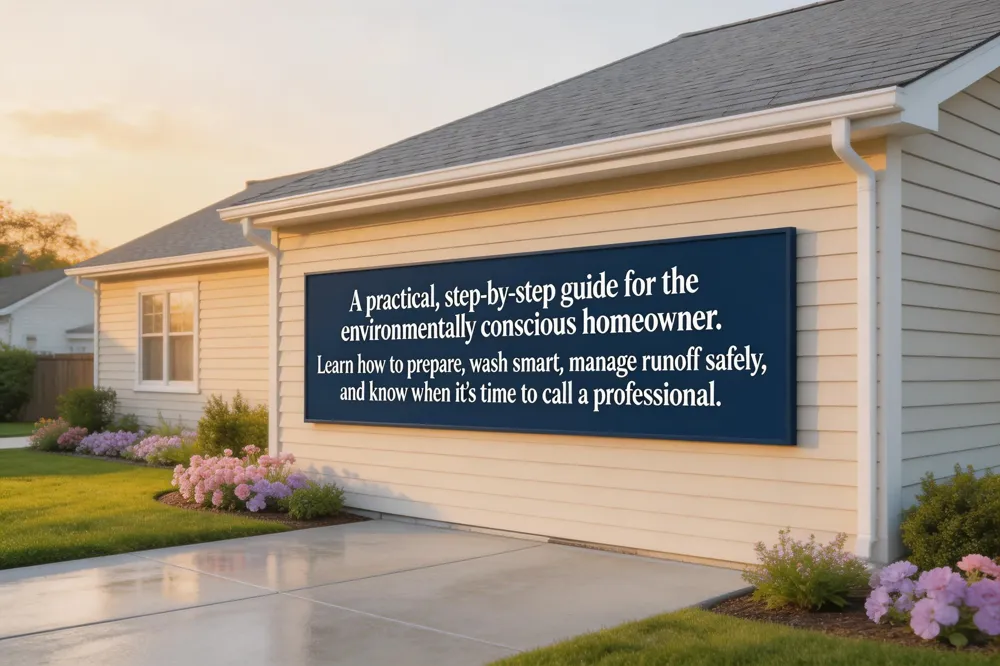
Your Action Plan: Simple Steps for Responsible Homeowner Pressure Washing
Pressure washing your home’s exterior can restore curb appeal and protect your investment, but doing it responsibly is key to safeguarding our local environment in Santa Barbara County. A thoughtful plan ensures effective cleaning while minimizing water and electricity use in pressure washing and preventing polluted runoff from entering storm drains. The following steps provide a clear, actionable guide for homeowners.
Pre-cleaning checklist
Before you turn on the pressure washer, proper preparation is crucial. Start by sweeping or blowing away loose dirt, leaves, and debris from driveways, walkways, and siding. This dry cleanup prevents these materials from becoming part of the wastewater stream. For oil or grease stains, apply an absorbent material like cat litter or sand, let it sit, then sweep it up and dispose of it in the trash. To protect your landscaping, thoroughly pre-soak plants, grass, and shrubs with a garden hose; this dilutes any potential chemical exposure. For delicate flowers or vegetables, consider covering them with plastic tarps as an extra barrier.
Smart washing techniques
Efficiency is the goal. Begin by testing the surface with plain water at a low pressure to see if it provides adequate cleaning, avoiding unnecessary chemicals. Always use the minimum pressure setting (PSI) that gets the job done to prevent surface damage from improper pressure washing. Employ a consistent, sweeping motion while maintaining a safe distance—typically 3-4 feet for siding. Make use of the machine’s shut-off trigger between passes and when moving to a new area; this simple habit can save gallons of water per minute. Selecting the correct nozzle is also vital: wide-angle nozzles for delicate surfaces (e.g., 40-degree) are gentler and use less water, making them suitable for most household surfaces.
Directing runoff safely
Controlling where the dirty water goes is perhaps the most critical environmental step. Never allow wastewater to flow into a street gutter or storm drain, as these often lead directly to local creeks and the ocean untreated. Before starting, identify and temporarily block nearby storm drains using specially designed mats, absorbent socks, or even heavy towels. If you are using only water (no soaps or chemicals), you can safely direct the runoff onto a permeable landscaped area like your lawn, where it can naturally filter into the ground. If you’ve used any cleaning agents, you must contain and collect all wastewater. Methods include using portable berms or collapsible pools to pool the water for later collection and proper disposal, such as pouring it slowly down a sanitary sewer drain (like a toilet or sink).
Knowing when to call a pro
While many cleaning tasks are DIY-friendly, certain situations warrant professional expertise. These include cleaning surfaces with old paint (pre-1978 homes may have lead paint, requiring special handling), large-scale projects like entire multi-story homes or expansive decks, and areas contaminated with grease, oils, or food waste (common near kitchens or driveways). Professionals have the equipment, such as water reclamation systems and industrial vacuums, to manage contaminated runoff fully. They are also knowledgeable about local Santa Barbara County regulations regarding wastewater disposal. If you are unsure about your property’s drainage connections or how to handle a specific stain, hiring a certified service is the safest choice for your property and the environment.
The power of preventative maintenance
Adopting a routine maintenance schedule is one of the most effective ways to reduce your long-term environmental impact. Regular, gentle cleaning—such as rinsing siding with a hose or spot-cleaning stains promptly—prevents the heavy buildup of mold, algae, and grime. This approach means that when a pressure wash is needed, it will be quicker, require less water, and potentially no harsh chemicals. By extending the time between intensive cleanings, you conserve significant amounts of water and energy over the years, while also preserving the lifespan and appearance of your home’s exterior surfaces.
Is it safe to pressure wash gutters?
Yes, pressure washing gutters is safe when done correctly with the right precautions. It’s essential to use a lower pressure setting—typically between 1,500 and 1,800 PSI—to avoid damaging the gutter material or fasteners. Equipping your pressure washer with specialized gutter cleaning extensions allows you to clean from the ground, greatly reducing the risk of ladder-related falls. Always wear protective eyewear and ensure stable footing when operating the equipment. For optimal safety and results, many homeowners in Santa Barbara County rely on professional services like ours, which use eco-friendly methods and proper techniques to protect your property.
| Step | Primary Action | Key Equipment/Tips | Environmental Benefit |
|---|---|---|---|
| Pre-Clean | Sweep debris, treat oil stains, protect plants. | Broom, absorbents, garden hose, tarps. | Reduces pollutant load in runoff, protects landscape. |
| Wash Smart | Use min. effective pressure, sweeping motion, trigger control. | Correct nozzle (e.g., 40°), steady pace. | Conserves water, prevents surface damage and repair waste. |
| Manage Runoff | Block storm drains, divert to lawn (water only), contain wastewater. | Drain mats, berms, collection pools. | Prevents chemicals & debris from polluting local waterways. |
| Call a Pro | For old paint, large areas, grease, drainage uncertainty. | Professional assessment, reclamation systems. | Ensures regulatory compliance, safe contaminant handling. |
| Maintain Regularly | Schedule light cleanings to prevent heavy buildup. | Hose, soft brush, prompt stain treatment. | Reduces future resource use for intensive cleaning sessions. |
Conclusion: A Clean Property, A Healthy Community
Reiterating the Shared Responsibility
Protecting our local waterways, from the creeks of Montecito to the coastline of Santa Barbara, is a community effort. Every pressure washing project creates runoff, and how we manage that runoff directly impacts our shared environment. When homeowners and professional services commit to responsible practices like containing wastewater, using eco-friendly products, and following local regulations, we all contribute to healthier rivers, oceans, and groundwater.
The Dual Reward of Responsible Cleaning
Responsible pressure washing delivers a powerful dual reward. It significantly enhances your property’s curb appeal, structural integrity, and resale value by safely removing damaging grime, mold, and stains. Simultaneously, by preventing chemical pollutants and debris from entering storm drains, these sustainable practices help preserve Santa Barbara County’s iconic natural beauty. This thoughtful approach to maintenance protects your investment and our cherished local ecosystems.
A Final Call to Action
Make sustainability a priority for every cleaning project. Partner with professionals who are trained in eco-friendly methods, use biodegradable detergents, and have systems for water reclamation and proper waste disposal. By choosing services that value environmental stewardship, you invest in a cleaner property and a healthier, more beautiful community for everyone.