


Why Concrete Care Matters in Santa Barbara
Santa Barbara’s coastal climate brings salty sea breezes, high humidity, and frequent fog, all of which accelerate concrete deterioration. Salt deposits and algae cling to driveways, promoting moisture retention, freeze‑thaw stress, and chloride‑induced corrosion of reinforcing steel. Regular pressure‑washing—ideally once a year—removes these contaminants, restores slip resistance, and prevents long‑term cracking. Eco‑friendly detergents and low‑pressure soft‑washing protect nearby vegetation and reduce water waste, complying with County water‑use regulations. By maintaining a clean, sealed surface, owners preserve curb appeal, protect structural integrity, and uphold property value in this sensitive coastal environment. Consistent cleaning also prolongs the lifespan of sealants, reducing future repair costs.
Understanding Pressure Washing Basics for Concrete
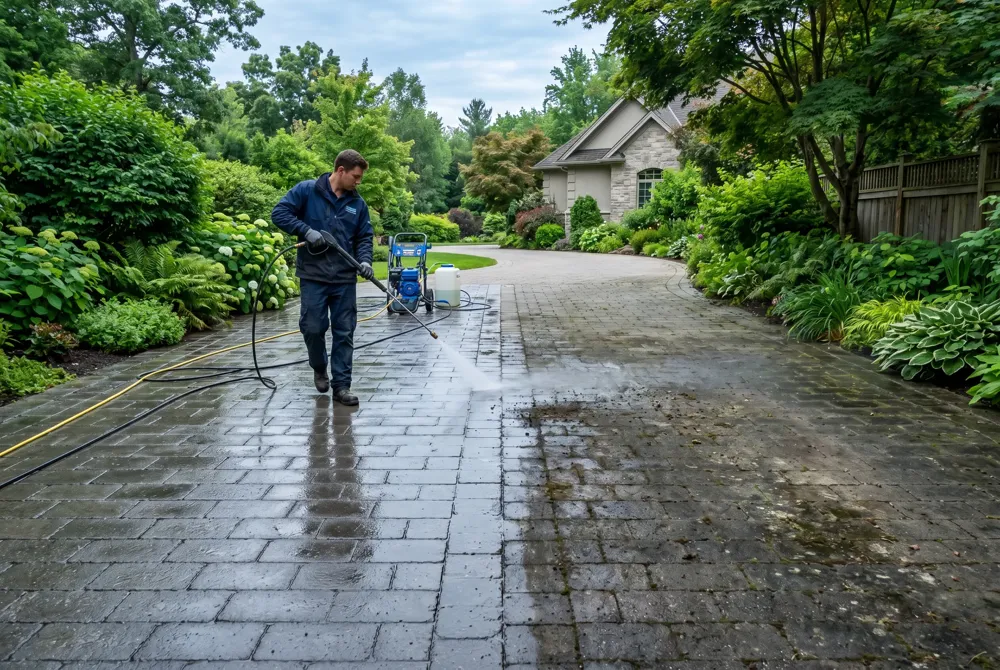
Pressure washing works by delivering a high‑pressure water jet that dislodges dirt, mold, algae, and automotive fluids from porous concrete. To clean effectively without harming the slab, balance pressure (psi) with flow (gpm): a 1,500‑2,500 psi setting with 2‑4 gpm is ideal for most residential driveways, while heavier stains may need 2,500‑3,000 psi. Nozzle choice is equally crucial; a 25° green nozzle provides a wide, even spray that removes grime while minimizing etching, whereas a 15° nozzle concentrates force for stubborn spots and a 40° white nozzle offers gentle cleaning for delicate or sealed concrete. Eco‑friendly cleaning agents—biodegradable, pH‑balanced detergents or enzyme‑based cleaners—lift oil, bird droppings, and algae without damaging the concrete matrix or nearby vegetation. Apply the solution, let it dwell 5‑10 minutes, then pressure‑wash at the recommended psi and distance (12‑18 inches). Rinse thoroughly, allow the surface to dry, and reseal if needed to preserve durability and curb appeal.
Concrete Strength and Durability: What the Science Says
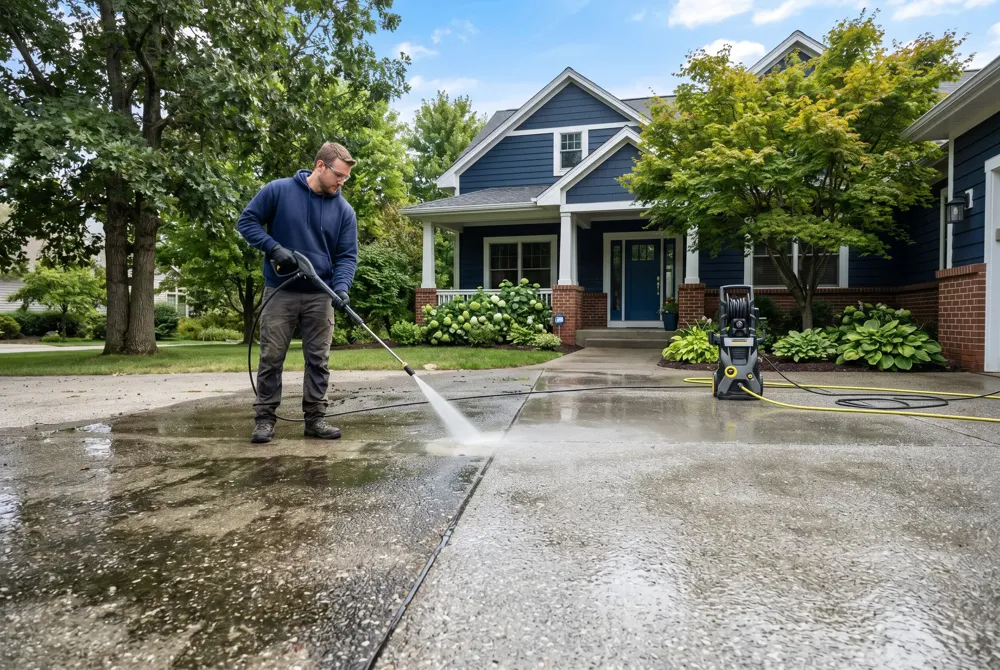
Pressure washing can be safe for concrete when the pressure, nozzle, and technique are matched to the material’s condition. Studies show that cleaning with 1,500‑3,000 psi—well below the typical compressive strength of 3,500‑4,500 psi—does not noticeably reduce strength, while pressures above 3,000 psi can cause micro‑cracking, spalling, and loss of surface sealant. Laboratory tests on aged slabs repeatedly washed at 1,200 psi showed a doubling of surface roughness without strength loss, whereas 4,000 psi produced measurable erosion and a drop in ultrasonic pulse velocity, indicating weakened concrete. Can you pressure wash year‑old concrete? Yes, after about 12 months the slab has cured enough to withstand low‑pressure cleaning (1,500‑2,000 psi) with a 25° nozzle, especially when a biodegradable degreaser is used. How does pressure washing affect concrete lifespan in California? Regular low‑psi cleaning removes algae, salt and mold that accelerate corrosion, extending service life by 5‑10 years, especially when followed by a sealant. How long does pressure‑washed concrete last? In Santa Barbara County a professional wash typically stays clean for 12‑18 months; sealing can push the interval toward the upper end.
Seasonal Timing and Frequency of Washes
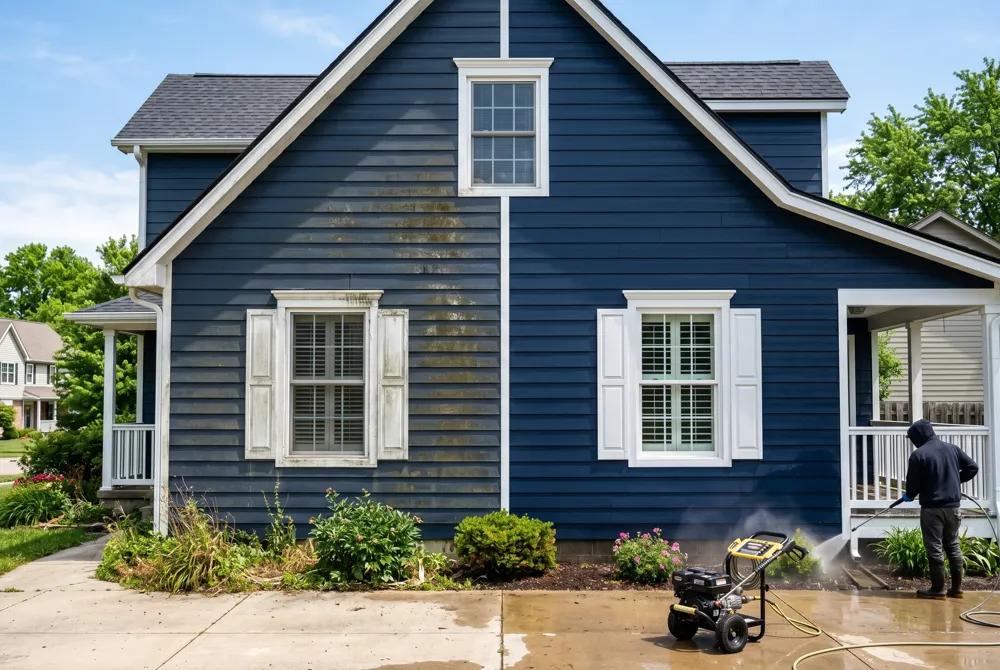
In Santa Barbara County, the sweet spot for driveway pressure washing is early spring—after the winter rains have cleared debris but before the summer heat dries cleaners. A A a wash is window light a to reset, a for high traffic heavy oil‑spills or shaded driveways a second fall wash or spot‑cleaning can be beneficial.
Can I power‑wash in October? Yes. October’s milder temperatures and lower humidity let water rinse quickly, preventing streaks and rapid algae regrowth. Choose a dry day, avoid near‑freezing evenings, and inspect gutters afterward.
How many times a year should you pressure wash your driveway? Generally once a year suffices; a second wash in fall is advisable for heavy‑use or shaded areas. Pair the wash with a professional sealant for lasting protection.
Pressure wash concrete before or after rain? Always when dry, sunny weather. Wet surfaces dilute cleaners, reduce penetration, and can cause streaks if rain follows. A clear, calm day yields the best, long‑lasting results.
Professional vs DIY: Cost, Equipment, and Safety
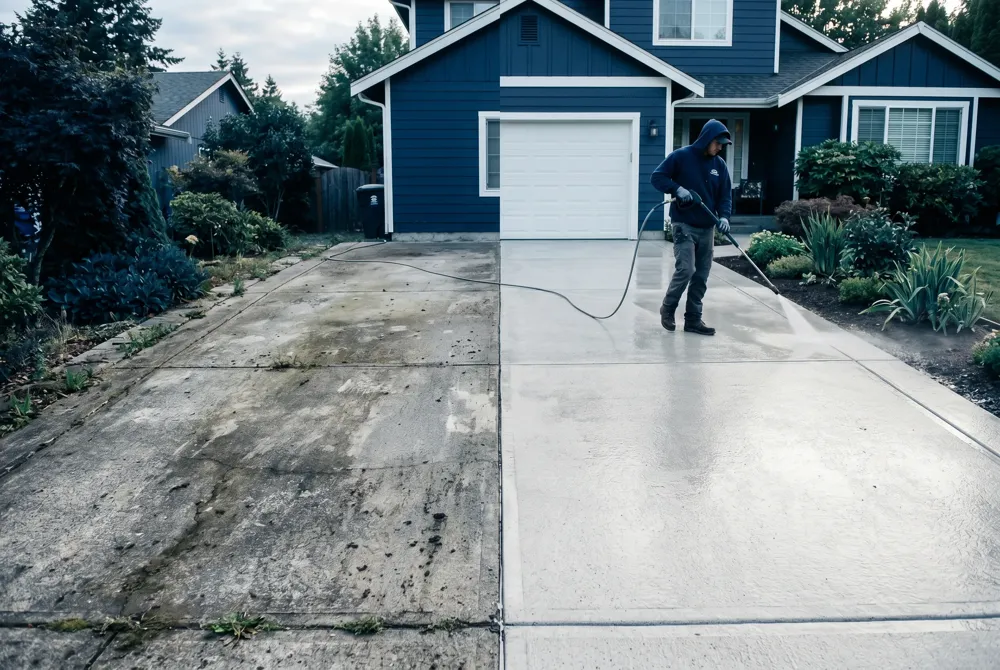
When deciding between hiring a pro and tackling pressure washing yourself, weigh cost, tools, and safety. In Santa Barbara County a professional full‑house wash costs $350‑$550 for a 2,000‑sq‑ft home, reflecting labor, calibrated equipment, and eco‑friendly detergents. DIY purchases can start at $150 for a basic electric unit, but add fuel, nozzle upgrades, and potential repair costs if damage occurs.
Equipment options – Battery‑operated washers (1,200‑1,800 psi) are perfect for quick patio or fence jobs and produce zero emissions, but they lack the power for deep oil stains. Cordless models like Sun Joe SJH‑112S (2,000 psi, 20‑min run) and Greenworks GPW1501 (1,500 psi, 30‑min run) balance portability and pressure for light concrete work. For heavier duty, the Karcher K5 (1,800 psi) or AR Blue Clean AR383 (1,900 psi) provide higher flow rates and interchangeable nozzles.
Safety precautions – Always wear goggles, gloves, and slip‑resistant shoes. Keep the wand 12‑15 inches from the surface, move it continuously, and start with the lowest effective PSI. Professionals know how to select the right nozzle (25° or 40° for concrete) and avoid damaging sealants or existing cracks.
FAQs
- How much should I charge to pressure wash a 2000 sq ft house? $350‑$550, depending on grime level and roof complexity; Goleta Home Services offers free estimates.
- Battery operated pressure washer – Ideal for light, quick clean‑ups; 1,200‑1,800 psi, cordless, eco‑friendly, but limited against stubborn stains.
- Cordless pressure washer reviews – Sun Joe SJH‑112S (2,000 psi, 20‑min), Greenworks GPW1501 (1,500 psi, 30‑min), Ryobi RWP150 (1,500 psi) are top picks for Santa Barbara homes.
- Best small pressure washer for home use – Karcher K5 (1,800 psi) offers power, detergent tank, and adjustable settings; Sun Joe SPX3000 and AR Blue Clean AR383 are solid alternatives.
Best Practices for Different Concrete Surfaces
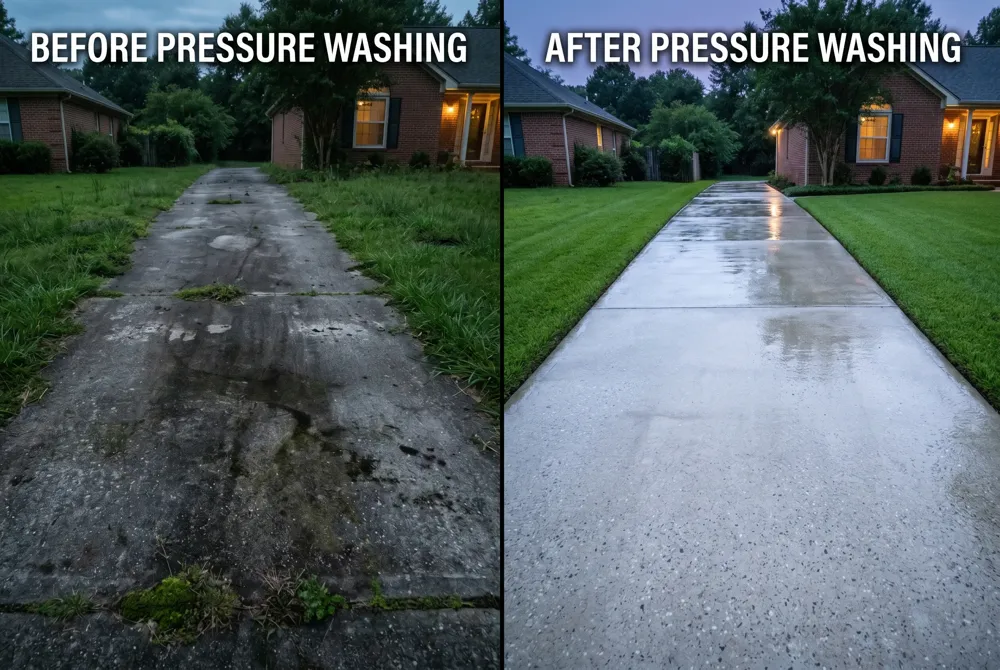
Keeping concrete driveways, patios, and garage floors in top condition starts with thorough debris removal and a proper pre‑wetting step. For driveways, sweep the surface, apply a pH‑balanced concrete cleaner, and use a 2,500‑3,000 psi washer with a 25° fan tip held 12‑18 inches away, moving in overlapping strokes from high to low. Rinse completely and seal with a breathable coating to lock out moisture and stains.
Patios require a gentler touch: clear furniture, sweep, then set the washer to 1,500‑2,000 psi with a 40° nozzle. Apply an eco‑friendly detergent, let it dwell, and rinse from the far edge toward you, keeping the spray at a slight angle to avoid gouging. A final sealant protects decorative joints and prolongs curb appeal.
Garage floors benefit from a rotary surface‑cleaner attached to a 2,500‑3,000 psi unit with a 25° nozzle. After degreasing and systematic overlapping passes, rinse thoroughly and apply a breathable sealant once dry. Regular annual or semi‑annual cleanings keep all concrete surfaces strong, safe, and looking fresh.
Eco‑Friendly Cleaning and Community Impact
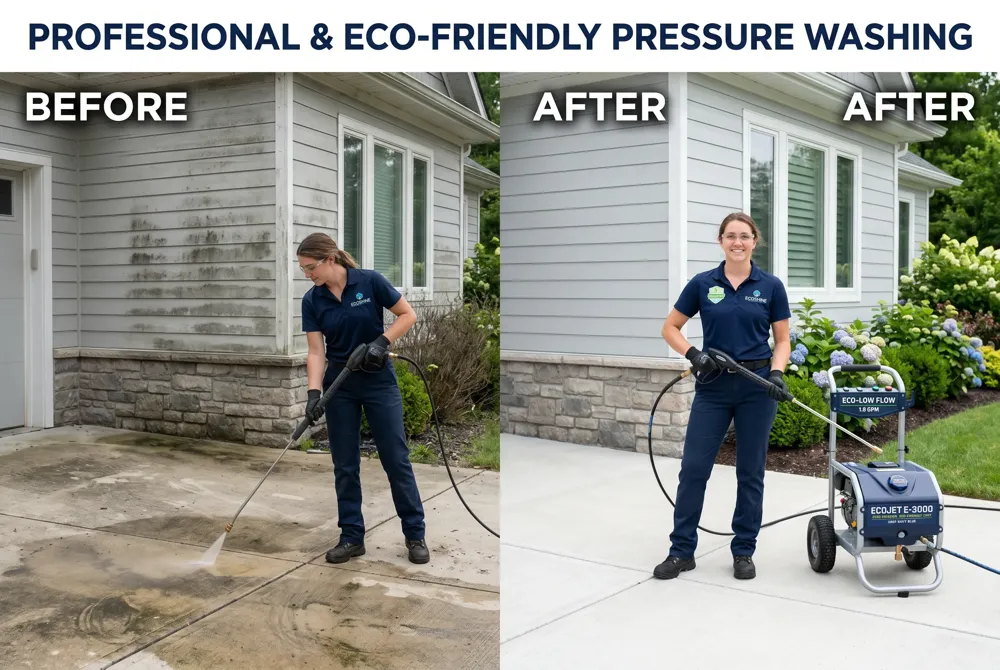
In drought‑prone Santa Barbara County, responsible water use is essential; professional pressure‑washing services employ low‑flow nozzles, recycle rinse water, and schedule cleanings during cooler hours to minimize runoff. Local ordinances often limit water‑intensive practices and require permits for high‑volume washes, so contractors must stay current on regulations and document compliance. Choosing biodegradable, EPA‑approved detergents reduces chemical runoff into storm drains, protecting marine habitats and groundwater. When neighborhoods adopt eco‑friendly cleaning, streets look cleaner, slip hazards drop, and property values rise, creating a healthier, more attractive community for residents and visitors alike.
Keeping Your Concrete Strong for Years
Proper pressure washing keeps a concrete driveway looking fresh and preserving its structural integrity. Start by sweeping away loose debris, then apply a biodegradable, pH‑neutral degreaser to break down oil, algae, and mold. Use a washer set between 1,500 and 3,000 psi with a 25° or 40° nozzle, holding the wand 12–18 inches away and moving it continuously in overlapping strokes. Avoid narrow‑angle (0°) tips and never linger on one spot, as excessive force can etch or spall the surface. Rinse thoroughly, let the slab dry completely, and finish with a breathable sealant to repel water and salts—especially important in Santa Barbara’s coastal climate. For consistent results and eco‑friendly compliance, hire trained technicians who calibrate pressure and choose the right chemicals. Call Goleta Home Services today to protect your concrete, boost curb appeal, and extend its lifespan and increase value.