By Grant, owner-operator · July 8, 2026 · 7 min read
First: You Almost Certainly Don't Need a New Roof
If your HOA or architectural committee sent you a letter about roof stains, here is the first thing to know: you almost certainly do not need a new roof, and you do not need to panic about the deadline. What you need is a professional soft wash, some before-and-after documentation, and a reply to the committee. The dark streaks the letter is complaining about are almost always a living algae, not permanent damage, and they clean off. This is a cosmetic-cleaning problem with a straightforward fix, not a roof-replacement problem.
Montecito and the surrounding communities hold their properties to a high standard, and roof-stain notices are a routine part of that. The committee wants the streaking gone because it reads as neglect from the street, not because your roof is failing. So the task in front of you is narrow: clear the stain the right way, prove you did it, and close the file. Let us walk through exactly how.
Read the Letter: Deadline and Standard
Start by reading what the letter actually requires, because that tells you your timeline and your standard. Most roof-stain notices give you a compliance window, often thirty to sixty days, and ask you to restore the roof to an acceptable appearance. Some reference a specific CC&R or architectural guideline about exterior maintenance. What they almost never do is specify a method, which means a soft wash that restores the look is what satisfies them, and you don't owe them a re-roof.
Note the deadline and note whether a follow-up inspection or a photo submission is required. That governs your documentation, which we will get to. If the language is vague about what acceptable means, it is safe to read it as get the visible streaking off, because that is what the neighbors and the committee are reacting to. Knowing the deadline up front matters because scheduling a quality soft wash, especially in the busy pre-rain fall season, takes a little lead time.
Identify the Stain: It's Cleanable, Not Replaceable
The stain the committee is objecting to is, in nearly every case, Gloeocapsa magma, a blue-green algae that grows on roofs and shows up as dark streaks running down the slopes. It is alive, it feeds on the material in the roof, and in Montecito it thrives because the coastal marine layer and the shade from the oak canopy keep roofs damp for hours every morning. It is not soot, it is not permanent staining, and it is not a sign your roof is worn out.
This matters for your response to the HOA, because the fix for algae is cleaning, not replacement. A homeowner who assumes the worst can talk themselves into a five-figure re-roof over a problem a soft wash solves for a few hundred dollars. On the tile roofs common in Montecito, the same is true for the moss that packs into the barrel-tile channels. Both come off with the right method, and the roof underneath is usually fine.
What a Compliant Soft Wash Looks Like
A compliant soft wash is one that fully restores the roof's appearance without damaging it, and that last part matters as much as the first. The committee wants the streaks gone; you want them gone in a way that does not strip your shingles, crack your tile, or void your roof warranty. A soft wash delivers both. It uses a low-pressure application and a cleaning solution to kill the algae and moss at the root, then rinses the dead growth away, leaving the roof clean and intact.
Beware the temptation to satisfy the letter cheaply by having someone pressure wash the roof fast. That may clear the streaks for the photo, but it strips granules off shingles and forces water under tile, so you trade an HOA notice for roof damage, and the streaks often return within a season anyway, which lands you right back in front of the committee. A soft wash keeps the roof clear for two to four years, which comfortably outlasts the compliance deadline and keeps you off the committee's radar.
It is worth being specific with the committee about the method, because it can actually work in your favor. A note explaining that the roof was cleaned with a low-pressure soft wash, the industry-recommended method that preserves the roof and its warranty, reads better to an architectural board than a bare receipt. It shows you did not just chase the deadline with the cheapest blast you could find, but maintained the property to the standard the community is asking for. In neighborhoods like the Montecito villages, where the same committees see the same homes year after year, being the owner who handles things properly and documents it tends to buy goodwill the next time something comes up.
The Deadline Math: Book Early
On timing, work backward from your deadline and build in a cushion. A good soft-wash company books out, especially in the fall, when everyone on the South Coast is trying to get their roof cleaned before the winter rains arrive in the October-to-December window. If your letter lands in that season, call sooner rather than later so you are not squeezed against the compliance date with no appointments left. If the deadline is tight, say so when you book, because a reputable local operator will try to work with a real HOA deadline.
There is a weather factor too. A soft wash needs a dry window to apply and dwell properly, and stacking storms in midwinter can push appointments. Getting on the schedule early protects you from a run of wet weather eating your remaining days. The comfortable move is to treat the letter as a reason to book now, clear the roof well before the deadline, and have your documentation ready with time to spare.
Documentation for Your HOA File
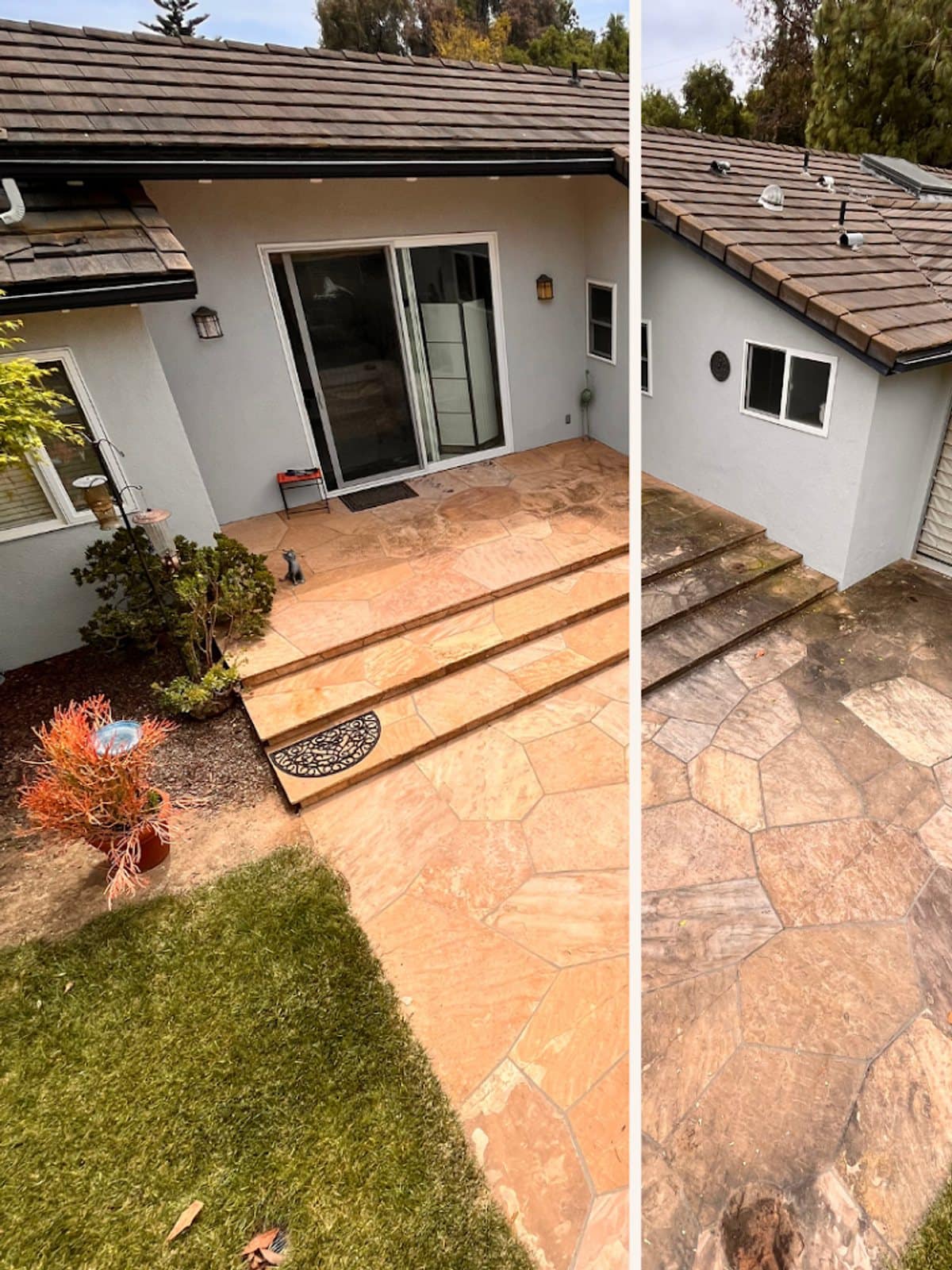
For the committee, documentation is what actually closes the file, so treat it as part of the job. Get clear before-and-after photos of the roof from the same angles the committee would see from the street, an itemized invoice from a licensed, insured company that states the work was a professional soft wash, and the date it was completed. That package does two things: it proves compliance now, and it protects you if the streaking is ever raised again.
Submit the photos and invoice with a short note referencing the letter and its date, and keep a copy for your own records. If the algae was heavy and you expect it to return in a few years, note the soft wash and its date so your next cleaning is on a known schedule rather than a surprise. A clean paper trail turns a compliance notice into a closed matter, and it signals to the committee that the property is being maintained properly, which is the whole point of the letter in the first place.
Why Montecito Roofs Earn These Letters
Montecito roofs earn these letters for predictable reasons, and we know them well. The oak canopy that makes these estates beautiful also shades the roofs and drops debris that feeds algae and moss, and the coastal marine layer keeps everything damp. The tile and shingle roofs here need careful, warranty-safe cleaning, not a fast blast, because the properties and their landscaping are held to a standard that a careless job will not meet.
Goleta Pressure Washing is a soft-wash specialist owned and operated by Grant, and we clean roofs across Montecito, Santa Barbara, Summerland, and Goleta. We handle the work carefully, protect the gardens these homes are known for, and hand you the before-and-after photos and itemized invoice your committee needs to close the file. If you're holding a roof-stain letter with a deadline on it, call (805) 705-8914 and we'll get you compliant with room to spare.