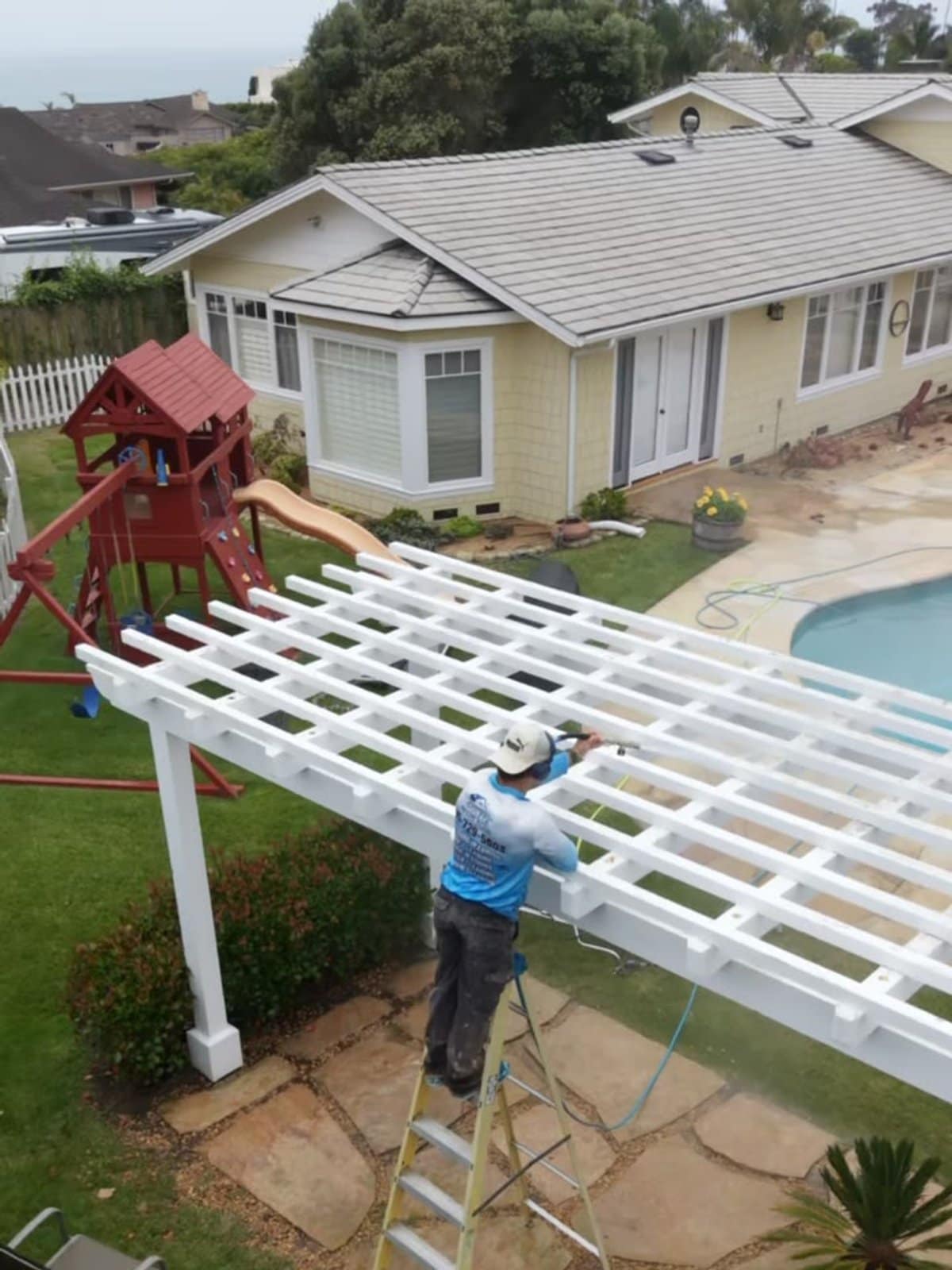
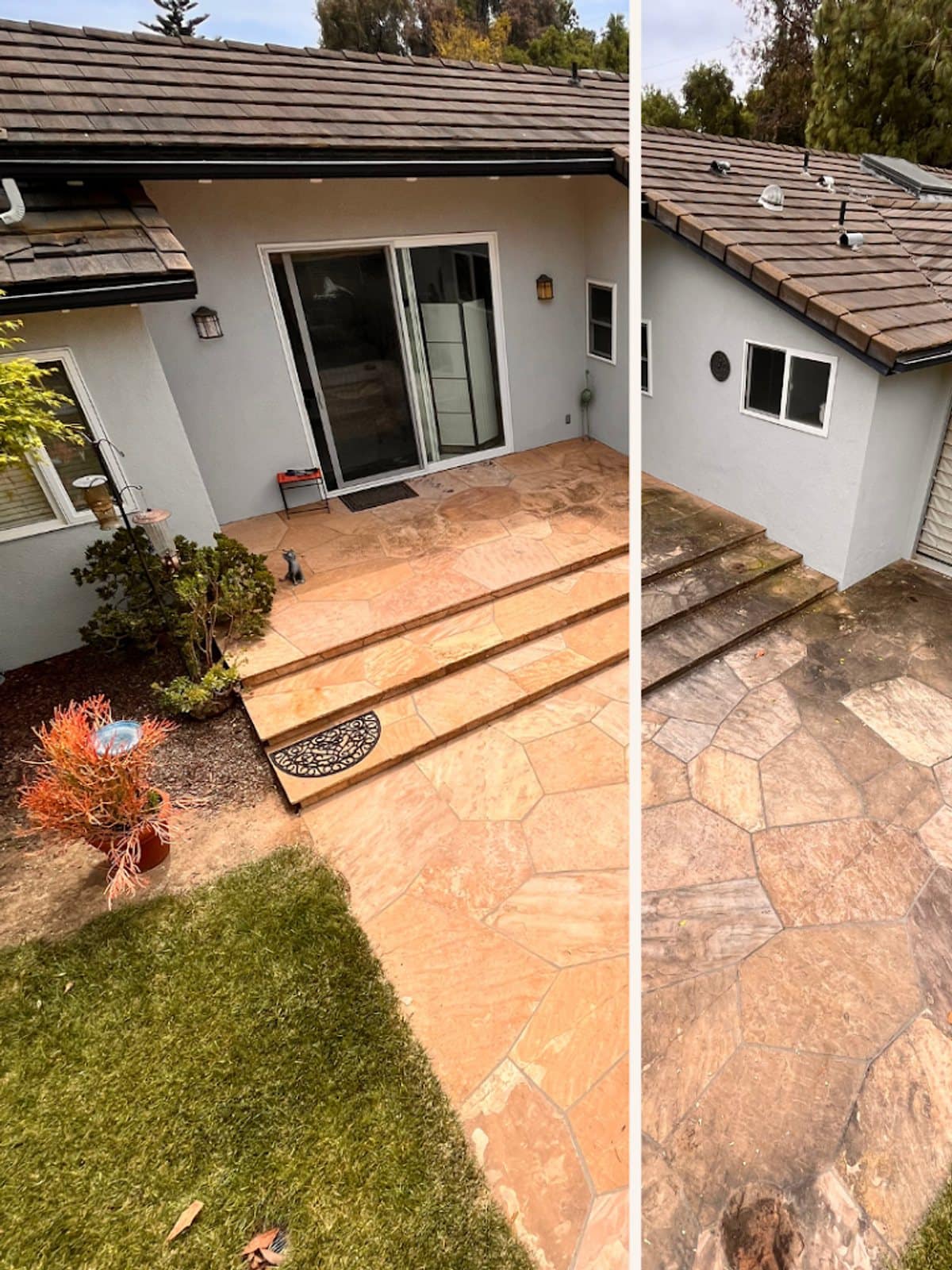
Soft washing is less a single service than the right way to clean anything a pressure washer would ruin. Instead of relying on force, it relies on a professional cleaning solution to break the bond between the grime and the surface, so a low-pressure rinse is all it takes to bring it clean. That makes it the correct method for a long list of what we clean on the South Coast: tile and composition roofs, stucco, the wood and plaster of a Spanish Colonial, painted trim, fences, and delicate siding. Goleta Pressure Washing are soft-wash specialists first — it's the core of the business — because so much of the housing here simply can't take high pressure, and because a soft wash gets those surfaces cleaner and keeps them clean far longer than blasting ever could. If someone's told you your roof or your stucco 'needs a good power washing,' this is the page to read before you let anyone near it with a wand.
The whole difference is force. A pressure washer uses water velocity to tear grime off a surface — effective on concrete, destructive on almost everything else. A soft wash uses the right cleaning solution, at the right dilution, to dissolve the grime's grip, so it releases with a gentle rinse. No cracked stucco, no water driven behind siding, no granules blasted off a roof, no gouged wood.
Because the solution kills the mold, mildew, and algae at the root instead of just knocking the visible layer loose, a soft-washed surface stays clean noticeably longer — often months longer than the same wall or roof given a quick pressure rinse, which leaves the living growth behind to grow right back the moment the marine layer returns.
There's no single recipe. A tile roof, a stucco wall, a wood fence, and a painted eave each get a different solution and a different dilution, and reading the surface to get that right is the craft of it. It's the step a one-machine operation skips — and the reason those jobs come out streaky or, worse, damaged.
On every soft wash the landscaping is pre-wet, shielded where it needs to be, and rinsed afterward, so the plants against the house are protected from the first step to the last.