By Grant, owner-operator · May 25, 2026 · 8 min read
It's Salt and Marine Damp, Not a Dirty House
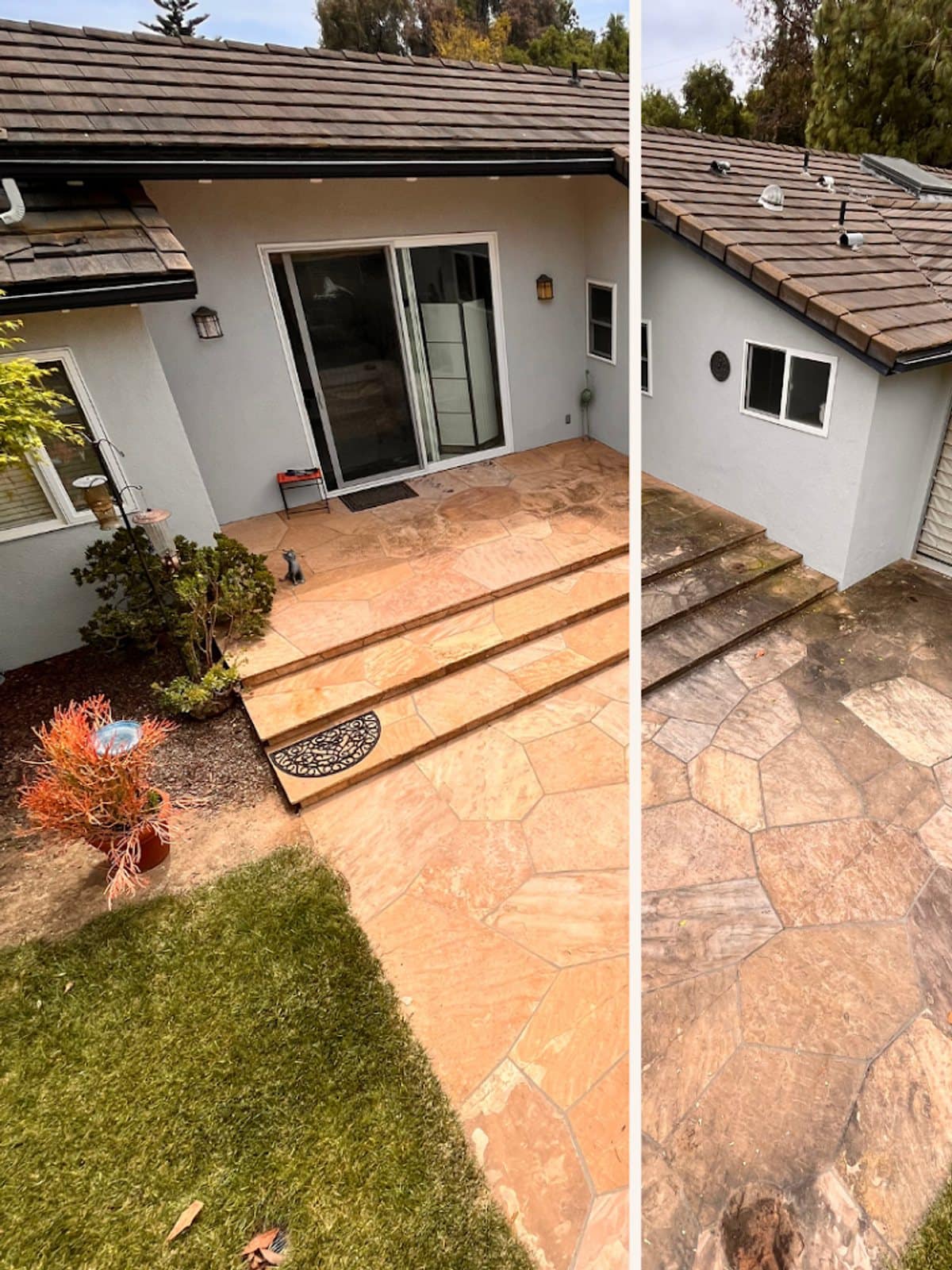
If you live on the Mesa and your house has grown dark streaks and a green-black film on the shaded walls, here is the direct answer: that is not dirt, and it is not because your house is dirty. It is a combination of salt air off the ocean and the marine-layer damp that keeps your walls wet, feeding a film of algae and mildew that darkens the stucco. The Mesa's position right above the water gives it a heavier dose of both than most Santa Barbara neighborhoods, which is why Mesa homes film up the way they do. And it comes off, cleanly, with a soft wash.
People assume streaks like these mean grime that a good scrub or a pressure washer would fix, and then they are surprised when neither works for long. The reason is that the problem is biological and it is fed by where the Mesa sits. Understanding what is actually growing on the wall, and why the salt and fog make it worse, is what points you to the fix that lasts instead of the one that comes back by next summer.
The Mesa's Specific Position
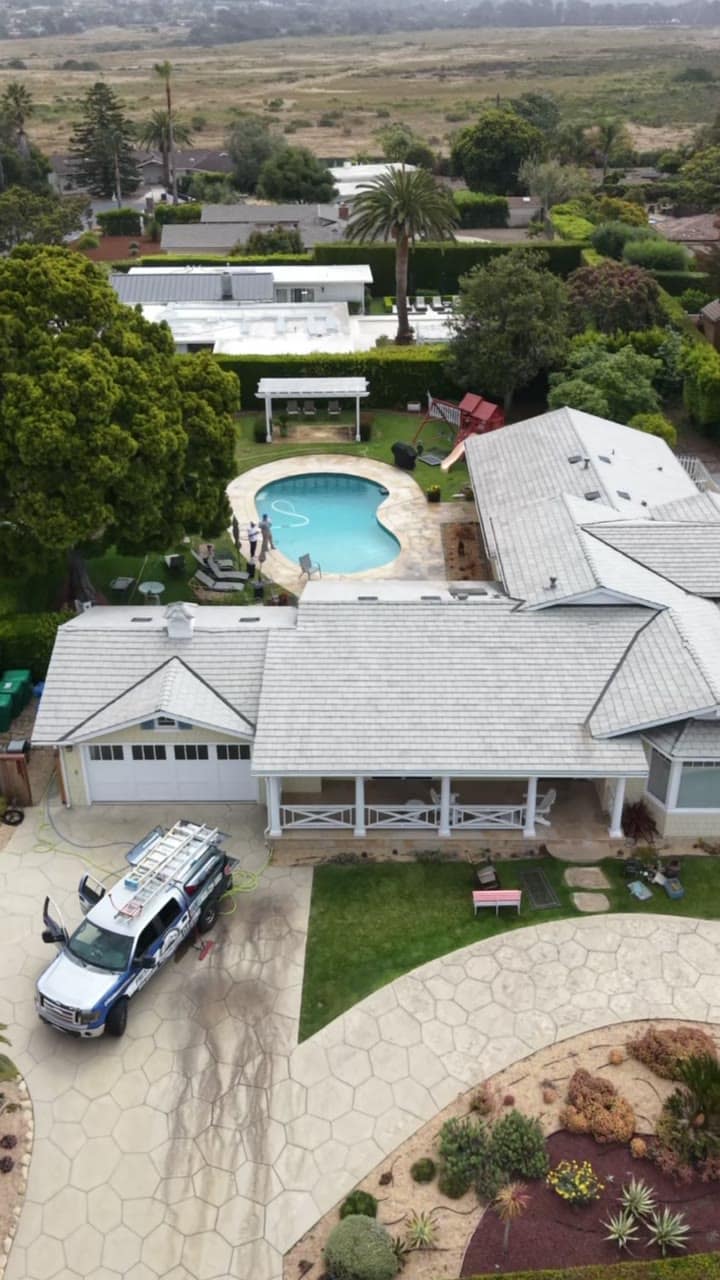
The Mesa sits on a bluff right above the Pacific, and that location is the whole story. Perched over the water on the ocean side of Santa Barbara, Mesa homes catch the salt spray and the moist onshore air more directly than neighborhoods tucked farther inland or up in the foothills. The same breezy, ocean-close position that makes the Mesa a beautiful place to live also means its houses take a steady load of salt and moisture that inland homes simply do not get in the same concentration.
That combination, salt plus persistent damp, is exactly what grows the film on your walls. The marine layer rolls in off the water and sits over the Mesa, and the ocean breeze carries a fine salt haze onto every exterior surface. Neither one is dramatic on any given morning, but day after day, most of the year, they add up to a wall environment that stays damp and salty, which is precisely the environment algae and mildew are built to colonize. The Mesa's charm and the Mesa's streaking come from the same place.
Why Salt Makes It Worse
Salt is what makes the Mesa's streaking worse than plain coastal damp would on its own, and the reason is a property called being hygroscopic: salt pulls moisture out of the air and holds it. When a fine film of salt haze settles onto your stucco, it does not just sit there, it actively grabs and retains humidity, keeping the wall surface a little damper for a little longer than it would otherwise stay. On a shaded wall that already dries slowly, that extra retained moisture is a gift to the algae.
So the salt is not staining the wall directly so much as it is feeding the thing that does. More retained moisture means more hours of dampness, and growth rate follows damp hours almost directly. This is why a home right on the salty, foggy Mesa can film up faster than an equivalent home a few miles inland with the same paint and the same shade. The salt is quietly extending every damp morning, and the algae is cashing in on it.
It's Algae and Mildew, Not Grime
What is actually on the wall is a colony of algae and mildew, not a layer of dirt, and that distinction is the key to cleaning it. The dark streaks and the green-black haze are living organisms that landed as airborne spores, took hold in the porous surface of the stucco, and started feeding on the moisture and organic matter there. Dirt would rinse off. This doesn't, because it's rooted into the surface and it regrows from those roots even after you knock the top layer off.
It shows up worst exactly where you would expect: the north-facing walls, the sides under the eaves, the stretches behind hedges or shaded by the house next door, anywhere the sun does not reach to dry the wall out. The sunny walls stay relatively bright while the shaded ones go dingy, which is a dead giveaway that you are looking at biological growth and not general grime. A wall that were merely dirty would darken evenly; a wall that is growing algae darkens where it stays damp.
Why a Mile From the Ocean Still Gets It
A common source of confusion is that the film shows up even on Mesa homes that are not right on the bluff, a mile or more back from the water, and people wonder how the ocean could be to blame that far in. The answer is that the marine layer is not a beachfront-only phenomenon. The coastal fog pushes well inland across the whole Mesa and beyond, and the onshore breeze carries salt haze along with it, so a home a mile from the ocean is still sitting in the same damp, faintly salty air most mornings, just a touch less intensely than one on the edge.
That is why black streaks are a Mesa-wide pattern, not just a bluff-edge one. The dose tapers as you move inland and uphill, so the closest, lowest, most shaded homes film up fastest and the ones farther back a little slower, but the whole neighborhood is in the marine-layer zone. A mile from the ocean on the Santa Barbara coast is still very much coastal as far as your stucco is concerned, and the growth on the wall reflects that.
Why a Hose or Pressure Washer Is the Wrong Move
This is where people go wrong trying to fix it themselves. A garden hose does nothing, because the algae is rooted into the pores of the stucco and a rinse only wets the surface. So they escalate to a pressure washer, which is the worse mistake, because stucco is porous and a high-pressure blast cracks the finish and drives water into the wall cavity behind it, where it feeds mold and can rot framing. You would be trading a cosmetic film for structural damage, and the film would still grow back.
It grows back because blasting the surface leaves the roots down in the pores, and on the salty, foggy Mesa those roots have everything they need to re-establish within a season. So the pressure-washer approach fails twice: it damages the stucco and it does not last. The Mesa's conditions are exactly the ones that punish the wrong method, because the environment is so consistently primed to regrow whatever you did not actually kill.
The Soft-Wash Fix for a Coastal Wall
The fix that works is a soft wash: low pressure, about the force of a garden hose, with a cleaning solution that kills the algae and mildew at the root down in the pores of the stucco and rinses the dead film away. Because it kills the growth rather than knocking it off, the wall stays clean far longer, even on the Mesa, and because it is low pressure, it does not crack the stucco or drive water behind it. It is the right method for a salty, foggy, coastal wall, and it is what actually clears a Mesa house.
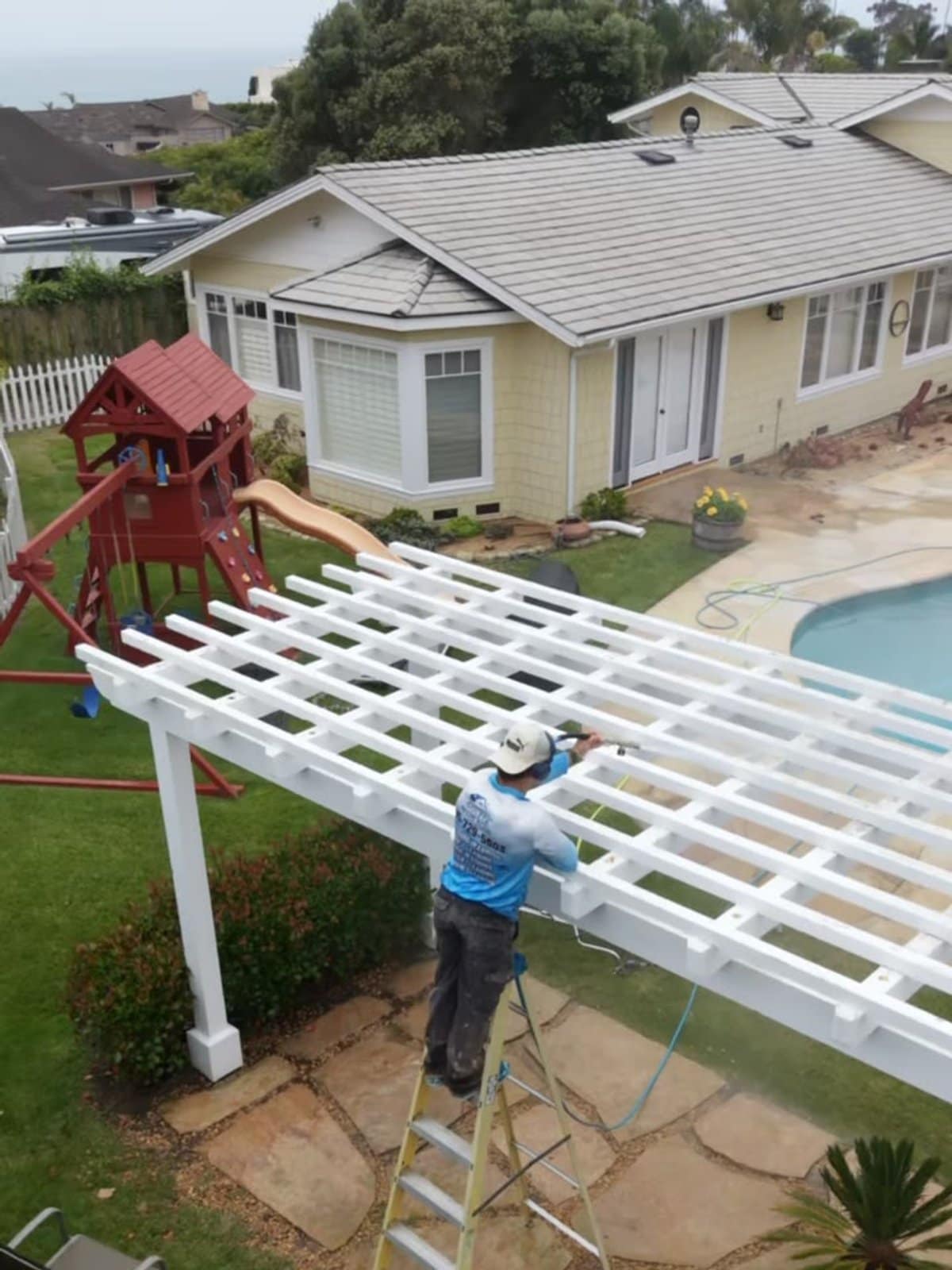
A careful soft wash also rinses the salt haze off the walls in the process and protects the landscaping around the house, pre-wetting and rinsing the plants so the solution does no harm. Goleta Pressure Washing is a soft-wash specialist, owned and operated by Grant, and we clean the Mesa and Santa Barbara homes the ocean and the marine layer have filmed up, across Santa Barbara, Goleta, Montecito, and Summerland. We're insured, and we work this stretch of coast every week, so we know how fast a salty wall grows its film back. If your Mesa house has gone streaky, call (805) 705-8914 for a free quote.