By Grant, owner-operator · June 7, 2026 · 8 min read
Pre-Treat, and Let the Chemistry Go First
Getting oil stains out of a Santa Barbara driveway comes down to one thing most people skip: you have to break the oil down with a degreaser and give it time to work before you ever touch it with pressure. Oil is not sitting on top of the concrete like dust. It has soaked down into the pores, and no amount of water, at any pressure, pulls it back out on its own. Pre-treat it, let the solution dwell and lift the oil up out of the slab, then wash it away. That order is the whole trick, and it is why a driveway that shrugged off an afternoon of blasting comes clean once the chemistry goes first.
It also helps to be honest up front: how much comes out depends on how fresh the stain is and how long it has been baking into the concrete. A drip from last week comes out almost completely. A five-year shadow under where a car has always parked may lighten a lot but not vanish entirely. We will get to why, and to what you can realistically expect, but the method is the same either way, and it is not the one the rental counter hands you.
Why Water Alone Never Works
Concrete looks solid, but under a microscope it is a sponge of tiny pores, and oil is exactly the kind of thin, creeping liquid that works its way down into them. When a car drips, the oil does not stay on the surface long. It wicks down into the pore structure and bonds there, which is why the stain has depth to it and does not just wipe off. That depth is the entire reason water fails.
A pressure washer moves water fast, but water and oil do not mix, so blasting a set-in oil stain mostly just pushes the surface around while the oil stays anchored below. People crank the machine higher and higher, spend an hour on one spot, and the shadow is still there when the slab dries. The problem was never that they needed more pressure. It was that they needed something to break the oil down chemically first, and pressure can't do that.
The Degreaser-and-Dwell Method
The method that works is degreaser and dwell. You apply a concrete degreaser directly to the stain, work it into the surface, and then leave it alone for ten to fifteen minutes so it can do the part that matters: chemically breaking the oil down and drawing it up out of the pores toward the surface. That dwell time is not optional and it is not a place to rush, because it is the step actually doing the cleaning. The wash at the end just removes what the degreaser already lifted.
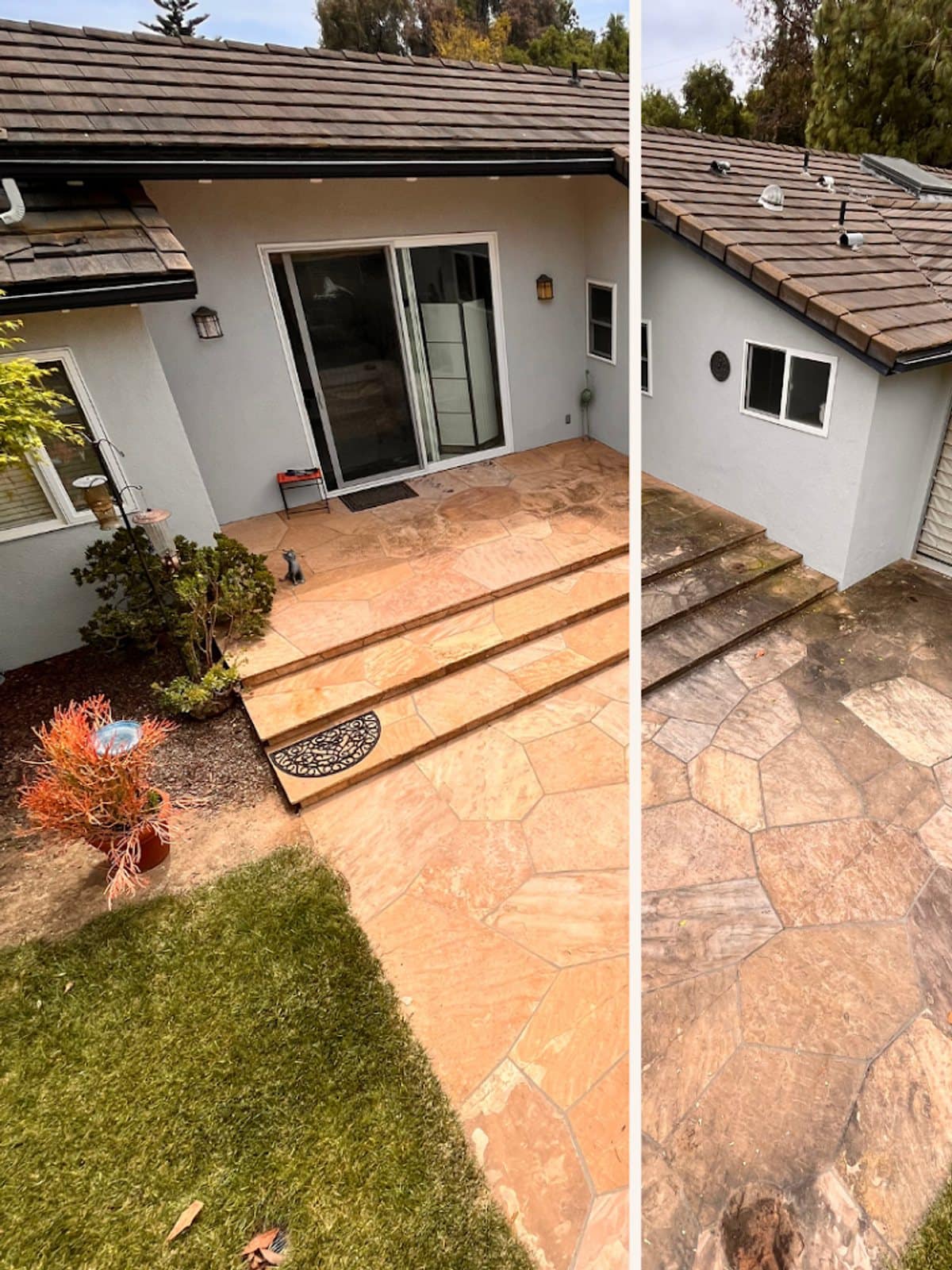
After the dwell, a hot rinse and a surface cleaner lift the loosened oil off the concrete and leave an even finish. Deep or older stains often need a second round, another application, another dwell, another pass, because the oil went deeper than one treatment can reach. On a badly soaked slab we will sometimes do this two or three times, and each pass pulls up a little more. It is patient work, not powerful work, which is the opposite of what most people assume driveway cleaning is.
Fresh Oil vs. Old, Baked-In Oil
How well this works depends a lot on how long the oil has been in the concrete, and Santa Barbara's climate makes that worse than you might expect. Our dry season runs essentially May through October with almost no rain, and that long dry stretch bakes oil deeper and harder into the slab. In a wet climate, rain periodically flushes some of the oil back out and keeps it from setting. Here, nothing does, so a stain just sits and cures and darkens month after month until someone finally treats it.
That is why a fresh drip and an old stain behave so differently under the same method. Fresh oil has not had time to migrate deep or bond hard, so the degreaser reaches all of it and it comes up clean. Old, baked-in oil has soaked down past where a surface treatment can fully reach and has chemically set into the pores, so it lightens but may leave a ghost. The Santa Barbara sun is quietly working against you the whole time a stain sits there untreated, which is the best argument for dealing with oil sooner rather than later.
The Honest Part: Some Old Stains Won't Fully Vanish
Here is the honest part that a lot of companies will not tell you: some old oil stains do not come out completely, and anyone who promises a five-year stain will vanish entirely is overselling. When oil has soaked deep into a porous slab and cured there for years, the degreaser lifts what it can reach, but a faint shadow can remain because the staining goes deeper than any surface cleaning safely goes. That is a limitation of the concrete, not of the effort.
What we can promise is real improvement: a heavy, dark stain lightened dramatically and evened out so it no longer reads as the first thing you see in the driveway. For the stubborn remainder, the honest options are a poultice treatment that pulls oil from deeper over time, or resurfacing or a coating if the staining is severe and the look really matters to you. We would rather tell you that going in than take your money and leave you disappointed when the ghost is still faintly there.
This is also a good argument for sealing the concrete once it is clean. A sealer fills the pores that let oil soak in, so the next drip sits on top where it is easy to wipe up instead of wicking down to stain. On a driveway that collects oil, sealing after a cleaning is often worth more than the cleaning itself, because it keeps you from starting this whole process over next year.
Rust and Other Stains That Aren't Oil
Not every dark mark on a driveway is oil, and the ones that are not need different chemistry, so it is worth knowing the difference. Rust stains, the orange-brown streaks from a wrought-iron railing, a forgotten patio chair, or fertilizer overspray, are iron oxide bonded into the concrete, and a degreaser will not touch them. Those need an oxalic or specialized rust remover applied to the stain, which lifts the iron and rinses clean when it is the right product for the job.
Leaf and tannin stains from oak and other trees, irrigation mineral stains, and battery or transmission-fluid marks all have their own treatments too. The point is that dumping degreaser on everything is as wrong as blasting everything with water. Reading what the stain actually is comes first, and then the right product goes on it. That is a big part of what separates a clean driveway from a wasted Saturday.
When to Call Us, and Why Sealing Helps
So the real answer to getting oil out of a Santa Barbara driveway is: pre-treat with a degreaser, give it time to dwell, pull the oil up, repeat on the deep stuff, and be honest about what an old baked-in stain will realistically do. Then seal the slab so you are not back here next year. Pressure has a role, but it comes last, after the chemistry has done the actual work.
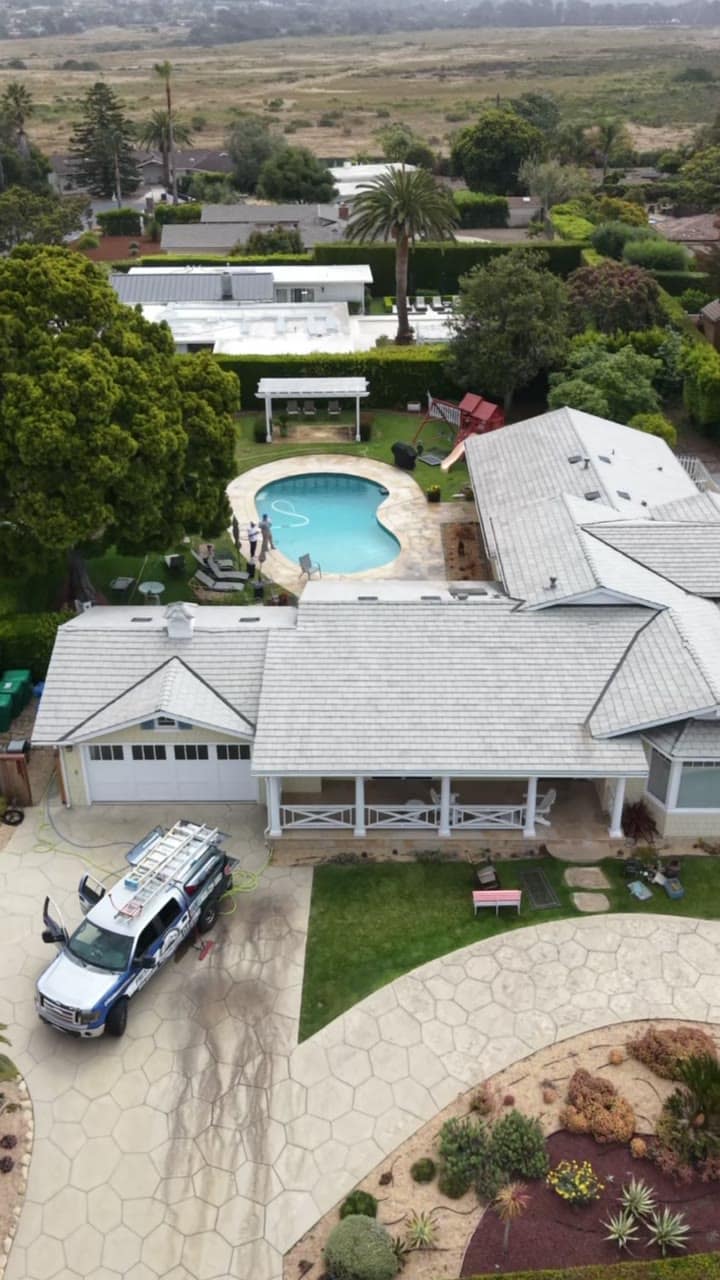
Goleta Pressure Washing handles driveway and concrete cleaning across Santa Barbara, Goleta, Montecito, and Summerland, and we pre-treat oil the right way instead of just blasting and hoping. We're insured, and we'll tell you honestly before we start what we think a given stain will actually do. For a straight answer on your driveway, call (805) 705-8914 for a free quote.