By Grant, owner-operator · May 5, 2026 · 9 min read
Exterior Cleaning Here Runs on a Calendar
Exterior cleaning on the South Coast is not a one-time job, it is a calendar, because the marine layer and the November-to-March rains put different surfaces under stress at different times of year. From Goleta to Summerland, the smart approach is to match each cleaning task to the season that makes it matter most: gutters and roof before the rains, windows and walls after them, hardscape through the dry summer. Do it in that rhythm and every surface gets cleaned when it counts, instead of scattered through the year by whenever something happens to look bad. Here is the month-by-month calendar for what to wash and when.
The whole calendar is driven by two local facts, so it is worth stating them up front. The marine layer keeps everything damp and growing algae essentially year-round, and the rain arrives in a concentrated burst of storms between roughly November and March. Those two forces decide the timing of every task below. Once you see how they set the schedule, the calendar mostly writes itself, and you can plan the year instead of reacting to it.
The Two Forces That Set the Calendar
The first force is the marine layer, and it runs all year. The coastal fog that rolls over the South Coast most mornings keeps roofs, walls, and hardscape damp for hours, which grows the algae, mildew, and moss behind roof streaks, green-black stucco film, and slippery decks. Because the fog never really stops, the biological growth it feeds is a year-round background process, always slowly returning after any cleaning. That is why so much South Coast exterior cleaning is really about managing growth, not removing dirt.
The second force is the rainy season, concentrated between November and March, often in a handful of intense atmospheric-river storms. That burst of rain is what makes gutters and roof drainage urgent in the fall and what spots up windows and walls through the winter. The dry season on either side, essentially May through October with almost no rain, bakes oil into driveways and lets pollen and film accumulate without a natural rinse. Between the year-round fog and the sharply seasonal rain, every surface has a season when cleaning it pays off most. The calendar just lines those up.
Fall (September to November): The Pre-Rain Priority
Fall is the highest-priority window on the whole calendar, because it is when you prepare for the rains. The top two tasks are gutter cleaning and roof cleaning, both done before the first serious storm. Gutters have to be clear and the downspouts flushed so the winter storms can actually drain, since a clogged gutter in the first atmospheric river overflows onto the fascia, foundation, and roof edge. Aim to have this done by the end of October, before the first big system, and book early because everyone wants it at once.
The roof belongs in this window too. A soft wash in the fall clears the algae and moss so the roof goes into the wet season clean, rather than holding moisture against the shingles and backing water up behind moss-packed tile channels for months. Fall is also the last reliable stretch of dry weather to apply and dwell a roof treatment before the storms start. If you do only one round of exterior cleaning all year on the South Coast, make it the fall gutter-and-roof round, because it protects the house through the season that does the most damage.
Winter (December to February): The Wet Season
Winter is mostly a waiting season for exterior cleaning, and that is by design, because you did the important work in the fall. The rains are actively falling, so it is not the time for roof washing or window cleaning, both of which the storms would immediately undo. The main winter task is reactive: keeping an eye on the gutters between storms, especially under year-round shedders like oaks, pines, and eucalyptus that keep dropping debris right through the winter and can re-clog a gutter mid-season.
If your gutters overflow during a storm, that is the signal for a mid-winter clearing, particularly on tree-heavy properties in Montecito and the foothills where the debris never stops. Otherwise, winter is when the fall preparation pays off and there's little to actively clean. It is also a good time to plan the spring reset, note which walls have filmed up, which windows are spotting, and what the storms have revealed, so you are ready to book the post-rain work as soon as the weather turns. Winter is the season to watch, not wash.
Spring (March to May): The Post-Rain Reset
Spring is the post-rain reset, and it is the second major cleaning window of the year. Once the rains are reliably done, it is time to undo what winter did: house washing to clear the green-black film the damp season grew on the stucco and siding, and window cleaning to remove the accumulated rain spotting and the spring pollen, timed for after the heaviest pollen settles. This is when the exterior gets bright again after months of storms and fog.
Spring is also the catch-up window for anything the fall missed. If the roof did not get cleaned before the rains, spring is the time to do it, before the summer and well before next winter. Late spring is additionally the moment to get hardscape ready for summer, prepping patios, walkways, and especially pool decks before the season of daily use and slip risk. Think of spring as the reset that takes the house from survived-the-winter to ready-for-summer, hitting the walls, windows, and any roof work left over from fall.
Summer (June to August): Hardscape and Maintenance
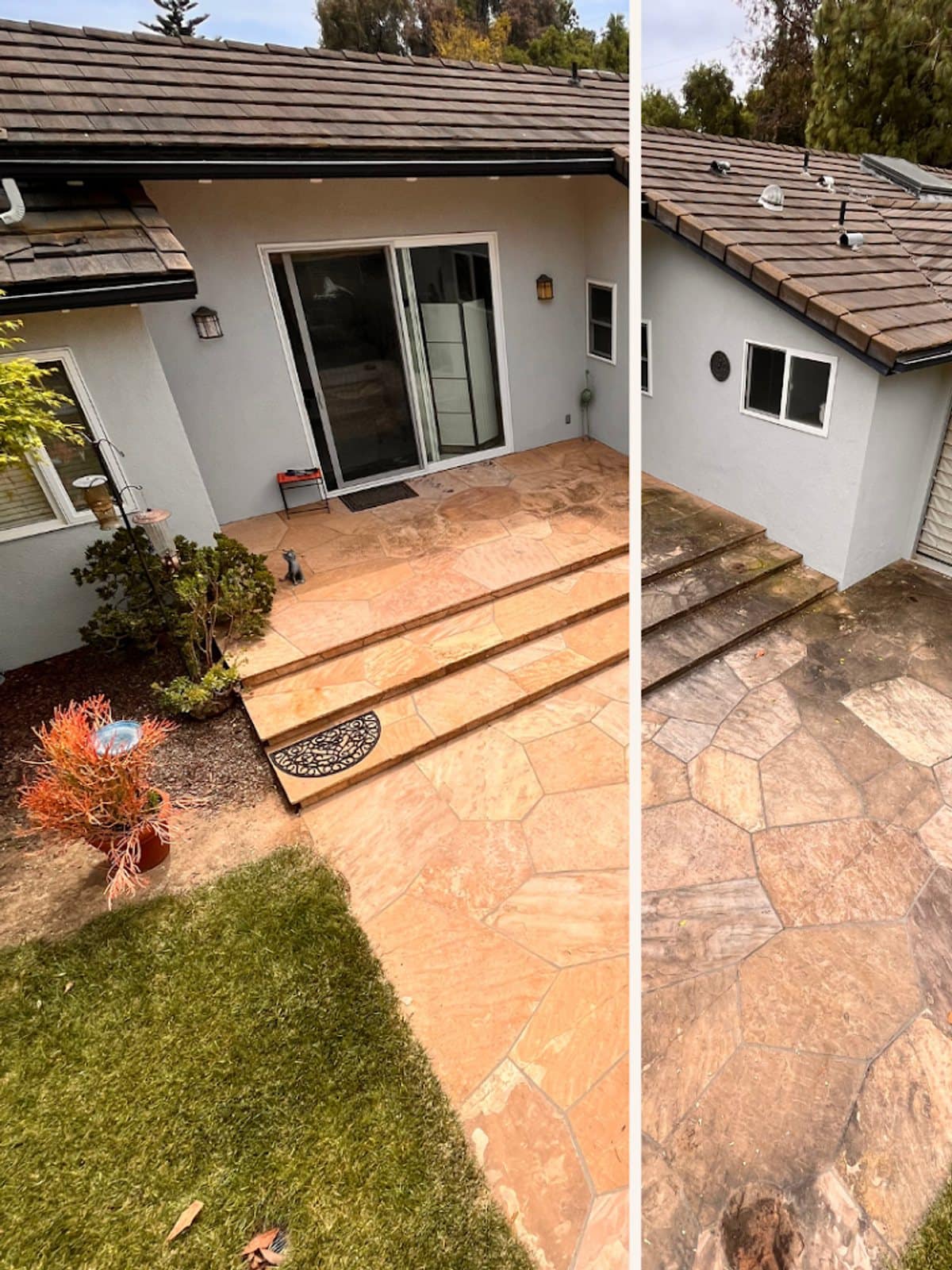
Summer is the dry-season hardscape window, and it is when the pressure-washing side of the work makes the most sense. With no rain to bake in and no fog-heavy mornings interrupting, it is a good stretch to pressure wash the driveway, patios, and walkways, lifting the oil, dust, and traffic marks that concrete collects. The long dry season is exactly what sets oil hard into a driveway, so summer is a sensible time to pre-treat and clear those stains with a degreaser and a surface cleaner.
Summer is also when solar panel cleaning matters most: the panels are producing hardest under the high summer sun, and the dry months let grove pollen and marine film accumulate on the glass with no rain to rinse it, so a mid-year cleaning recovers output right when the system should be at its peak. Beyond that, summer is a light-maintenance stretch, the growth keeps ticking along under the fog, but there is no rain deadline driving anything, so it is the flexible part of the calendar for catching up on whatever surface has gotten ahead of you.
Putting the Year Together
Put the year together and the South Coast calendar is simple to remember. Fall: clean the gutters and roof before the rains, the single most important round. Winter: watch the gutters between storms and plan the reset. Spring: wash the house and windows after the rains, and catch any roof work fall missed. Summer: pressure wash the hardscape and clean the solar panels in the dry stretch. The year-round marine layer means growth is always slowly returning, so the calendar is a rhythm to maintain, not a one-time fix, but this rhythm keeps every surface cleaned in the season it matters.
You don't have to run all of it yourself or track every date. Goleta Pressure Washing works this calendar across Goleta, Santa Barbara, Montecito, and Summerland, roof and gutters before the rains, house and windows after, hardscape through the summer, each surface getting the method it needs, soft washing the delicate parts and pressure washing the concrete. We're insured, and whatever season you're reading this in, we'll put you on the right schedule for the year. Call (805) 705-8914 for a free quote to start.