By Goleta Pressure Washing · September 16, 2026
Homeowners: Remove Mildew on Exterior Walls by Surface, Use Soft Wash
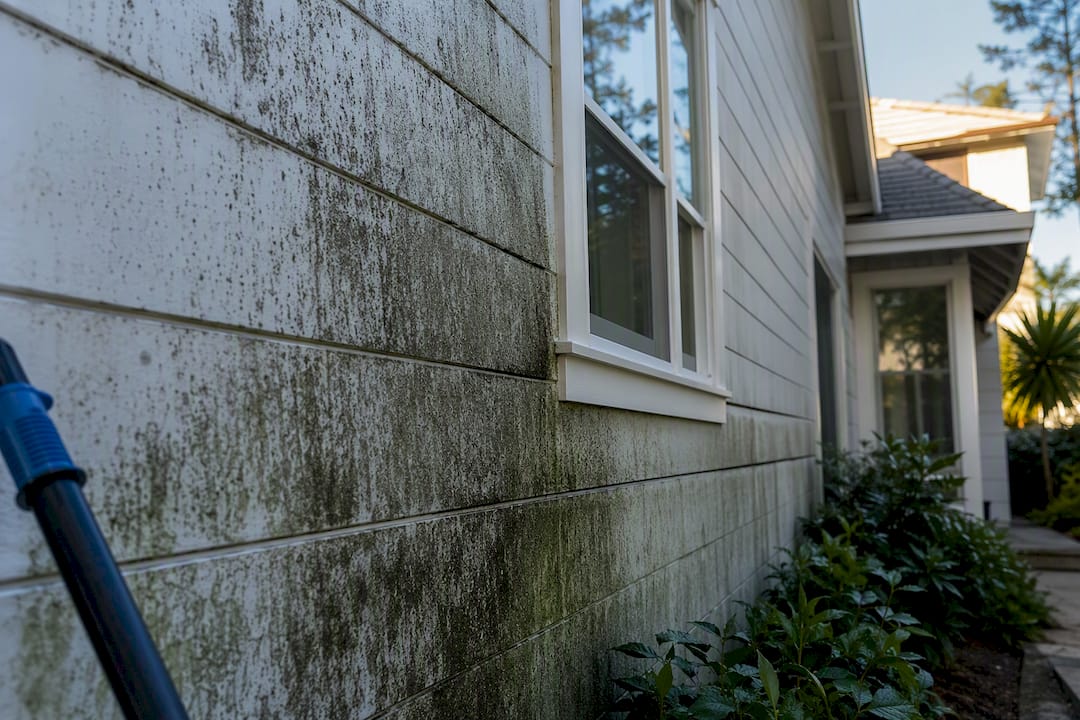
Mildew on exterior walls is usually a surface-level fungus, and most homeowners can clear it themselves with an oxygen-bleach cleaner or a diluted chlorine solution, the right protective gear, and a thorough rinse. Start with a spot test using a diluted cleaner to confirm you’re dealing with mildew rather than dirt or a deeper mold problem. If the siding feels soft, spongy, or the growth covers large sections of the house, stop and call a professional instead of pushing forward.
TL;DR:
- Mildew typically appears flat, powdery, and in shaded locations, fading quickly with bleach, while mold is fuzzy and signals trapped moisture.
- Using oxygen bleach is gentler on surfaces like vinyl and fiber cement, but chlorine bleach offers faster results with careful application.
- Protecting surrounding plants, avoiding high-pressure washing, and working in shaded conditions are essential safety steps during cleaning.
- Regular maintenance, such as gutter clearing and proper grading, helps prevent mildew recurrence by controlling moisture exposure around the home.
- If siding feels soft, shows signs of rot, or mildew persists despite cleaning, hiring a professional with soft-wash methods is recommended.
Table of Contents
- How To Tell Mildew From Mold, Dirt, or Old Stains
- Removing Mildew From Siding: Step-By-Step By Material
- Staying Safe While You Clean
- A Maintenance Checklist That Actually Stops Mildew From Returning
- When To Stop DIY-ing and Call a Professional
- Why Soft-Washing Changes the Equation for Coastal Homes
- Get Your Exterior Professionally Cleaned Without the Guesswork
- Sources
- FAQ
How To Tell Mildew From Mold, Dirt, or Old Stains
Mildew shows up flat and powdery, often in shades of black, green, or gray, and it wipes off relatively easily once you apply the right cleaner. Mold, on the other hand, tends to look fuzzy or raised, with texture you can feel under your fingers, and it’s more likely to signal moisture trapped behind the surface rather than just sitting on top of it.
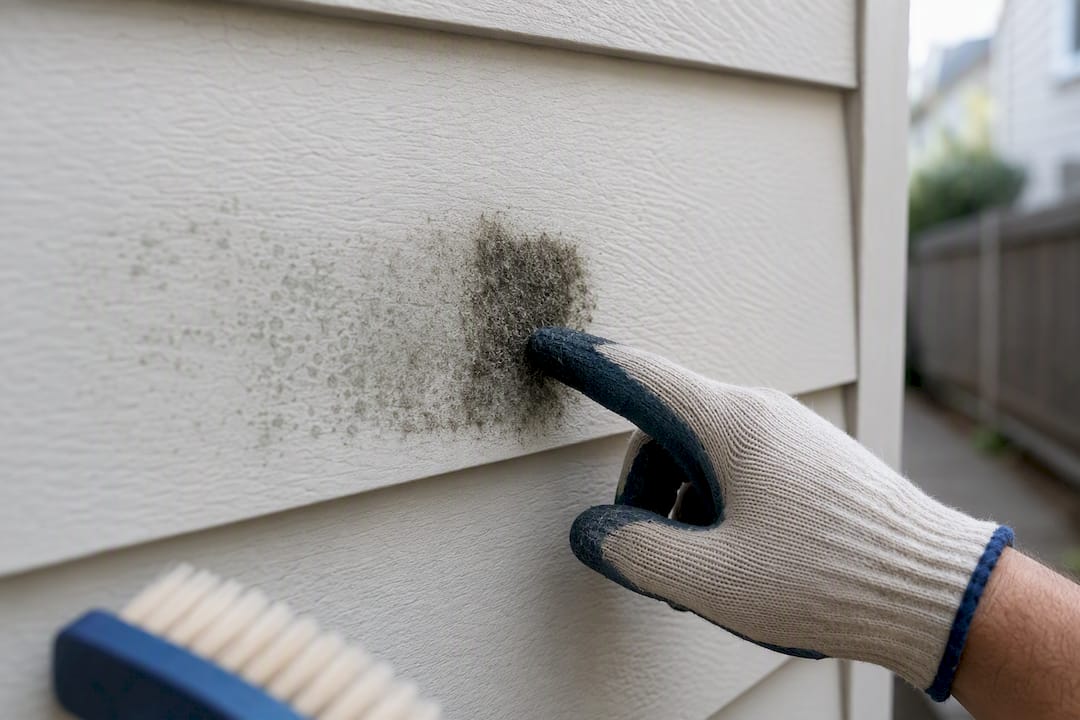
Location tells you a lot before you even touch the wall. Mildew shows up most on north-facing walls, under eaves, near gutters that overflow, and anywhere shade keeps a surface damp longer than the rest of the house.
The bleach test settles most doubts. Dab a small amount of diluted bleach on the stain: if it fades within a couple of minutes, you’re looking at mildew or algae. If the discoloration stays put, you may have a paint stain, rust, or tannin bleed from wood siding instead, and bleach won’t touch it.
A few signs point to something more serious than a weekend cleaning job:
- A persistent musty odor near the wall, even after the surface looks clean
- Siding that feels soft, spongy, or crumbles slightly under light pressure
- Growth that keeps coming back in the same spot within weeks of cleaning
- Discoloration that spreads inward rather than staying on the surface
Any of those point toward trapped moisture, and cosmetic cleaning alone won’t fix the underlying cause, according to CDC guidance on mold-related health problems.
Removing Mildew From Siding: Step-By-Step By Material
Your cleaner choice depends on how much risk you’re willing to take with your finish. Oxygen bleach (the hydrogen peroxide-based kind) is gentler on paint, plants, and metal fixtures, while chlorine bleach cuts through stubborn growth faster but can lighten paint, kill landscaping, and corrode certain fasteners if it’s left too long. The CDC’s mold clean-up guidance recommends both, with a standard chlorine mix of one part bleach to three parts water when you go that route.
Follow this general sequence, adjusting for your siding type:
- Protect surrounding plants with plastic sheeting or a heavy pre-rinse of water.
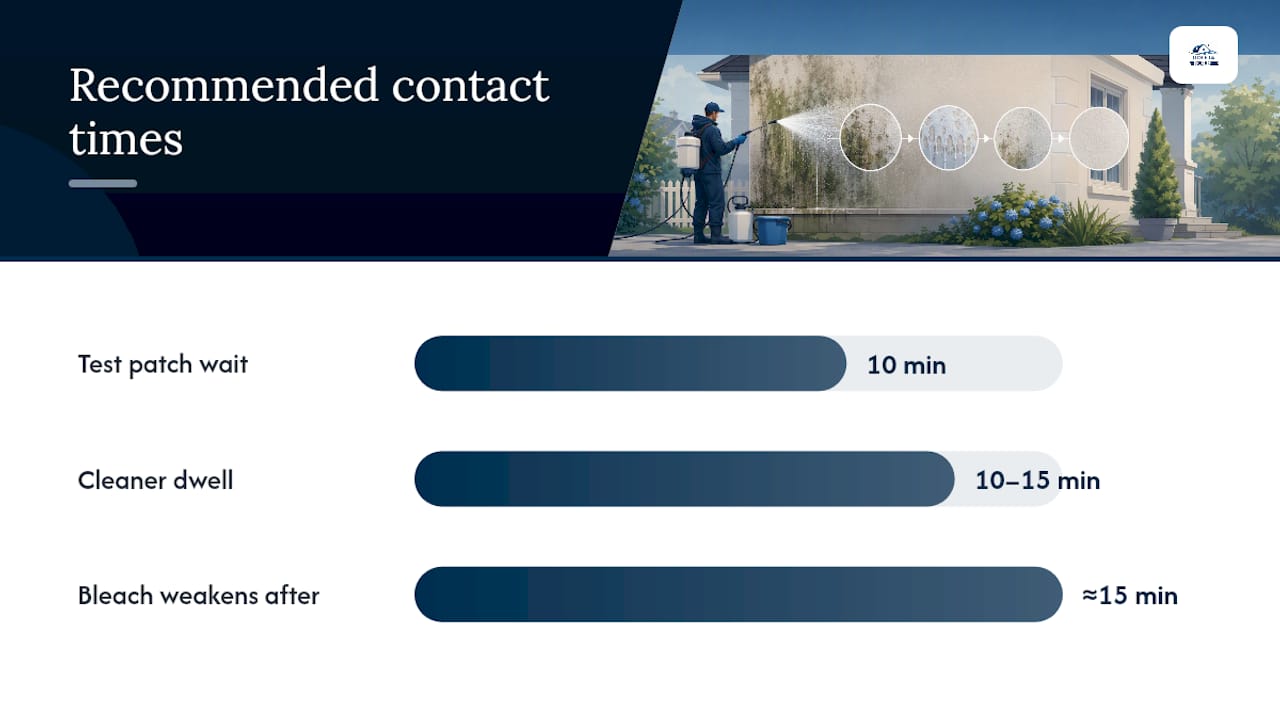
- Test your cleaner on a small, hidden section first and wait 10 minutes to check for discoloration.
- Apply the solution from the bottom up to avoid streaking, then let it sit 10 to 15 minutes.
- Scrub gently with a soft-bristle brush. Never use a wire brush or abrasive pad on painted or fiber-cement surfaces.
- Rinse thoroughly from top to bottom with a garden hose or low-pressure setting.
Vinyl siding tolerates oxygen bleach and light scrubbing well, but avoid high heat and harsh solvents that can warp panels. Fiber cement handles similar treatment, though This Old House recommends oxygen-bleach products over straight chlorine for painted surfaces since they’re less likely to strip color. Painted wood needs the gentlest touch of the group: skip the pressure washer entirely and stick to hand-scrubbing, since forced water behind old wood siding invites rot. Stucco and masonry can handle a slightly stronger bleach mix, but Sherwin-Williams’ repainting guidance recommends a full rinse and dry period before repainting any surface you’ve treated.
If you’re set on using a pressure washer, keep it on the lowest effective setting with the nozzle at least a couple feet from the surface. A soft-wash approach, which combines low pressure with a targeted cleaning solution, avoids the risk of forcing water behind siding that a straight high-pressure blast creates. Our guide to washing stucco safely covers the pressure and technique differences in more detail.
Pro Tip: Work in overlapping sections rather than the whole wall at once. Bleach solutions start losing effectiveness after about 15 minutes of sun exposure, so covering too much surface before you rinse wastes product and lets the solution dry unevenly.
Staying Safe While You Clean
Bleach and mildew removers aren’t dangerous in small doses, but exterior jobs mean hours of exposure, ladder work, and runoff you need to manage responsibly.
- Wear an N95 mask or better, chemical-splash goggles, long sleeves, and waterproof gloves.
- Never mix bleach with ammonia or any cleaner that contains it. The combination produces toxic fumes.
- Work in shade or overcast conditions when possible; direct sun speeds up fume buildup and evaporation.
- Tarp nearby plants and rinse runoff away from garden beds and storm drains.
- If the job requires a ladder above one story or the siding feels compromised, stop and call a professional.
OSHA’s chemical safety guidance reinforces the same basics for anyone handling cleaning agents outdoors: ventilation and proper respiratory protection aren’t optional extras, they’re the difference between a routine cleanup and a trip to urgent care.
A Maintenance Checklist That Actually Stops Mildew From Returning
Cleaning mildew off your walls solves the symptom. Preventing it means dealing with the moisture that fed it in the first place, and the EPA’s guide to mold and moisture puts moisture control at the center of every long-term fix.
Run through this checklist twice a year, ideally before and after your rainy season:
- Clear gutters and downspouts so water doesn’t overflow onto siding below.
- Redirect sprinkler heads away from exterior walls; constant sprinkler mist is one of the most common mildew drivers homeowners overlook.
- Check grading near the foundation to make sure water drains away from the house, not toward it.
- Trim shrubs and trees back to leave 2 to 3 feet of clearance for airflow along the wall.
- Wash exterior walls at least once a year, twice if your property sits in heavy shade or fog.
- Reseal porous surfaces like stucco or masonry after cleaning to slow moisture absorption.
Iowa State Extension’s siding-care research points to the same pattern: shaded, poorly ventilated walls near overgrown landscaping are the properties that keep calling back for repeat cleanings, sometimes within a single season.
When To Stop DIY-ing and Call a Professional
A few conditions mean it’s time to hand the job off rather than reach for another bottle of cleaner.
- Siding that feels soft, spongy, or shows visible rot when pressed
- Interior signs of moisture, like peeling paint or musty smells on the wall opposite the exterior growth
- Mildew that returns in the same spots season after season despite regular cleaning
- Growth covering more than a small patch, especially at height or on multiple stories
A reputable pro should inspect the full exterior before quoting, recommend soft-washing over high-pressure blasting for anything delicate, protect your landscaping during the job, and walk you through what caused the growth in the first place. Before hiring anyone, ask about insurance coverage, whether they guarantee their work, which chemicals they use, and whether they can share recent local references. Cost typically depends on siding material, how much ladder or lift access the job requires, how widespread the contamination is, and whether any repairs come before cleaning.
Why Soft-Washing Changes the Equation for Coastal Homes
High-pressure washing looks satisfying, but on painted wood, aging stucco, or asphalt shingles common in coastal neighborhoods, it can strip finishes and force water where it doesn’t belong. Soft-washing pairs low pressure with a solution built to kill mildew and algae at the root, not just blast the surface layer off. Catching mildew early with routine washes keeps a cosmetic issue from becoming a structural one. If you’re unsure whether your siding can handle a DIY clean, an inspection settles it faster than guesswork.
— Grant K.
Get Your Exterior Professionally Cleaned Without the Guesswork
If your walls need more than a garden hose and a bottle of oxygen bleach, professional exterior cleaning services use soft-wash methods combining low pressure with specialized solutions designed to lift mildew and algae without stripping paint or shingles.

Our crews cover the services most homeowners need for a full mildew reset: house washing for siding and trim, roof cleaning for shingles holding onto algae stains, and gutter cleaning to stop the overflow that feeds mildew growth in the first place. The same crew that quotes your job is the one that shows up to complete it. If you’re seeing recurring stains or you’re just not confident about tackling stucco or painted wood yourself, request a quote through our services page and get a straight answer on what your exterior actually needs.
Sources
- EPA — A Brief Guide to Mold, Moisture and Your Home
- This Old House — How To Remove Mildew From Siding
- Sherwin-Williams — How to Remove Mildew from Walls
FAQ
What kills mildew on a wall?
Oxygen bleach (hydrogen peroxide-based cleaners) and diluted chlorine bleach, typically mixed one part bleach to three parts water, both kill and remove mildew when applied with a brief dwell time and a thorough rinse.
Does dish soap kill mold spores?
Dish soap can lift surface grime and loosen light mildew, but it doesn’t kill mold spores the way bleach or oxygen-bleach cleaners do, so it’s a weak stand-in for a real fungicidal cleaner on exterior walls.
Can mildew on walls be harmful?
Mildew itself is a lower-risk fungus than deeper mold, but prolonged exposure can still irritate airways and trigger allergy-like symptoms, which is why the CDC recommends PPE during any cleanup.
What’s worse, mold or mildew?
Mold is generally worse because it grows into a surface and often signals trapped moisture or water damage, while mildew usually stays on top and comes off with routine cleaning.
Should I pressure wash mildew off my siding myself?
You can, but a straight high-pressure blast risks forcing water behind siding and stripping paint. A soft-wash approach with low pressure and a targeted cleaning solution handles the job with far less risk to delicate surfaces.
Recommended
Ready for a quote?
Roof cleaning, house washing, and pressure washing across Goleta, Santa Barbara, Montecito & Summerland.
Get a fast quote →