By Goleta Pressure Washing · August 31, 2026
Homeowners: $0.15–$2.00 per sq ft for Paver Cleaning in 2026

Paver cleaning alone typically runs $0.15 to $0.55 per square foot, or roughly $300 to $600 for a standard patio or walkway job. Add sealing, and the total climbs to $1.00 to $2.00 per square foot, with most full clean-and-seal projects landing between $400 and $900. The exact number depends on paver condition, sealer type, and how much of the job is prep work versus rinsing. A dirty, moss-covered patio costs more to clean than a driveway that just needs a routine rinse.
TL;DR:
- Full cleaning and sealing costs generally range from $1.00 to $2.00 per square foot, with minimum charges often between $150 and $300, depending on job size.
- Organic growth, surface condition, and access difficulty significantly affect the final price, with organic stains adding labor and potential pretreatment costs.
- DIY cleaning may seem cheaper but risks joint sand displacement, uneven sealing, and surface damage, especially on natural stone or delicate pavers.
- Contractors typically quote cleaning and sealing separately, and sealing is recommended for high-traffic or sun-exposed pavers to prevent stains and organic re-growth.
- Regular maintenance, including resealing every 2 to 5 years and light cleaning between professional visits, reduces long-term costs and preserves paver appearance.
Table of Contents
- How Much Does Paver Cleaning Cost Per Square Foot?
- What Drives Your Paver Cleaning Price Up or Down
- Cleaning and Sealing Are Different Jobs, Priced Separately
- Real-World Cost Examples by Patio and Driveway Size
- Should You Clean Pavers Yourself or Hire a Pro?
- How Contractors Quote Jobs and What to Ask For
- How to Lower Your Paver Maintenance Costs Over Time
- Why Soft Washing Matters for Paver and Hardscape Surfaces
- My Rules of Thumb for Budgeting a Paver Job
- Get a Paver Cleaning and Sealing Estimate
- Sources
- FAQ
How Much Does Paver Cleaning Cost Per Square Foot?
Pricing for paver cleaning varies more than most homeowners expect, and the spread between low-end and high-end quotes usually comes down to what’s included, not just square footage.
Contractor pricing guides put cleaning-only work at $0.15 to $0.35 per square foot, while sealing typically adds another $0.80 to $1.50 per square foot depending on the sealer grade and number of coats. That means a full clean-and-seal package can range anywhere from $1.00 to nearly $2.00 per square foot once you combine both services.
Homewyse’s January 2026 baseline pegs cleaning alone at around $0.30 to $0.55 per square foot, which sits toward the middle of the contractor-quoted range. Meanwhile, Angi reports an average total cost of about $400 for paver cleaning and resealing combined, with most projects falling between $300 and $550.
Pro Tip: Most contractors set a minimum charge, often somewhere between $150 and $300, to cover mobilization and setup. If your patio is small, don’t be surprised if the per-square-foot rate looks high. You’re paying for the truck to show up as much as the square footage cleaned.
Here’s how the ranges typically break down:
- Cleaning only: $0.15 to $0.55 per sq ft, or $150 to $400 minimum per job
- Cleaning plus sealing: $1.00 to $2.00 per sq ft, or $400 to $900 for a typical patio
- Cleaning, re-sanding, and sealing: often $500 to $1,200 depending on square footage and sealer grade
Bigger jobs benefit from economies of scale. A 2,000-square-foot driveway rarely costs proportionally more than a 500-square-foot patio, since setup time gets spread across more square footage.
What Drives Your Paver Cleaning Price Up or Down
Two identical-looking patios can generate wildly different quotes, and the reason almost always traces back to a handful of variables that contractors weigh before naming a number.
Square footage and layout complexity. A rectangular patio with easy truck access costs less to clean than a curved walkway squeezed between flower beds and a fence line. Tight access means more hand work and less time running equipment efficiently.
Paver material and porosity. Porous natural stone like flagstone or travertine absorbs stains differently than dense concrete pavers, which changes both cleaning time and sealer selection.

Surface condition. Years of algae, moss, or oil stains take longer to lift than routine dirt and pollen. Organic growth especially adds labor, since it often requires a pretreatment step before rinsing.
Prep and protection needs. Covering nearby landscaping, protecting wood fencing, or masking off delicate stucco adds time that shows up in the final bid.
- Square footage and access difficulty
- Paver material, porosity, and existing finish
- Level of organic growth or staining
- Required prep and protection of adjacent surfaces
- Cleaning method chosen and sealer type selected
- Regional labor costs
Labor costs also shift by region. Bureau of Labor Statistics wage data shows meaningful differences in what exterior cleaning crews earn across metro areas, which explains why the same job can quote 20% to 30% higher in a coastal California market than in a lower cost-of-living region.
Cleaning and Sealing Are Different Jobs, Priced Separately
Professional operators almost always quote cleaning and sealing as separate line items, and there’s a practical reason behind that split rather than just upselling.
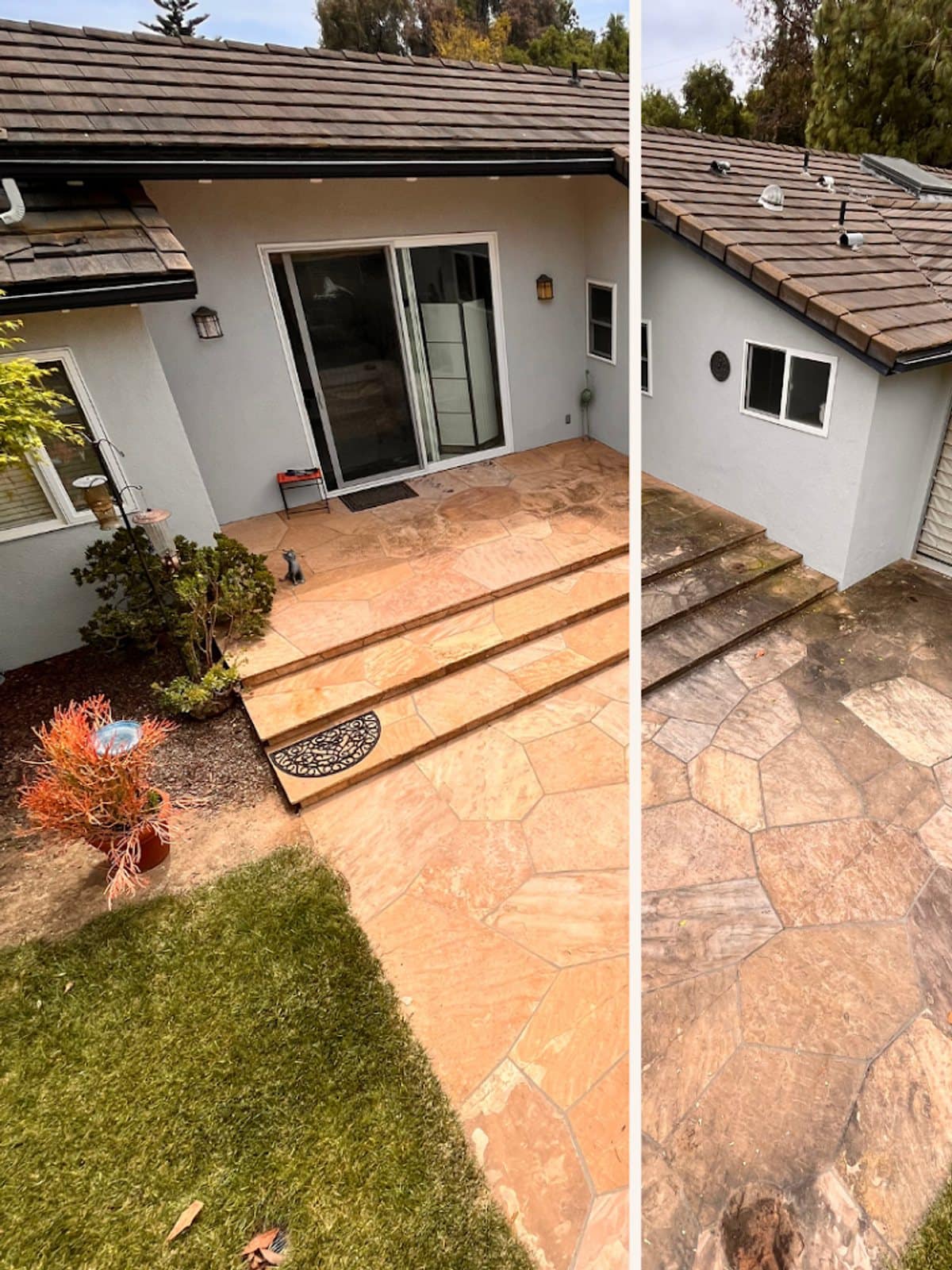
Cleaning removes surface dirt, algae, and stains through pressure or soft washing, sometimes paired with a stain treatment for stubborn oil marks, followed by a thorough rinse. Sealing is a distinct process: applying a protective coating (topical, penetrating, or a wet-look enhancer), often in two coats, sometimes paired with polymeric sand to lock joints in place and resist weed growth.
Skipping one or the other creates problems down the line:
- Cleaning without sealing tends to be a short-term fix, since porous pavers re-absorb dirt and organic growth faster once exposed
- Sealing over an unclean surface traps contaminants underneath, which can cause hazing and discoloration that later requires costly professional stripping
- Applying sealer too soon after cleaning, before the surface fully dries, often causes cloudy or uneven results
Sealing makes the most sense when pavers see heavy foot traffic, direct sun exposure, or are near a pool where chemical splash accelerates wear. If your pavers are in good structural shape and just need refreshing, cleaning alone may be enough for now, with sealing planned for a future service.
Real-World Cost Examples by Patio and Driveway Size
Seeing actual numbers against actual square footage makes budgeting far easier than staring at a per-square-foot range. These estimates assume moderately soiled pavers, standard concrete paver material, and a mid-grade sealer where sealing is included.
| Area Size | Cleaning Only | Cleaning + Re-Sand | Cleaning + Seal |
|---|---|---|---|
| Small patio (small job) | $150 to $400 | $300 to $600 | $350 to $500 |
| Medium patio/driveway (~500 to 700 sq ft) | $300 to $600 | $400 to $900 | $500 to $1,200 |
| Large driveway (~1,500 to 2,000 sq ft) | $350 to $700 | $700 to $1,200 | $1,500 to $2,800 |
A few notes on these figures:
- Small jobs often hit the contractor’s minimum charge before square footage even factors in heavily
- Medium-size jobs are where per-square-foot pricing becomes most predictable and comparable across quotes
- Large driveways benefit from lower per-square-foot rates, but total cost still climbs fast once sealing enters the picture, since sealer material cost scales directly with area
These numbers shift with paver material, sealer grade, and how much organic growth or staining exists before the crew arrives.
Should You Clean Pavers Yourself or Hire a Pro?
Renting a pressure washer for a weekend runs $50 to $100, and a jug of paver cleaner adds another $20 to $40. Add sealer if you’re doing that step too, and DIY materials alone might total $150 to $300, plus a full weekend of your own labor.
That math looks appealing until you weigh the risks against a professional quote:
- Joint sand displacement. Standard pressure washers, especially at high PSI, can blast polymeric or standard sand right out of the joints, leaving gaps that invite weeds and shifting pavers.
- Inconsistent sealer application. Uneven coverage creates blotchy patches that only show up once the sealer cures, and fixing it usually means stripping and starting over.
- Trapped contaminants. Rushing the cleaning step before sealing locks in stains and organic residue you can’t remove later without professional-grade stripping chemicals.
- Surface damage on delicate materials. Natural stone and older, softer pavers can chip, pit, or lose their finish under aggressive pressure settings.
Hiring a pro is strongly advised when pavers are natural stone, when there’s heavy organic growth, or when sealing is part of the plan. Testing a hidden spot before running equipment on any hardscape surface is worth doing regardless of who’s holding the wand.
How Contractors Quote Jobs and What to Ask For
Getting quotes you can actually compare means asking every contractor the same set of questions, since vague estimates are where scope creep and surprise charges start.
- Request line-item pricing that separates cleaning, re-sanding, and sealing (brand, type, and number of coats)
- Ask how they measured square footage, and whether that number is based on an actual walk-through or a rough estimate
- Confirm proof of insurance and ask for recent references on similar hardscape jobs
- Clarify what counts as site prep and whether mobilization or minimum charges are built into the number
Contractor guides note that homeowners who accept a single all-inclusive number without a defined scope risk paying more once the crew discovers extra staining or access issues on-site.
Pro Tip: Get the agreed scope in writing, including sealer brand and coat count, before work starts. A verbal “we’ll seal it good” promise means nothing if the results look thin six months later.
How to Lower Your Paver Maintenance Costs Over Time
Bundling cleaning with other exterior services, like a driveway and concrete cleaning visit scheduled alongside house washing, often saves on mobilization fees since the crew is already on-site.
Timing matters too. Scheduling before your area’s rainy season keeps sealer curing conditions favorable and avoids the premium some contractors charge for peak spring and summer demand.
- Ask about bundling if you’re also getting house washing or gutter cleaning done
- Consider polymeric sand over standard sand. It costs more upfront but resists washout and weed growth far longer
- Sweep debris and rinse light dirt between professional visits to slow re-soiling
- Reseal every 2 to 5 years depending on sun exposure and sealer grade; clean every 1 to 3 years depending on foot traffic
A year-round paver maintenance guide is worth bookmarking if you want a fuller seasonal checklist beyond these basics.
Why Soft Washing Matters for Paver and Hardscape Surfaces
High-pressure equipment can etch soft stone, blast sand out of joints, and leave pavers looking worse than before cleaning started. That’s especially true along the coast, where salt air and marine moisture already stress hardscape surfaces.

Goleta Pressure Washing built its soft-washing approach around lower pressure combined with targeted cleaning solutions, the same philosophy applied across roof cleaning, house washing, and driveway work. It’s a method suited to delicate materials without sacrificing results, backed by a 100% satisfaction guarantee on every completed job.
My Rules of Thumb for Budgeting a Paver Job
After walking through the numbers, three rules hold up consistently. First, budget $0.15 to $0.55 per square foot for cleaning alone, and closer to $1.00 to $2.00 if sealing is part of the plan. Second, never accept a quote that isn’t broken into line items. Third, plan resealing into your long-term maintenance budget now, not as a surprise expense two years from now.
If you’re not sure where your project lands, ask for a written, itemized estimate before committing to anything.
— Grant K.
Get a Paver Cleaning and Sealing Estimate
Skipping steps to save money upfront, whether that’s renting equipment or accepting a vague all-in-one quote, tends to cost more later once sand washes out or sealer fails unevenly. A clear, line-item estimate from the start avoids both problems.

Goleta Pressure Washing offers paver cleaning, re-sanding, and sealing using the same soft-wash principles applied to roofs, siding, and windows across Santa Barbara County, backed by a 100% satisfaction guarantee on every job. If your driveway or patio needs more than a quick rinse, browse the full lineup of exterior cleaning services or request an on-site estimate to get measured square footage and a written, itemized quote before any work begins.
Sources
- How Much Does It Cost to Seal and Clean Pavers? 2026 Data
- Cost to Clean Pavers - 2026 Cost Calculator
- How to Quote a Paver Cleaning Job | SurfaceMeasure
FAQ
Is It a Good Idea to Pressure Wash Pavers?
High pressure can strip joint sand and etch soft paver materials, so soft washing or carefully controlled low-pressure settings are generally safer for most paver surfaces.
How Do You Clean Dirty Pavers?
Professional cleaning typically combines a pretreatment for algae or stains with low-pressure or soft-wash rinsing, followed by joint sand replacement if needed before any sealing step.
How Much Does It Cost to Pressure Wash a 2,000 Sq Ft Driveway?
Cleaning alone on a driveway that size typically runs $350 to $700, while a full clean-and-seal package often lands between $1,500 and $2,800 depending on sealer grade.
Is There a Machine That Can Clean Pavers?
Yes. Contractors use adjustable-pressure washers and soft-wash systems that pair lower PSI with specialized cleaning solutions, which protects joint sand and paver finish better than standard high-pressure equipment alone.
Recommended
Ready for a quote?
Roof cleaning, house washing, and pressure washing across Goleta, Santa Barbara, Montecito & Summerland.
Get a fast quote →