By Goleta Pressure Washing · October 23, 2026
Pergola Cleaning: Remove Mildew and Algae Without Damage

The safest way to clean a pergola is to match the method to the material. Rinse and soft-brush aluminum and vinyl. Treat wood gently with an oxygen-based cleaner. On any of them, skip the high-pressure blast, because it removes the visible green or black film and leaves the living growth underneath to come back. Along the Santa Barbara coast, where the marine layer keeps shaded beams damp for much of the year, that regrowth shows up fast.
I’m Grant, the owner-operator at Goleta Pressure Washing. Below is how we think about pergolas, what you can safely do yourself on a Saturday, and where the job is better handed to a crew.
TL;DR
- Identify the material first: wood, aluminum, vinyl and wood-look aluminum each need a different approach.
- Never use a high-pressure washer on wood or coated surfaces. It strips stain, raises the grain and drives moisture in.
- Mildew and algae are living colonies. Cleaning that does not neutralize them only buys you a few weeks.
- Trimming back overhanging branches and clearing debris quarterly slows regrowth more than any cleaner.
- For tall, slippery or attached patio covers, a trained crew with low-pressure soft washing is the safer call.
Table of Contents
- Why pergolas turn green, black and gray
- Identify your pergola material before you clean
- Cleaning an aluminum or vinyl pergola
- Cleaning a wood pergola and removing mildew
- Why pressure washing a pergola backfires
- Where the water goes matters too
- Prevention: the cheapest way to clean less
- Our perspective: treat the colony, protect the surface
- When to hire a professional
- Get your pergola and the rest of the exterior cleaned
- FAQ
- Sources
Why pergolas turn green, black and gray
A pergola is a near-perfect habitat for microscopic growth. The slats shade each other, pollen and leaf litter settle on the horizontal surfaces, and coastal fog keeps everything damp through the morning. What you see as a dark streak or a green haze is a living colony, not just dirt.
On roofs and other structures, the Asphalt Roofing Manufacturers Association names Gloeocapsa magma, a blue-green algae, as the main cause of black and brown discoloration. The same organism streaks patio covers and the north faces of pergola posts. On wood, you may also see true mildew, which is a fungus feeding on the wood’s surface and any old finish.
There are three practical signs to look for:
- Black or brown streaks running down from the top edges: usually algae.
- Fuzzy gray or dark spots on stained wood, especially at joints: mildew.
- Green film or moss on rafters, cross beams and the tops of posts: moss and algae that have been established for a season or more.
Identify your pergola material before you clean
This is the step most online guides skip, and it decides everything else.
| Material | What it tolerates | What to avoid |
|---|---|---|
| Cedar, redwood, other wood | Soft brush, hose, oxygen bleach solution | High pressure, chlorine bleach, steel wool |
| Vinyl | Mild soap, soft brush, clear rinse | Abrasive pads, harsh solvents |
| Aluminum (powder-coated) | Annual rinse, soft brush, mild soap for grime | Harsh chemicals, abrasive pads |
| Wood-look aluminum | Treat as coated aluminum | Scrubbing that wears the embossed finish |
Wood-look aluminum is common here, and it fools people. It is an embossed aluminum product that mimics wood grain, with a baked-on finish, so you clean it like aluminum, not like wood. Tap it. Metal sounds hollow and bright, wood sounds dull.
Cleaning an aluminum or vinyl pergola
These are the easy ones, and the maintenance guidance is mild. For aluminum and vinyl, the recommendation is an annual rinse with clear water and a soft-bristled brush to remove dust and pollen, with a mild soap solution only when grime has built up. The same source says harsh chemicals and abrasive pads should be avoided to protect the finish.
Here is the routine we would follow at home:
- Hose down the whole structure from the top so dust and pollen do not streak the lower beams.
- Mix a small amount of mild dish soap into a bucket of water.
- Work from the top down with a long-handled soft brush, one section at a time.
- Rinse each section before the soap dries.
- Let it air dry, then check the finish for chalky patches or chips.
If you see black algae streaks that soap does not lift, that is where a low-pressure soft wash with a proper algae-killing solution does the job without scrubbing the coating.
Cleaning a wood pergola and removing mildew
Wood needs more care, because the surface itself can be damaged. Two sources written for wood pergola owners agree on the basics. One advises against using a power washer on wood because it strips the natural goodness out of the surface. Another timber-frame builder says to never use bleach, ammonia, steel wool or metal brushes on timber, and gives an oxygen bleach recipe for mildew: one part oxygen bleach to four parts water, applied with a soft brush, left for 10 to 15 minutes, then rinsed well.
To follow that approach safely:
- Test a hidden spot. Pick the underside of a rafter or the back of a post. Wait for it to dry fully before judging the result.
- Wet the surrounding plants. Cover or rinse nearby plants first. We cover this in our guide to a five-minute test patch for plant safety.
- Apply the oxygen bleach mix with a brush or a low-pressure pump sprayer. Work along the grain.
- Dwell, then agitate gently. Keep the surface wet but not dripping.
- Rinse with a hose, not a pressure nozzle.
- Let the wood dry for a few days before you re-stain or seal.
A note on stain: if the wood has a film finish that is peeling, cleaning will not fix it. Plan to sand and refinish after cleaning, or you will be cleaning again by spring.
Why pressure washing a pergola backfires
It is tempting. The streaks vanish in seconds and the surface looks bright. But there are two problems.
First, damage. On shingles, ARMA warns that high pressure causes irreversible granule loss. Wood has a different weakness, but the same principle applies: the stream cuts into soft grain, raises fibers and strips finish. We explain what that means for your home in our post on why roofs should stay under 500 PSI.
Second, regrowth. A pergola can look clean after a blast, but if the organic colony is not neutralized, the growth tends to return more aggressively. Clean and killed are different outcomes. This is the core reason we use soft washing, which pairs low pressure with a cleaning solution that treats the growth itself. If you want the full explanation, read soft washing explained for coastal homes, or our comparison of pressure washing vs. soft washing.
Where the water goes matters too
A pergola usually sits over a patio, and that patio usually slopes toward a drain or a planter. Wash water carrying detergent and organic debris is considered polluted in many US jurisdictions. San Diego’s guidance, for example, says it is illegal to discharge polluted wash water into the storm drain system. That is a San Diego rule, not a Santa Barbara one, but the principle is the same up and down the coast: storm drains lead to the ocean.
San Diego’s fact sheet describes blocking storm drains, using absorbent materials, or diverting water to landscaped areas as ways to control runoff. At home, the practical version is simple: close off nearby drains, keep soap concentrations low, and rinse toward lawn or beds that tolerate it, not toward the street. Check your local city or county stormwater rules before you start.

Prevention: the cheapest way to clean less
The most useful advice has nothing to do with cleaners. Experts point out that trimming overhanging branches to let in sunlight and clearing pollen and leaves quarterly slows algae and moss from establishing, which in turn helps both wood and synthetic finishes last.
A seasonal checklist that suits our climate:
- Spring: rinse off winter growth, check for new streaks, inspect fasteners and post bases.
- Summer: trim back branches, sweep leaf litter off the beams.
- Fall: clear debris before the first rains, then inspect again for corrosion or loose anchors.
- After storms: look for pooled water on flat beams and debris stuck in joints.
That same source recommends a twice-yearly spring and fall check of fasteners, anchors and post bases, even for pergolas marketed as maintenance-free. It is a step many owners skip, and it catches small problems before they get expensive.
Material choice also changes how much cleaning you will do over the years. If you are still deciding or planning a rebuild, this look at pergola materials that cut costs over two decades is worth reading before you commit.
Our perspective: treat the colony, protect the surface
We wash a lot of coastal homes, and the same mistake shows up again and again. Someone borrows a pressure washer, blasts a shaded beam, and two months later the streaks are back and the surface is rougher. The cleaner was never the problem. The method was.
Our approach for roofs, siding and delicate surfaces is soft washing: low pressure plus a specialized solution that breaks down algae, moss and grime. We apply the same thinking to pergolas and patio covers. The finish is the thing you are paying to protect, so the cleaning should do as little to it as possible.

We also keep things simple on the business side. The crew that gives you the quote is the same crew that does the work, so what we promise on your driveway is what we do on your pergola. We are fully insured, and we back every job with a 100% satisfaction guarantee.
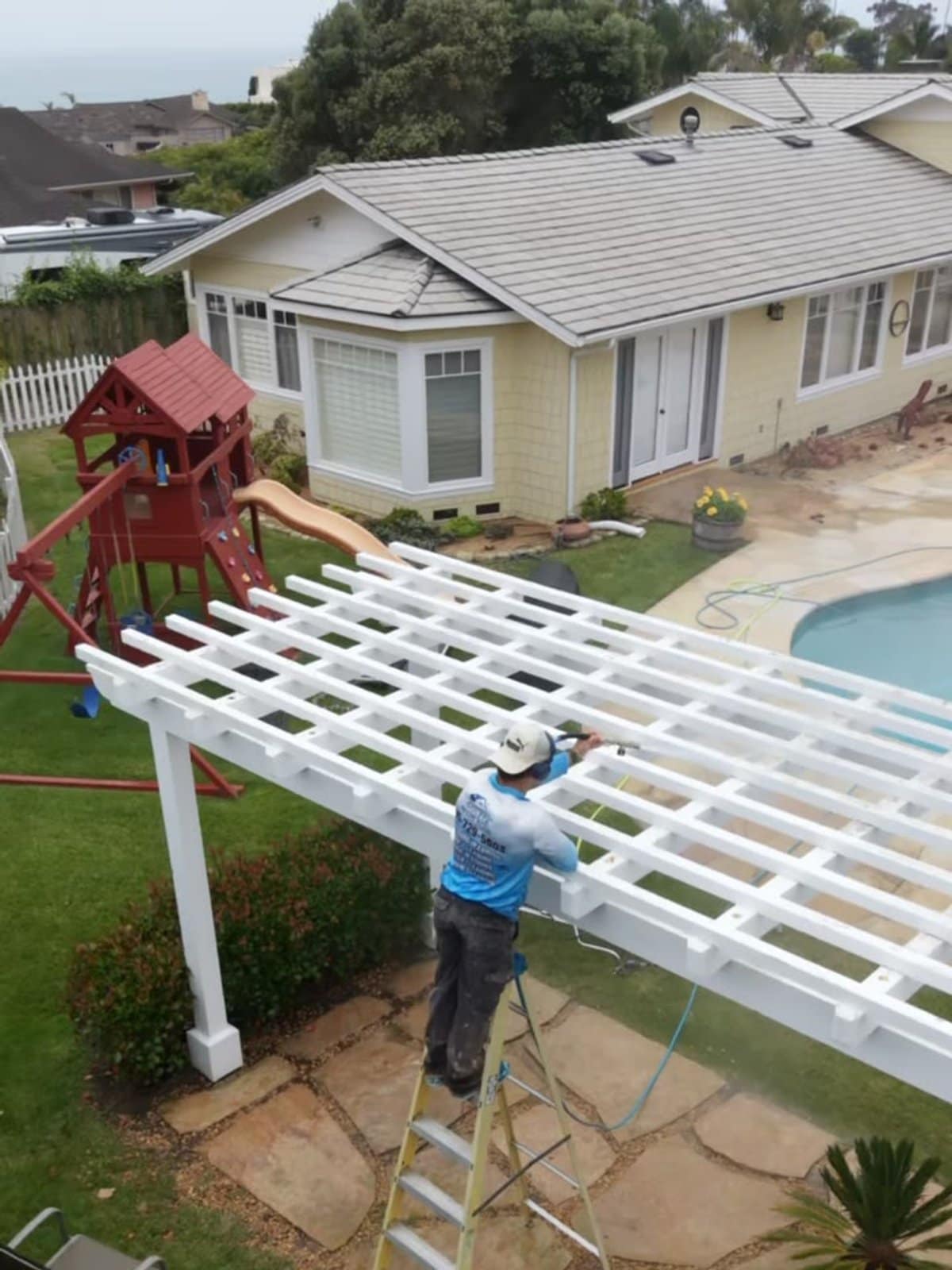
One honest caution: cleaning solutions, even simple bleach mixtures, can make surfaces extremely slippery, and ARMA says only trained professionals should do this kind of work on elevated surfaces. If your pergola is attached to a second story, has a solid roof panel or requires a tall ladder, please do not climb up there with a bucket.
— Grant K.
When to hire a professional
DIY is a fine choice for a low freestanding pergola with a light film of dust or pollen. Call a pro when:
- You need a ladder taller than you are comfortable with, or the footing is uneven.
- The structure is attached to your house, roof or a second-floor deck.
- Black streaks return soon after you scrub.
- The surrounding plants, stone or pavers are delicate or historic. Our write-up on power washing a historic Santa Barbara home shows how we handle that.
- You want the pergola, patio and house cleaned in one visit.
If you are comparing companies, our list of seven questions to ask before you hire a soft wash company will help you spot the ones that default to high pressure.
Get your pergola and the rest of the exterior cleaned
Goleta Pressure Washing serves homeowners and property managers across Goleta, Santa Barbara, Eastern Goleta Valley, Montecito and Summerland. Pergolas are quoted per job, and we are happy to look at one alongside other work. Our published ranges for related services are $250-$500 for house washing, $350-$900 for roof cleaning and $150-$400 for window cleaning. For soft-wash work on delicate surfaces, start with our soft washing page, or see how we price jobs before you call.
FAQ
Can I pressure wash a pergola?
We advise against it for wood and for coated aluminum or vinyl. High pressure strips stain, raises grain and can wear finishes, and it does not neutralize the algae or mildew underneath. A garden hose, a soft brush and a low-pressure soft wash are safer.
What removes mildew from a wood pergola?
One timber-frame builder suggests a mix of one part oxygen bleach to four parts water, brushed on, left for 10 to 15 minutes and rinsed thoroughly. Test a hidden spot first and protect nearby plants. If the mildew keeps returning, the wood may be staying too damp or shaded.
How often should I clean my pergola?
For aluminum and vinyl, an annual rinse with a soft brush is usually enough, with soap only where grime builds up. Wood in a foggy or shaded spot may need attention more often. Clearing debris quarterly and trimming branches reduces how often you need a full cleaning.
Is bleach safe on a pergola?
It depends on the material. Chlorine bleach is not recommended on wood by pergola builders and can harm plants and finishes if used carelessly. Professionals use controlled dilutions and rinse protocols, which is why we suggest leaving sodium hypochlorite-based treatments to a trained crew.
Sources
- Algae & Moss Prevention and Cleaning for Asphalt Roofing Systems, ARMA
- Algae Discoloration of Roofs, ARMA
- DIY Pergola Maintenance Costs: Complete 5-15 Year Lifecycle Analysis
- Alumawood Pergolas: The Maintenance-Free Choice for Outdoor Living
- How to Clean a Pergola, The Backyard Showcase
- Pergola Maintenance Tips for Long Lasting Timber Structures
- Pressure Washing, City of San Diego (2016)
- Pressure Washing BMP Fact Sheets, City of San Diego
Recommended
Ready for a quote?
Roof cleaning, house washing, and pressure washing across Goleta, Santa Barbara, Montecito & Summerland.
Get a fast quote →