By Goleta Pressure Washing · September 12, 2026
Homeowners: Pressure Washing Risks Backed by Injury Data and Lab Tests
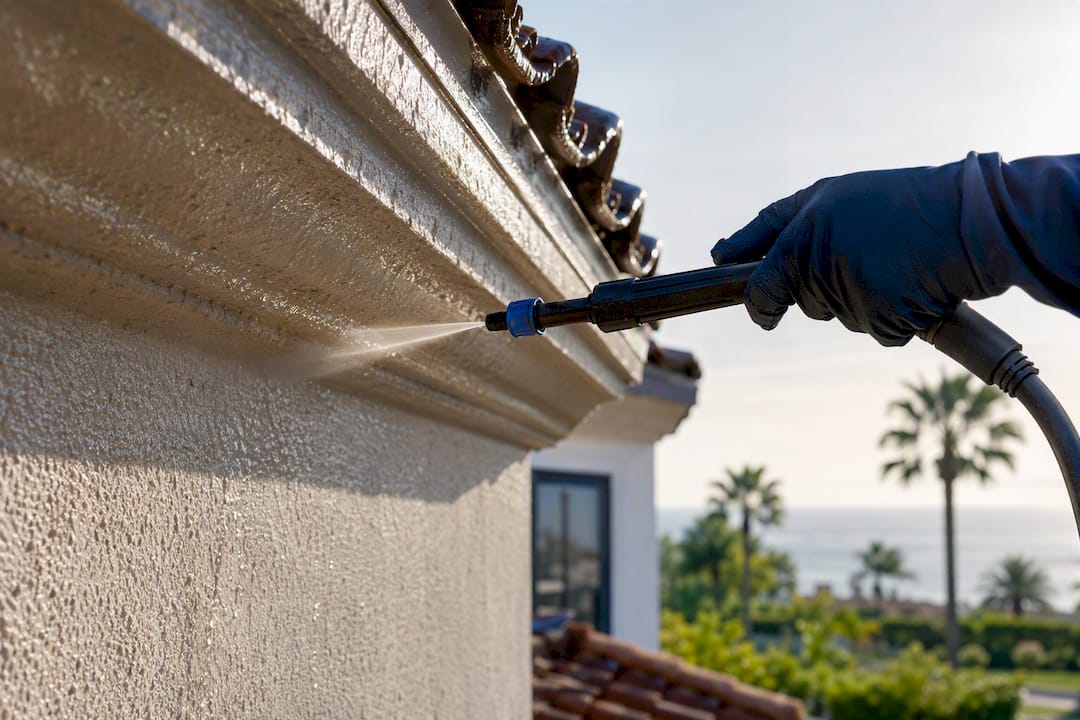
Pressure washers are genuinely risky tools. The jet can inject water under the skin, gas engines can fill an enclosed garage with carbon monoxide, and a wet ladder turns a simple gutter job into a fall hazard. The single rule that prevents most serious harm: never point the wand at yourself, another person, or an animal, and treat any skin strike as a medical emergency, not a scrape.
TL;DR:
- Concentrated nozzles like 0° or round tips can penetrate skin within seconds at close range, especially at distances less than two feet.
- Gas-powered washers must always be used outdoors to prevent fatal carbon monoxide buildup, and electric models require GFCI outlets to avoid electrocution.
- Falls and property damage are common hazards, with wet surfaces and misjudged pressure risking serious injury or surface cracking on delicate materials.
- Professional soft washing is recommended for roofs, multi-story exteriors, or delicate surfaces to minimize injury and property risk.
Table of Contents
- Understanding Pressure Washing Risks: What the Injury Data Shows
- Why the Jet Hurts: Pressure, Nozzle Type, and Distance
- Beyond the Wand: Carbon Monoxide, Electrocution, and Property Damage
- Your Pre-Job, During-Job, and Post-Job Safety Checklist
- If You Get Hurt: What to Do in the First Hour
- Do Operators Need Training or Certification?
- When DIY Makes Sense, and When to Call a Pro
- Get Safe, Professional Exterior Cleaning Without the Injury Risk
- Sources
- FAQ
Understanding Pressure Washing Risks: What the Injury Data Shows
The numbers back up the caution. A NEISS analysis covering 2012 through 2021 estimated 15,307 high-pressure injection hand injuries nationwide, roughly 1,531 a year, with a clear seasonal spike in May and the highest single-day rates falling on weekends. That timing tracks exactly when most homeowners drag out the machine for spring cleaning.
By the numbers: High-pressure injection hand injuries occur annually in significant numbers, with a seasonal spike in May and higher rates on weekends compared to weekdays.
The injuries themselves span a wide range of severity:
- Lacerations from direct jet contact or flying debris
- Injection injuries, where water and contaminants force their way under the skin through a pinhole entry wound
- Eye trauma from splash-back or ricocheting grit
- Contusions and burns, the latter mostly from hot-water units or engine components
- Fall-related fractures from ladders, wet decking, or recoil from the wand
The worst outcomes aren’t cosmetic. Injection injuries can progress to compartment syndrome, a condition where pressure inside tissue cuts off blood flow, and severe cases have required surgical debridement or amputation when treatment was delayed.
Why the Jet Hurts: Pressure, Nozzle Type, and Distance
Two numbers define how dangerous a pressure washer is: PSI (pounds per square inch, the force behind the water) and GPM (gallons per minute, the volume). A concentrated 0° or round-tip nozzle focuses nearly all of that force into a pinpoint stream, which is why it cleans concrete fastest and why it’s also the most dangerous tip in the box.
Consumer Reports has flagged 0° nozzles as high-risk enough that some rental shops now discourage or remove them entirely, since the extra cleaning speed rarely justifies the added danger.
Lab testing backs that up with hard thresholds. WJTA conference research found that both fan and round jets can penetrate skin simulants at pressures well within the range of ordinary consumer machines, sometimes in under two seconds at close range. Standoff distance matters more than almost anything else you control:
- Round jets carry damaging energy farther than fan jets at the same PSI
- Penetration risk drops sharply as distance from the nozzle increases
- Protective clothing does not reliably stop penetration at close range
That last point explains why injection injuries look deceptively minor. A tiny entry wound can mask deep tissue contamination, which is exactly why it demands urgent evaluation rather than a bandage.
Beyond the Wand: Carbon Monoxide, Electrocution, and Property Damage
The spray isn’t the only hazard. Other risk categories cause just as much harm, and homeowners tend to underestimate all of them.
- Carbon monoxide. Gasoline engines produce CO fast enough to be fatal indoors, and NIOSH has documented poisonings from gas washers run in garages and partially enclosed spaces, even with a door cracked open. The CDC’s guidance is unambiguous: gas-powered units belong outdoors, away from windows, vents, and doorways.
- Electrocution. Electric units mix water and current by design. A GFCI (ground fault circuit interrupter) outlet is non-negotiable, and any frayed cord or wet connection needs to be replaced or dried before use, not bypassed.
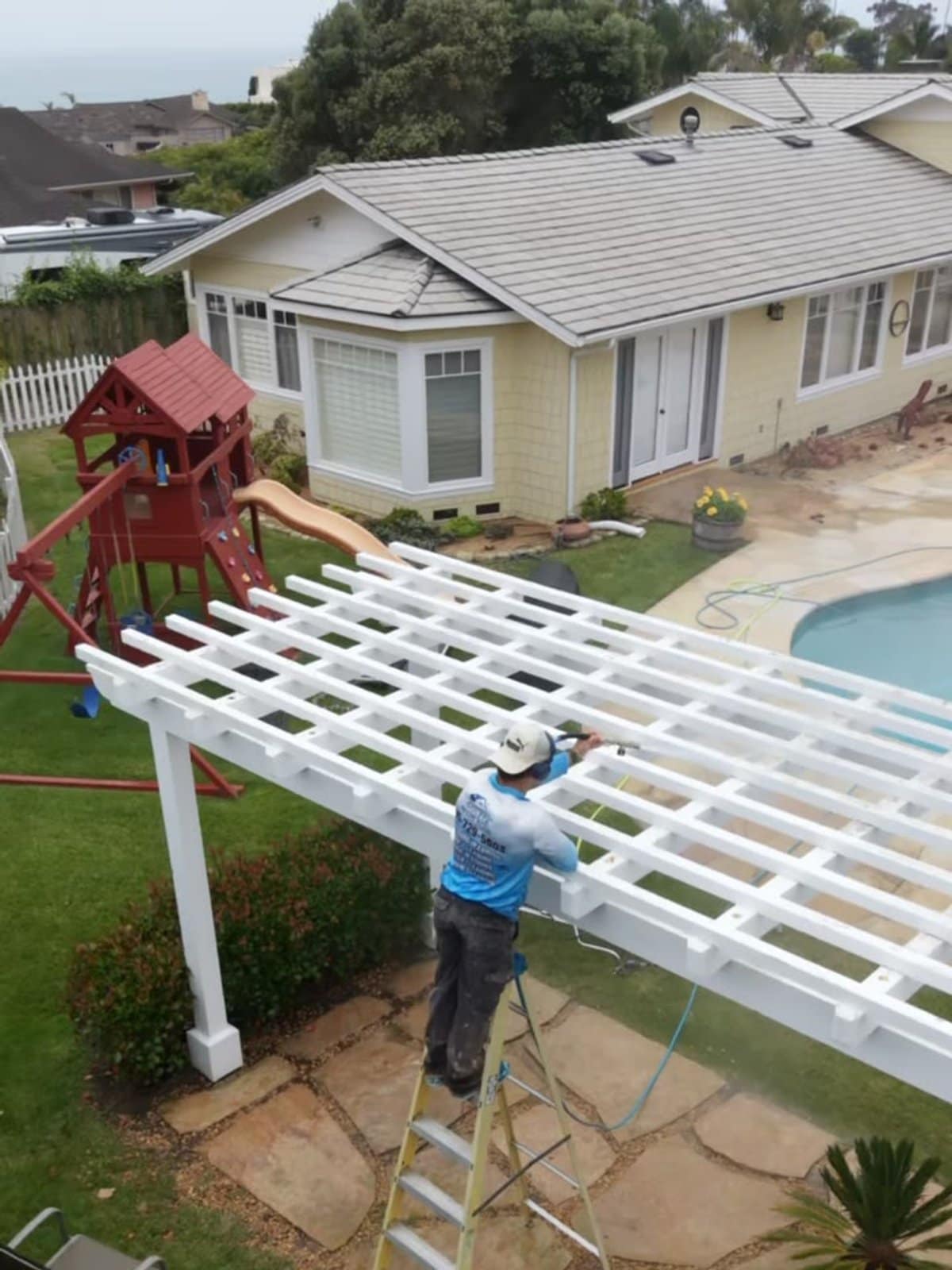
- Falls. Ladders and wet surfaces are a bad combination, made worse by wand recoil that can throw you off balance mid-spray. Multi-story jobs are where telescoping wands, scaffolding, or a professional crew make more sense than a homeowner on a ladder.
- Chemical exposure. Detergent mist, bleach solutions, and runoff can irritate skin and lungs and kill nearby landscaping if you don’t rinse or cover plants first.
- Surface damage. Roofs, aging stucco, and painted siding can be stripped or cracked by pressure that’s fine for a concrete driveway. That’s a job for soft washing rather than a high-pressure nozzle.
Your Pre-Job, During-Job, and Post-Job Safety Checklist
Most incidents come from skipping a step, not from bad luck. Working through the process in order closes the gaps.
Before you start:
- Read the equipment manual, since nozzle sizes and pressure settings vary by model
- Walk the job site and clear bystanders, pets, and loose objects from the work area
- Choose a fan tip for general cleaning and reserve 0° tips for isolated, stubborn stains only
- Inspect hoses, fittings, and the power cord, and bleed trapped air from the line before starting
Gear that actually protects you:
- Sealed goggles or a face shield against splash-back and flying debris
- Waterproof gloves and boots, since wet leather soles are a slip risk on decking
- Hearing protection for extended use, particularly with gas engines
- Long pants and sleeves to reduce cuts from grit in the spray
Power and machine setup:
- Plug electric units into a GFCI outlet, no exceptions
- Run gas units outdoors only, positioned away from windows and doors
- Refuel a cold engine, never a hot one
- Recheck every hose connection for leaks before pulling the trigger
Pro Tip: Start at two feet from the surface and only move closer if the result demands it. It’s far easier to step in gradually than to recover from a jet that’s already too close.
Operating technique:
- Grip the wand with both hands to control recoil
- Never test the spray pattern against your own skin or aim it at another person
- Keep the nozzle moving instead of holding it stationary on one spot
When you’re done:
- Depressurize the system and remove the nozzle before storage
- Rinse any surfaces that were treated with detergent
- Store the machine dry to prevent corrosion and pump damage
If You Get Hurt: What to Do in the First Hour
Any wound where the jet broke the skin needs same-day emergency care, even if it looks like a pinprick. Tell the clinician it was a “high-pressure injection injury” specifically, since that phrase changes how they triage and treat you.
- Skin penetration: Go to the ER immediately. Don’t apply topical antibiotic ointment into the wound, and don’t wait to see if it worsens.
- Eye exposure: Flush with clean water for at least 15 minutes and seek medical evaluation even if vision seems normal.
- Suspected fracture from a fall: Immobilize the area and avoid weight-bearing until it’s imaged.
- At the ER: Expect imaging to map contamination depth, possible surgical exploration and debridement, a tetanus check, and IV antibiotics.
Delayed treatment is the single biggest factor in worse outcomes, since bacteria and cleaning chemicals driven under the skin spread while you wait. Surgeons who operate within hours of an injection injury see meaningfully better recovery than those who see the patient a day or two later.
Do Operators Need Training or Certification?
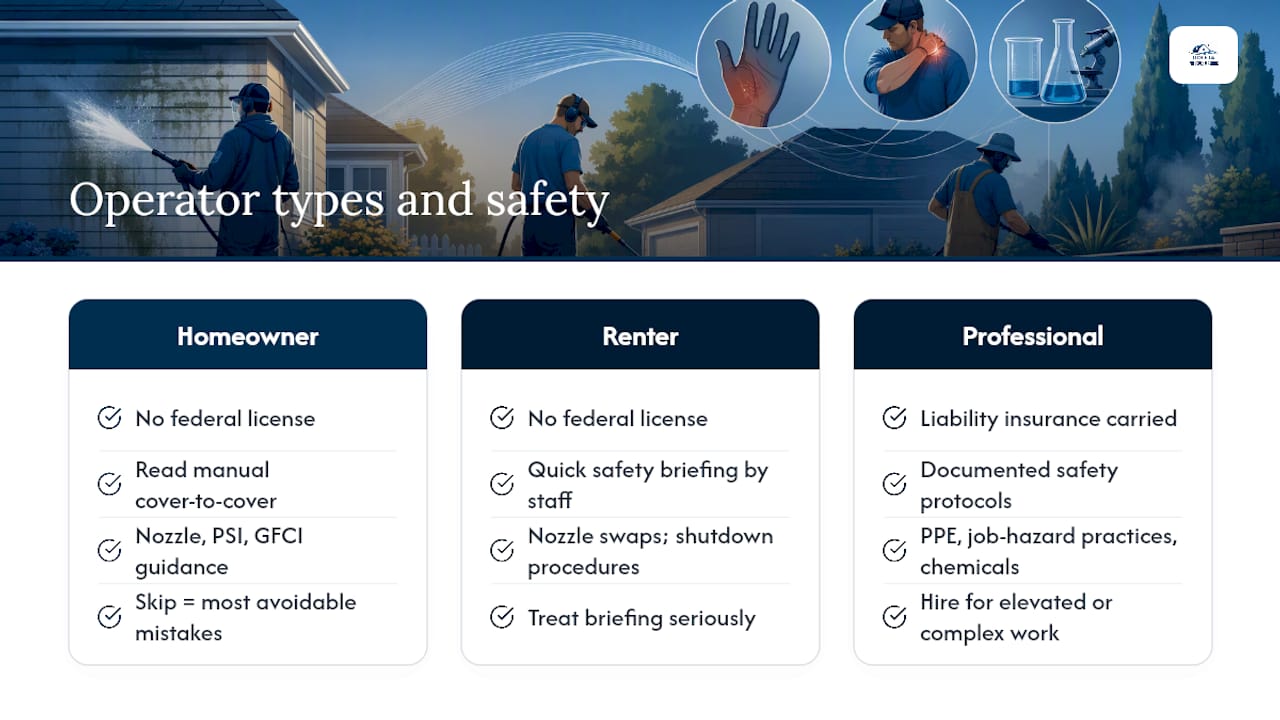
No federal license is required to run a residential pressure washer, but that doesn’t mean training is optional. Manufacturer manuals cover the basics: correct nozzle selection, safe PSI ranges for different surfaces, and GFCI requirements for electric units. Reading that manual cover to cover before your first job is the closest thing to a homeowner certification, and skipping it is where most avoidable mistakes start.
Rental companies typically walk renters through a quick safety briefing before handing over equipment, covering nozzle swaps and shutdown procedures. Take that briefing seriously even if you’ve used a pressure washer before, since every rental unit handles slightly differently.
Professional operators are a different story. Crews working on roofs, multi-story exteriors, or commercial properties generally carry liability insurance and follow documented safety protocols, including PPE and job-hazard practices that go beyond what a one-page rental checklist covers. If a job involves elevated work, chemical mixing, or electrical proximity, that gap in training is exactly why hiring a professional makes sense instead of improvising.
When DIY Makes Sense, and When to Call a Pro
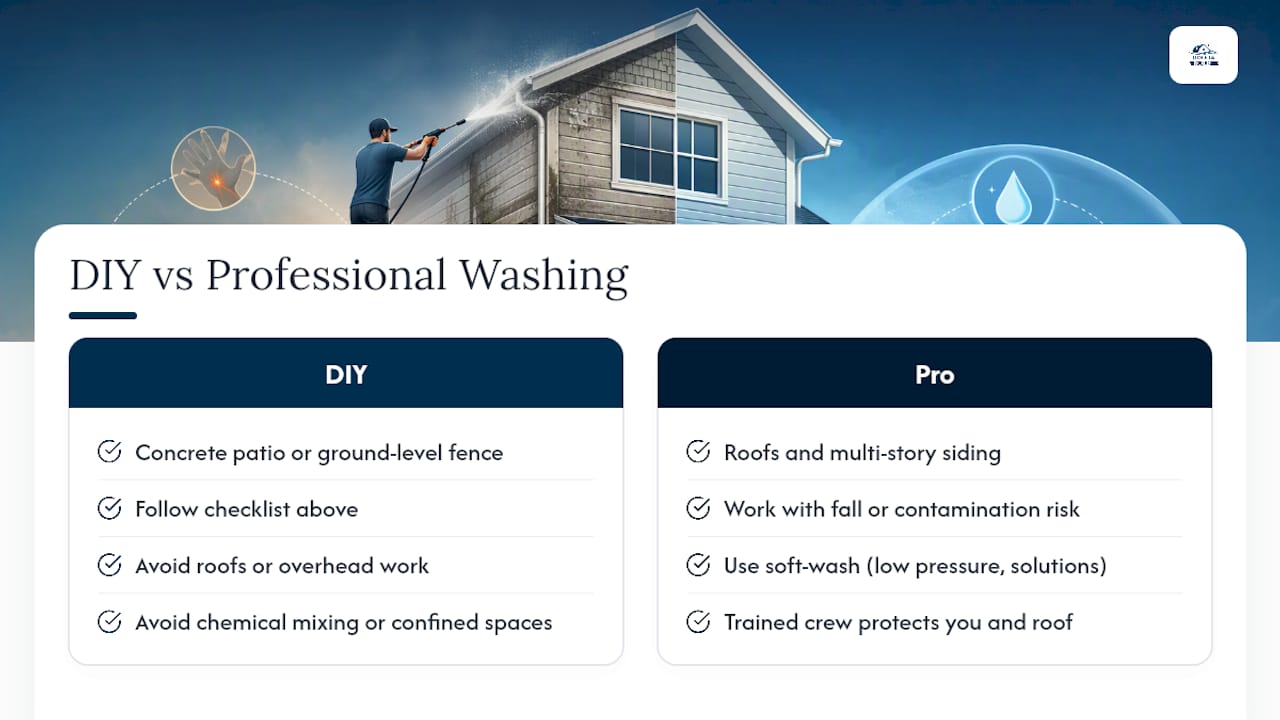
A concrete patio or a fence at ground level is reasonable DIY territory if you follow the checklist above. Roofs, multi-story siding, chemical mixing, and confined spaces are a different calculus, since the margin for error shrinks and the fall or contamination risk climbs fast.
Soft washing exists precisely for the surfaces where high pressure does more harm than good, using low pressure with targeted solutions instead of raw force. For anything overhead or delicate, a trained crew with the right soft-wash approach protects both you and your roof.
Get Safe, Professional Exterior Cleaning Without the Injury Risk
Professional exterior cleaning services exist for exactly the jobs this article flags as too risky to DIY: roofs, multi-story siding, and anything requiring chemical mixing near electrical fixtures or windows. Instead of renting equipment you’ve never calibrated and hoping the nozzle choice was right, you get a trained crew running low-pressure soft washing built for delicate surfaces, backed by a 100% satisfaction guarantee.

That matters most on the jobs where a mistake is expensive, whether that’s cracked shingles from an over-aggressive nozzle or a fall from a ladder that a ground-level tool never needed. Goleta Pressure Washing handles roof cleaning, house washing, gutter cleaning, and window cleaning across Santa Barbara County with the safety protocols a one-day rental never comes with. If your project involves a roof, multiple stories, or anything you’re not fully confident handling yourself, request a quote through the pressure washing services page and get it done without the ER visit.
— Grant K.
Sources
- High-pressure injection injuries: NEISS analysis (PMC)
- Pressure Washer Safety | CDC
- Pressure washer safety alert — Consumer Reports
- WJTA pressure-jet penetration tests (conference paper)
FAQ
Can a 2000 PSI pressure washer hurt you?
Yes. Lab testing shows even pressures within consumer machine ranges can penetrate skin simulants at close range, particularly with a concentrated 0° nozzle.
Is pressure washing bad for your house?
It can be, if the pressure and nozzle are wrong for the surface. Roofs, aging stucco, and painted siding are commonly damaged by high-pressure jets, which is why soft washing exists for delicate exteriors.
Can pressure washers injure you?
Yes, in several ways: injection injuries from the jet, lacerations, eye trauma, carbon monoxide poisoning from gas engines, electrocution from electric units, and falls from ladders or slick surfaces.
What is the most common problem with pressure washers?
Injection injuries to the hands are among the most frequently reported, with an estimated 1,531 cases a year, but surface damage from incorrect nozzle or pressure choice is the most common property complaint homeowners run into.
Recommended
Ready for a quote?
Roof cleaning, house washing, and pressure washing across Goleta, Santa Barbara, Montecito & Summerland.
Get a fast quote →