By Goleta Pressure Washing · August 17, 2026
What That White Haze on Your Pavers Really Means

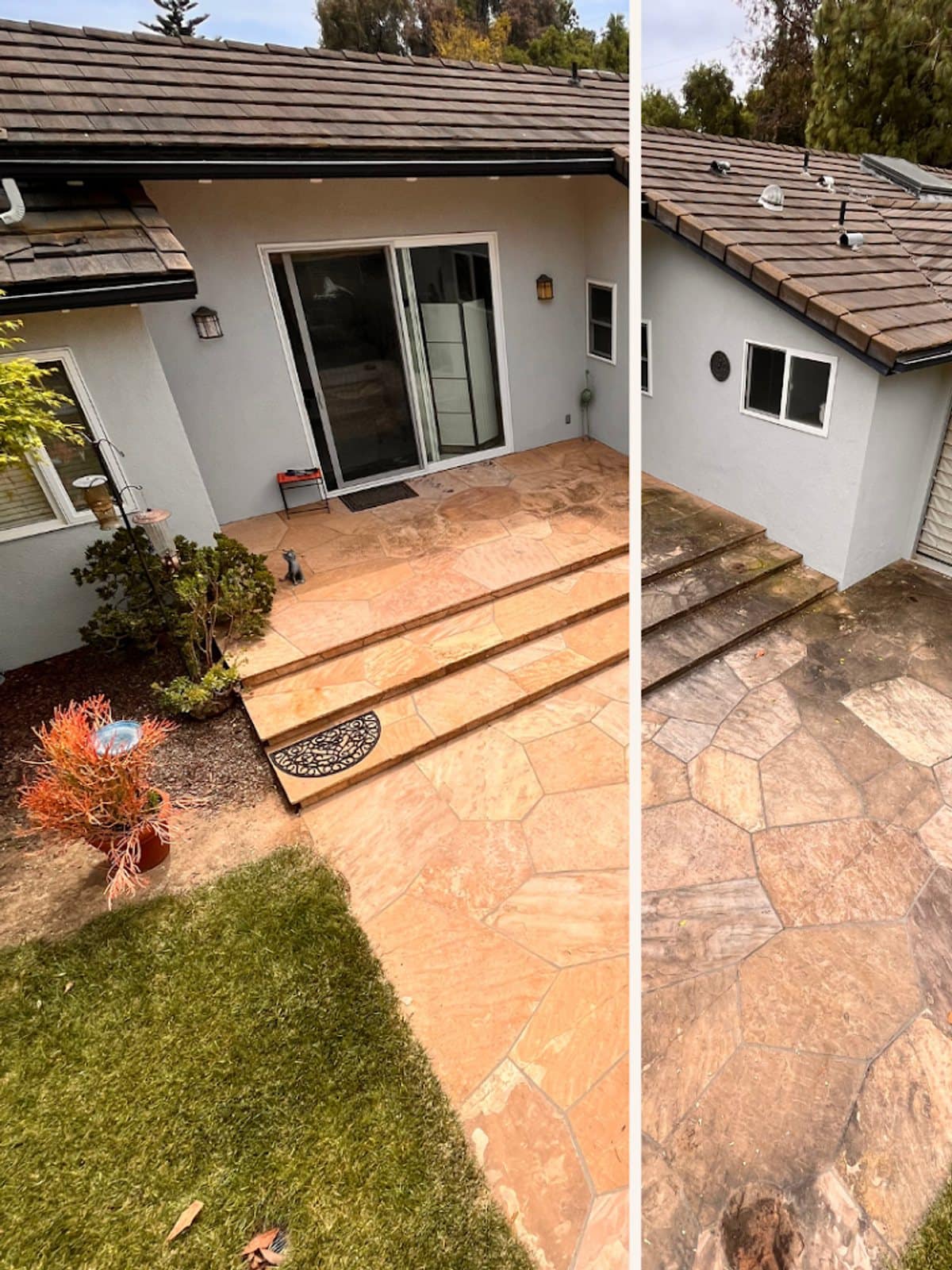
That chalky white film on your patio or driveway is almost always efflorescence, and it’s cosmetic, not structural. Start gentle: let the surface fully dry, sweep with a stiff nylon broom, then rinse with low pressure from high ground to low.
- Do: watch how it fades when wet and returns when dry. That’s your confirmation.
- Don’t: blast it with a high-pressure washer, seal over it, or pour undiluted acid on the stones.
Key Takeaways
Efflorescence on pavers is a cosmetic salt deposit caused by moisture movement, and it responds best to gentle, staged cleaning paired with fixing the underlying drainage source.
| Point | Details |
|---|---|
| Identify it correctly | It fades when wet and returns when dry; lookalikes like mold or sealer haze don’t behave this way. |
| Start gentle | Dry-sweep with a stiff nylon broom before ever reaching for a hose or chemical cleaner. |
| Avoid high pressure | Blasting near joints strips jointing sand and can etch or destabilize the paver surface. |
| Never seal over it | Wait until deposits stop appearing, often two to three months or more, before sealing. |
| Call a pro when it persists | Goleta Pressure Washing uses soft-wash methods and can diagnose drainage issues causing repeat efflorescence. |
Table of Contents
- Understanding Efflorescence on Pavers
- What Causes Efflorescence in the First Place
- Efflorescence vs. Mold, Sealer Haze, and Other Lookalikes
- How Long Does Efflorescence Last on Pavers?
- Removing Efflorescence Without Damaging Your Pavers
- Choosing an Efflorescence Cleaner and Using It Safely
- Why We Recommend Soft-Wash Over High Pressure
- Preventing Efflorescence From Coming Back
- When to Call a Professional
- A Straight Answer on How We Handle It
- Let Us Handle the Efflorescence So You Don’t Have to Guess
- Sources
- FAQ
Understanding Efflorescence on Pavers
Efflorescence is a powder-like deposit of water-soluble salts, usually calcium based, that rides moisture to the surface of your pavers and stays behind once the water evaporates. It’s less a stain and more a byproduct of how cement-based products cure and breathe.
Here’s the tell that separates it from an actual stain: wet it down and it visibly lightens or disappears, then it comes back once things dry out. That’s not your imagination. It’s the chemistry working in reverse.
Darker pavers show it more dramatically simply because of contrast, and it’s a natural condition in nearly any cement-based hardscape. Annoying, yes. A sign your pavers are failing? Almost never.
What Causes Efflorescence in the First Place
Water moves through porous materials the same way it climbs a paper towel dipped in a glass. That’s capillary action, and it’s the engine behind every efflorescence problem you’ll ever see on a paver surface. As moisture travels up through bedding sand, joint fill, or a concrete sub-base, it picks up soluble salts and carries them along for the ride.
Those salts come from predictable places:
- Portland cement in the pavers or nearby mortar joints
- Bedding sand that wasn’t properly washed before installation
- Soil, gravel, or aggregate sitting beneath the hardscape
- Adjacent concrete slabs or retaining walls leaching into the paver base
Site conditions decide how bad it gets. Poor drainage, irrigation heads spraying directly onto the surface, and pavers set over a base that traps water instead of shedding it all raise your risk considerably. Proper grading and water management during installation genuinely cuts down how much salt ever reaches the surface.
Efflorescence vs. Mold, Sealer Haze, and Other Lookalikes
Not every white or hazy patch on a paver is efflorescence, and treating the wrong problem wastes time and can make things worse. A few quick field tests settle it fast.

Spray the area with water. Efflorescence fades or disappears; sealer whitening and mold generally don’t. Feel the texture. Efflorescence is powdery and brushes off dry; mold feels slightly slick or fuzzy, and old sealer haze often feels smooth or slightly tacky. Location matters too. Efflorescence tends to follow joint lines and drainage paths, while de-icing salt residue clusters near curbs and entry points.
| Test | Efflorescence | Common Lookalike |
|---|---|---|
| Water spray | Fades or vanishes | Mold/sealer haze stays |
| Texture | Dry, powdery | Sticky (sealer) or slick (mold) |
| Timing | Worse after wet-dry cycles | Consistent regardless of moisture |
| Location | Follows joints, low spots | Follows shade or splash zones |
How Long Does Efflorescence Last on Pavers?
Left alone, efflorescence typically fades with repeated wet and dry cycles as rain and irrigation gradually flush the available salts out of the material. Many homeowners see a noticeable drop within a few months of normal weather.
Full resolution takes longer in some climates, occasionally stretching toward two years if the salt reserve is deep or moisture keeps replenishing it.
- Frequent rainfall speeds the fade; dry stretches slow it down
- An ongoing moisture source (leaky irrigation, poor drainage) resets the clock
- Track results across several rain or irrigation cycles before reaching for stronger cleaners
Removing Efflorescence Without Damaging Your Pavers
Work from the gentlest method upward. Jumping straight to acid or a pressure washer set on “blast” is how homeowners turn a cosmetic issue into a repair bill.
- Let it dry completely, then dry-sweep. A stiff nylon broom lifts a surprising amount of loose efflorescence on its own, especially on lighter deposits.
- Rinse at low pressure. Work from the highest point of the surface downward, keeping the nozzle away from direct contact with the joints so you don’t blow out the sand.
- Brush with a paver-safe cleaner if rinsing isn’t enough. Test on a small section first, since even mild formulas can react differently depending on the paver’s finish.
- Apply a dedicated efflorescence remover for stubborn deposits, following the manufacturer’s dilution and dwell-time instructions. Heavy buildups sometimes need more than one treatment.
Skip high-pressure blasting near joints, skip improvised acid mixes on natural stone, and never seal a surface while efflorescence is still active.
Pro Tip: Give the paver surface two or three wet-dry cycles between treatments before deciding whether you need to go stronger. Rushing straight to the strongest cleaner often means you never find out the gentle approach would have worked.
Choosing an Efflorescence Cleaner and Using It Safely
Reach for a paver-safe, manufacturer-formulated efflorescence remover rather than straight muriatic acid, which can etch or discolor sensitive stone and concrete surfaces. Barkman Concrete’s guidance on dry brushing and low-pressure rinsing before reaching for chemicals holds up well in practice.
Before treating the whole patio, test a 4 square foot patch and let it dry fully to check for color shift. Dilution ratios and dwell times vary by product and by how old the pavers are, so follow the label ranges rather than guessing at a stronger mix.
- Wear gloves and goggles; add a respirator if the label calls for one
- Keep runoff away from plant beds and storm drains
- Dispose of leftover product per local regulations, not down a gutter
Pro Tip: Cooler, overcast mornings give cleaners more working time before they evaporate. That extra dwell time often means less scrubbing on your end.
Why We Recommend Soft-Wash Over High Pressure
High-pressure washing looks satisfying in the moment, but on pavers it can strip jointing sand, etch the surface, and loosen the interlock that keeps the whole installation stable. That’s the tradeoff nobody mentions until the sand washes out after the first hard rain.
Soft-wash cleaning pairs a paver-safe efflorescence remover with controlled, low-pressure rinsing, which lifts the deposits without disturbing the joints underneath. It’s the same philosophy we apply across driveway and hardscape cleaning: protect what’s underneath the stain, not just erase what’s on top.
Large areas, deeply embedded deposits, or efflorescence tied to a drainage problem are usually where a professional visit pays off.
Pro Tip: If your driveway loses visible joint sand after every rinse, that’s a sign the pressure setting is too aggressive, not that the pavers need more cleaning.

Preventing Efflorescence From Coming Back
Cleaning treats the symptom. Fixing moisture and drainage treats the cause, and that’s the difference between a one-time chore and a recurring one.
- Regrade low spots so water sheds away from the paver bed instead of pooling under it
- Extend downspouts so roof runoff doesn’t dump directly onto or beside the hardscape
- Adjust irrigation heads that spray the paver surface directly
- Use washed, properly graded bedding sand during any repair or reinstallation
- Install over a well-draining base rather than compacted soil alone
Never seal over active efflorescence. Trapping salts under a sealer just relocates the problem beneath a film that’s much harder to fix. Wait until the surface has been clean and dry for two to three months, sometimes longer, before applying a breathable, penetrating sealer.
When to Call a Professional
Persistent efflorescence that keeps returning after proper cleaning is usually a sign of ongoing moisture migration from hydrostatic pressure, groundwater, or a hidden irrigation leak, not a cleaning failure.
Call in help if you’re seeing standing water, joint sand loss, visible settlement, or a project too large to test-and-treat section by section.
- Ask what method they use: soft-wash and low pressure, or high-pressure blasting
- Ask about experience specifically with pavers, not just concrete or siding
- Confirm insurance, a satisfaction guarantee, and whether they’ll test a small area first
- Ask whether they diagnose drainage issues or only clean the surface
A Straight Answer on How We Handle It
We treat efflorescence the way we treat every delicate surface: least aggressive method first, joints protected, no shortcuts with pressure. If it’s a small patio, most homeowners can handle the sweep-and-rinse routine themselves.
We get involved when deposits keep coming back, the area is large, or drainage looks like the real culprit underneath.
Let Us Handle the Efflorescence So You Don’t Have to Guess
Goleta Pressure Washing gives Santa Barbara County homeowners a safer alternative to renting a pressure washer and hoping for the best: our soft-wash technique removes efflorescence with paver-safe cleaners and controlled low-pressure rinsing, so your joint sand and paver finish stay intact instead of washing out.

We test problem areas before treating the whole surface, and if the white haze keeps returning after cleaning, we’ll check for the drainage or irrigation issue actually causing it rather than sending you back out to scrub again next month. That diagnostic step alone saves most homeowners from repeating the same fix every few months.
If your driveway or patio has stubborn or recurring efflorescence, get a quote through our pressure washing service page or ask about our soft-wash approach for a lower-impact clean built specifically for pavers.
Sources
For deeper technical detail beyond this guide, these manufacturer and industry resources are worth bookmarking:
- Managing Efflorescence | Cambridge Pavingstones
- CONTROL AND REMOVAL OF EFFLORESCENCE (Techniseal efflorescence leaflet)
- Technical Service Digest (Brick Industry Association) — Efflorescence guidance
- What to do with white residue on pavers | Barkman Concrete
- Efflorescence 101: What is it? | Unilock
Always follow the specific dilution and testing instructions on your chosen product, and loop in a local pro when moisture issues run deeper than the surface.
FAQ
How Long Does Efflorescence Last on Pavers?
It often fades noticeably within a few months as rain and irrigation flush out the salts, though full resolution can sometimes stretch toward two years in certain climates.
How Do You Get Rid of Efflorescence on Patio Pavers?
Start with a dry sweep using a stiff nylon broom, follow with a low-pressure rinse, and only move to a paver-safe efflorescence remover if deposits persist after several cleanings.
What Is the Best Efflorescence Cleaner for Pavers?
A manufacturer-formulated, paver-safe efflorescence remover applied at the recommended dilution works better and more safely than muriatic acid, which can etch or discolor sensitive stone.
Will Efflorescence Eventually Go Away on Its Own?
Yes, in most cases it fades naturally as the source salts get used up through repeated wet and dry cycles, though an ongoing moisture problem can keep it coming back.
Is Efflorescence a Sign of a Bigger Problem With My Pavers?
Usually not. It’s typically cosmetic, though efflorescence that keeps returning after cleaning often points to a drainage or moisture issue worth having a professional like Goleta Pressure Washing diagnose.
Recommended
Ready for a quote?
Roof cleaning, house washing, and pressure washing across Goleta, Santa Barbara, Montecito & Summerland.
Get a fast quote →