By Goleta Pressure Washing · September 9, 2026
Save Your Concrete: Remove Patio Mildew with 10–15 Minute Dwell

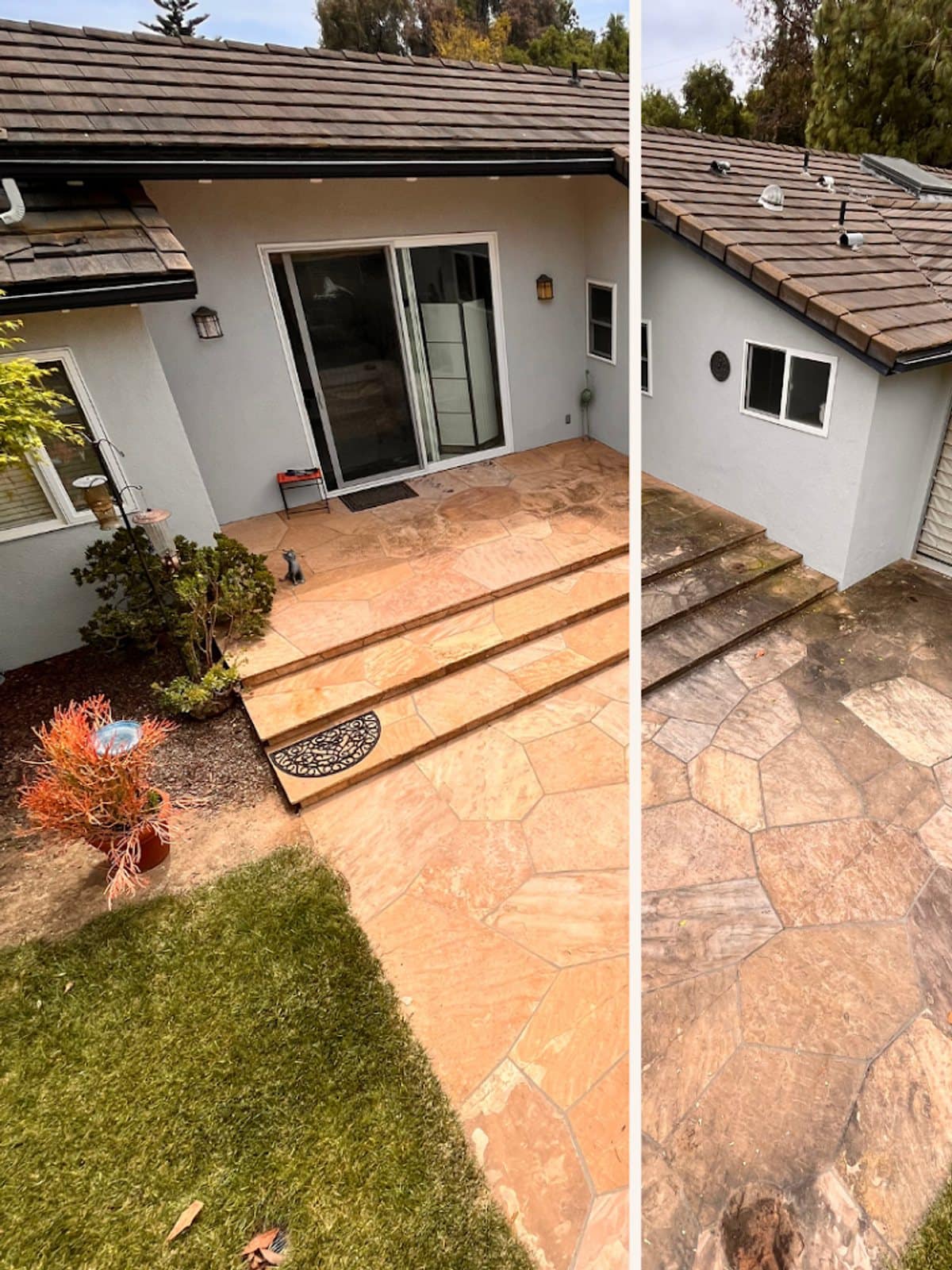
For most patios, the fastest safe fix is a simple sequence: sweep debris, apply a mildew-killing cleaner and let it dwell 10 to 15 minutes, scrub with a stiff non-metal brush, then rinse thoroughly and let it dry. Diluted bleach or a masonry-specific cleaner both work well, while a soft-wash professional is the better call for delicate or decorative surfaces. Wear gloves and eye protection, and pre-wet nearby plants before any chemical touches the slab.
TL;DR:
- Using diluted bleach or masonry-specific cleaners effectively removes mildew from patios, but aggressive pressure washing can damage delicate surfaces.
- Always rinse thoroughly after cleaning and wait a full day for the slab to dry before evaluating the results or applying a sealer.
- Protect nearby plants and wear proper safety gear, including gloves, goggles, and masks, especially when working with chemicals like bleach or ammonia.
- Prevent mildew recurrence by controlling moisture and shade through proper drainage, trimming foliage, and applying breathable water-repellent sealers.
- For heavily stained, larger, or delicate surfaces, hiring a professional soft-wash service is safer and more effective than DIY methods.
Table of Contents
- What Is the Safest Way to Do Patio Mildew Removal Yourself?
- Which Cleaning Solutions Actually Work on Patio Mildew?
- Can You Use a Pressure Washer to Remove Mildew on a Patio?
- What Safety Gear Do You Need for Mildew Cleaning?
- How Do You Stop Patio Mildew From Coming Back?
- When Should You Call a Professional Instead of DIYing It?
- Why Soft Washing Beats Guesswork on Coastal Patios
- A Straightforward Option When You’d Rather Not DIY
- Sources
- FAQ
What Is the Safest Way to Do Patio Mildew Removal Yourself?
Patio mildew removal follows the same logic every time, whether you’re dealing with a shady corner behind the barbecue or a green haze across the whole slab: prep, apply, dwell, scrub, rinse, dry. Skip a step and you either waste the cleaner or damage the concrete underneath it.
Here’s the workflow in order.
- Prep the area. Move furniture and planters, sweep off loose leaves and dirt, and pre-wet or cover any grass, shrubs, or flower beds within a few feet of the slab. If your patio has decorative stamping, color, or an existing sealer, test your chosen cleaner on a small hidden corner first.
- Apply the right cleaner. Match the product to the stain and surface (more on that below), saturate the mildew evenly, and keep the area damp for 10 to 15 minutes so the solution has time to break down the organic growth rather than just sitting on top of it.
- Scrub in sections. Work a stiff-bristled brush across a manageable patch at a time. Use a nylon or polypropylene brush, never a wire one. Metal bristles can leave microscopic deposits that rust and stain the concrete worse than the mildew did.
- Rinse thoroughly. Flush from the back of the patio toward the edges so cleaner and residue don’t pool in low spots. The EPA’s mold cleanup guidance specifically calls out full rinsing as a required step, not an optional one.
- Let it dry fully before judging the results. Wet concrete always looks darker and cleaner than it will once it dries. Give it a full day before deciding whether you need a second pass or a sealer.
Pro Tip: Do a final rinse pass with plain water even after the cleaner looks rinsed away. Leftover residue often shows up as a hazy streak once the sun dries it.
Which Cleaning Solutions Actually Work on Patio Mildew?
The right cleaner depends on how bad the staining is, what your concrete finish looks like, and how close your landscaping sits to the runoff.
- Bleach. Diluted bleach is the workhorse for organic staining. A common dilution ratio is 1 cup of bleach per gallon of water, with a tablespoon of dish soap added as a surfactant to help it penetrate. It’s strong, cheap, and fast, but it can bleach nearby grass, kill plants on contact, and lighten colored or stamped concrete if overused.
- Vinegar. A gentler option for light surface haze, but it has real limits. Vinegar’s acidity can etch sealed or colored concrete with repeated use, and remediation specialists note it doesn’t reliably kill mold at the root the way people assume.
- Hydrogen peroxide and baking soda. Both are milder alternatives that avoid bleach’s color risk, but expect to make multiple passes on stubborn stains.
- Commercial masonry cleaners. Purpose-built products are formulated specifically to target biological staining on concrete, and masonry experts point out they carry less risk to the surface finish than household shortcuts.
For light, fresh mildew on plain gray concrete, bleach or vinegar will usually get the job done. For decorative, colored, or heavily stained slabs, a masonry-grade cleaner is worth the extra cost.
Can You Use a Pressure Washer to Remove Mildew on a Patio?
Yes, but treat it as a supporting tool, not the whole solution. A pressure washer is good for pre-rinsing debris and flushing away cleaner residue. It’s not a great primary weapon against biological staining on its own, since aggressive pressure can etch the concrete surface faster than it removes the growth.
If you do use one:
- Start on the lowest pressure setting and work up only if needed.
- Use a wide fan tip, ideally a 25 degree nozzle, instead of a narrow turbo tip.
- Keep the nozzle at least 12 inches from the surface at all times.
- Keep the wand moving in steady, overlapping passes. Never hold it still in one spot.
- Never use a zero degree or pinpoint nozzle on concrete. It’s the fastest way to gouge a stripe into the slab.
If your patio has stamped, stained, or aging concrete, testing a hidden section first can save you from an expensive mistake. When in doubt, a low-pressure soft-wash approach protects the finish better than brute force ever will.
What Safety Gear Do You Need for Mildew Cleaning?
Cleaning chemicals and standing water make this a job worth taking seriously, not casually.
- Wear safety glasses, rubber gloves, and at minimum an N95 mask. If you’re working with bleach or ammonia-based products in a low-airflow area, step up to a proper respirator.
- Never mix bleach with vinegar or ammonia. The combination releases toxic chlorine gas, and it can happen faster than you’d expect if you’re layering products to work harder.
- Pre-wet grass and plants near the work area, and reroute or collect runoff where you can instead of letting it pool at the base of shrubs.
- If you feel dizzy, get a headache, or start coughing from fumes, move to fresh air immediately and seek medical attention if symptoms don’t clear quickly.
Pro Tip: Work with the wind at your back, not your face. Chemical fumes drift, and you’ll notice the difference within minutes.
How Do You Stop Patio Mildew From Coming Back?
Mildew doesn’t grow because your patio is dirty. It grows because moisture and shade give it a place to live. Cleaning removes the symptom; fixing the moisture source is what actually keeps it from returning.
- Redirect sprinkler heads and downspouts away from the patio surface, and correct any grading that lets water pool against the slab.
- Trim overhanging shrubs and tree branches to cut down on shade and let the surface dry faster after rain or irrigation.
- Sweep regularly to clear leaves, dirt, and organic debris before they become a food source for new growth.
- Once the slab is completely dry, a breathable water-repellent sealer can slow future growth without trapping moisture underneath, which is the mistake non-breathable coatings often make.
When Should You Call a Professional Instead of DIYing It?
Some patios are past the point where a weekend project and a bottle of cleaner will fix things.
- The mildew covers a large area, keeps coming back within weeks of cleaning, or has spread across multiple surfaces.
- You suspect the moisture problem runs deeper than the surface, with mold potentially working its way toward siding, decking, or crawl spaces.
- Your patio has decorative concrete, natural stone, or landscaping close enough that a low-pressure soft-wash chemistry makes more sense than DIY scrubbing and rinsing.
Why Soft Washing Beats Guesswork on Coastal Patios
Coastal fog keeps patios damp longer than inland yards, which is exactly the kind of environment mildew thrives in. Soft washing pairs low pressure with cleaning solutions built for biological growth, so the surface gets treated rather than blasted. On shaded or older concrete, that difference is often what separates a clean patio from an etched or striped one.
— Grant K.
A Straightforward Option When You’d Rather Not DIY
If your patio has decorative concrete, sits close to landscaping you don’t want to risk, or you’d simply rather not spend a Saturday mixing chemicals and hauling a hose around, Goleta Pressure Washing handles the job with the same soft-wash approach used on delicate siding and roofing. A visit typically starts with an inspection of the slab and surrounding plants, protective steps for anything nearby, and a straightforward quote before cleaning begins.

The team’s driveway and concrete cleaning service is built around removing biological staining without the etching risk that comes with a rented pressure washer and guesswork dilution ratios. If you’ve got heavy debris or yard waste to clear before cleaning day, Ohana Property Services can handle that separately. To get a quote for your patio, visit the pressure washing services page and describe the surface and staining you’re dealing with.
Sources
The EPA’s mold cleanup guidance and PROSOCO’s masonry cleaning guidance informed the safety and technique steps above. Both are worth bookmarking before your next cleaning project.
- EPA — Mold course: Chapter 4
- Mildew on concrete — PROSOCO
- How to remove mold and mildew from concrete | GhostShield
- Does vinegar kill mold? | BELFOR
FAQ
How Can I Remove Mildew From My Patio?
Sweep the surface clear, apply a mildew-killing cleaner and let it dwell 10 to 15 minutes, scrub with a non-metal stiff brush, then rinse thoroughly and let it dry fully before judging the results.
Does Bleach or Vinegar Kill Mildew Better?
Bleach is generally more effective at killing organic staining and mildew, while vinegar works best on light surface haze but doesn’t reliably kill mold at the root and can etch sealed or colored concrete with repeated use.
How Can I Remove Mildew From My Concrete Patio?
The same sequence applies to concrete specifically: a diluted bleach solution (roughly 1 cup per gallon of water) or a masonry-specific cleaner, applied with dwell time and scrubbed with a non-metal brush, then rinsed completely.
What Is the Best Outdoor Mildew Remover?
For plain gray concrete, diluted bleach is fast and affordable. For decorative, colored, or repeatedly stained slabs, a commercial masonry cleaner or a professional soft-wash service protects the finish better than household shortcuts.
Should I Pressure Wash My Patio to Remove Mildew?
A pressure washer works well for pre-rinsing and final flushing, but keep it on low pressure with a wide fan tip at least 12 inches from the surface, since aggressive settings can etch or stripe the concrete.
Recommended
Ready for a quote?
Roof cleaning, house washing, and pressure washing across Goleta, Santa Barbara, Montecito & Summerland.
Get a fast quote →