By Goleta Pressure Washing · November 8, 2026
Washing a House After Painting: When and How to Do It

Wait. Fresh exterior paint needs weeks to cure before it should be washed, and the first wash should be a gentle one. One paint maker’s bulletin advises at least 60 days before washing newly painted surfaces, so latex or water-based paint can dry and cure fully. After that, a low-pressure soft wash lifts the dust, pollen and coastal film without stressing the new coating.
This guide covers three situations. You may have just painted and wonder when the house can be cleaned. You may be planning to wash before a paint job and want to know how long to let the walls dry. Or you may be watching the forecast and wondering about rain. I’m Grant, and I run Goleta Pressure Washing. I’ll explain how we think about each one on Santa Barbara County homes.
TL;DR
- Don’t wash newly painted siding for at least 60 days if the paint is latex or water-based. Check the can and the paint maker’s instructions for your product.
- When you do wash a painted house, use low pressure, a downward angle and a cleaning solution. Soft washing is built for this.
- If you are washing before painting, let the walls dry fully. A moisture reading is a better guide than counting days.
- Rain during or shortly after painting can wash out waterborne paint, so give the film time to set before wet weather.
- A gentle wash that gets the dirt off is the best prep and the best maintenance. A hard blast can undo a paint job.
Table of Contents
- How long to wait before washing a freshly painted house
- Why a freshly painted surface is vulnerable
- Rain after painting: what to check before you start
- Washing before painting: how long should the walls dry?
- How to wash a painted house without damaging the paint
- What about driveways, patios and fences after painting?
- Our perspective
- Get your house washed the right way
- FAQ
- Sources
How long to wait before washing a freshly painted house
The short answer is about two months for latex paint. Most house paint sold today is water-based. It looks dry to the touch within hours, but the film keeps hardening for much longer as the water leaves and the binder fuses into a continuous layer. TK Products’ paint-washing bulletin puts the minimum at 60 days before washing newly painted surfaces.
That figure is a floor, not a promise for every product. Cool, damp weather slows curing. Warm, dry weather speeds it up. Your paint can’s technical data sheet is the best reference for your exact product, and your painter will know it.
What counts as washing in that window? Anything that puts pressure or detergent on the film:
- A pressure washer, even at a modest setting
- A scrub brush with soap
- A strong garden-hose jet aimed at one spot
Dust and light pollen in the first weeks can wait. A gentle rinse with a standard hose and a wide fan nozzle is a different matter from scrubbing, but the safest course is to hold off until the paint has had its full cure time.
What if something splashed on the new paint?
For a spot of bird droppings or a splatter of mud, blot it or rinse it softly with plain water from a distance. Don’t scrub. If the stain is still there after the paint has cured, a soft wash will deal with it.
Why a freshly painted surface is vulnerable
Paint is a film, and a film needs time to form. Two things threaten it early.
Mechanical force. A young coating hasn’t reached its full hardness. A concentrated jet can lift an edge, scar the surface or push water under it. Once water gets behind the film, you can end up with bubbling or peeling.
Water at the wrong moment. The American Coatings Association explains that waterborne coatings can be washed out by rain during or shortly after application, until the film coalesces and becomes sufficiently water-resistant. That is a weather issue, but the lesson carries over to washing: water in the first stage can do harm that water later can’t.
Rain after painting: what to check before you start
The question comes up as often as the washing question. How long should it stay dry after a house is painted?
There is no single number. The American Coatings Association notes that some formulations are tested for rain resistance within one to two hours, but that result is product-specific and not a universal rule for homeowners. Rain that interrupts the film formation can prevent a continuous protective film and lead to defects.
Here is how I’d approach it:
- Read the can. Look for the rain-resistance or recoat time on the label or data sheet.
- Look at the whole window. Check the forecast for the day you paint and the next day or two, and for overnight dew or fog as well as rain.
- Remember the marine layer. On the Santa Barbara coast, a morning blanket of coastal fog can keep surfaces damp well into the day. Paint in the late morning on a day that clears, and don’t start in the afternoon if fog is coming back that night.
- Ask your painter. A good painter reads the weather for a living and will move the schedule rather than risk the finish.
Can you wash a house before rain?
Yes, with a sensible plan. Washing before rain is fine when you aren’t painting: rain doesn’t harm clean siding, and some people like to wash ahead of a storm so the dirt isn’t baked on. Washing before rain and before painting is the case to avoid. Wet walls need time to dry, and a rainy forecast stretches that time out. If painting is next, pick a stretch of dry days after the wash.
Washing before painting: how long should the walls dry?
Most readers searching this topic are really asking about the step before painting. Do you wash the house, and when can paint go on?
Yes, wash first. Paint sticks to a clean surface and fails over dirt, chalk, mildew and algae. The wash is the prep that lets the paint grip.
How long to wait is where advice varies. Painters commonly suggest anywhere from a day to several days, and I’ve seen “about a week” quoted too. I’d rather not hand you one number, because it depends on the siding, the weather and how thoroughly the house was wet. The reliable test is moisture.
- Wood siding soaks up water and is slowest to dry. A moisture meter reading is the right guide, and your painter may have one.
- Stucco is porous and can hold moisture for a while, particularly on the shaded north side. Our guide to washing a stucco house safely covers how we approach it, and repainting versus washing stucco helps if you aren’t sure which one the house needs.
- Vinyl and fiber cement dry faster, but water can still sit in seams and behind trim.
A simple check: tape a small square of clear plastic to a wall for a few hours. If condensation forms under it, the wall is still releasing moisture. It isn’t a lab test, but it catches an obvious problem. For anything high-stakes, trust the meter.
One more point: if your wash uncovers peeling paint, that loose paint still needs scraping and sanding, and bare spots need primer. Washing shows you what’s there. It doesn’t replace prep.
How to wash a painted house without damaging the paint
When the cure period is over and the house is ready for its first cleaning, the method matters more than the machine.
Use low pressure and the right angle
Florida Paints’ technical bulletin notes that vinyl siding can be pressure-washed at around 2,000 PSI with the stream perpendicular to the wall or pointing down. That is an upper bound for a tough surface, not a target for painted wood or stucco. We go much lower on painted surfaces and let the cleaning solution do the work.
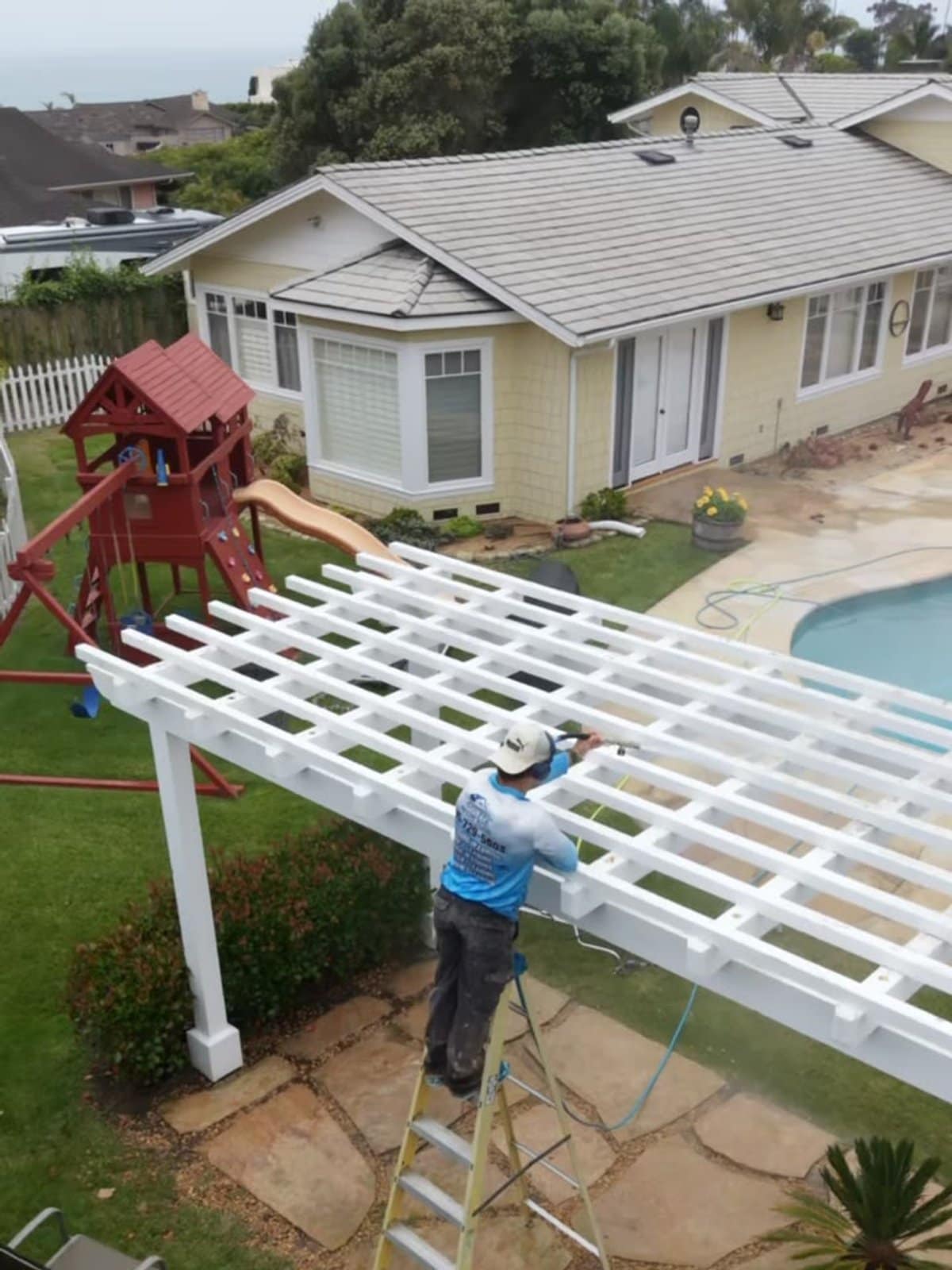
The same bulletin warns against spraying at an upward angle, because water can be driven behind the siding, and advises caution near doors, windows, electrical panels, faucets and other penetrations. This is the main way a wash causes trouble: not the paint, but the water that gets behind it. For more on that risk, see this explanation of pressure washing shingles and the damage it can do, which shows how force and angle push water where it doesn’t belong.

Let a cleaning solution do the work
Soft washing applies a cleaning solution at low pressure, lets it dwell on the surface, then rinses. The solution breaks down algae, mildew and grime at the source, so you don’t need force. Our article on soft washing siding explains the steps, and soft washing for coastal homes covers why it suits our salt air and fog. If you see dark or green patches on a wall, our guide to removing mildew from exterior walls matches the method to each surface.
A sensible routine
- Close windows and doors, and cover or unplug exterior outlets and lights.
- Wet nearby plants, and cover delicate ones.
- Apply the solution from the bottom up, so streaks don’t form, then rinse from the top down.
- Keep the rinse angled downward and avoid direct spray at windows, vents and trim joints.
- Let the house dry before you touch up or paint.
What about driveways, patios and fences after painting?
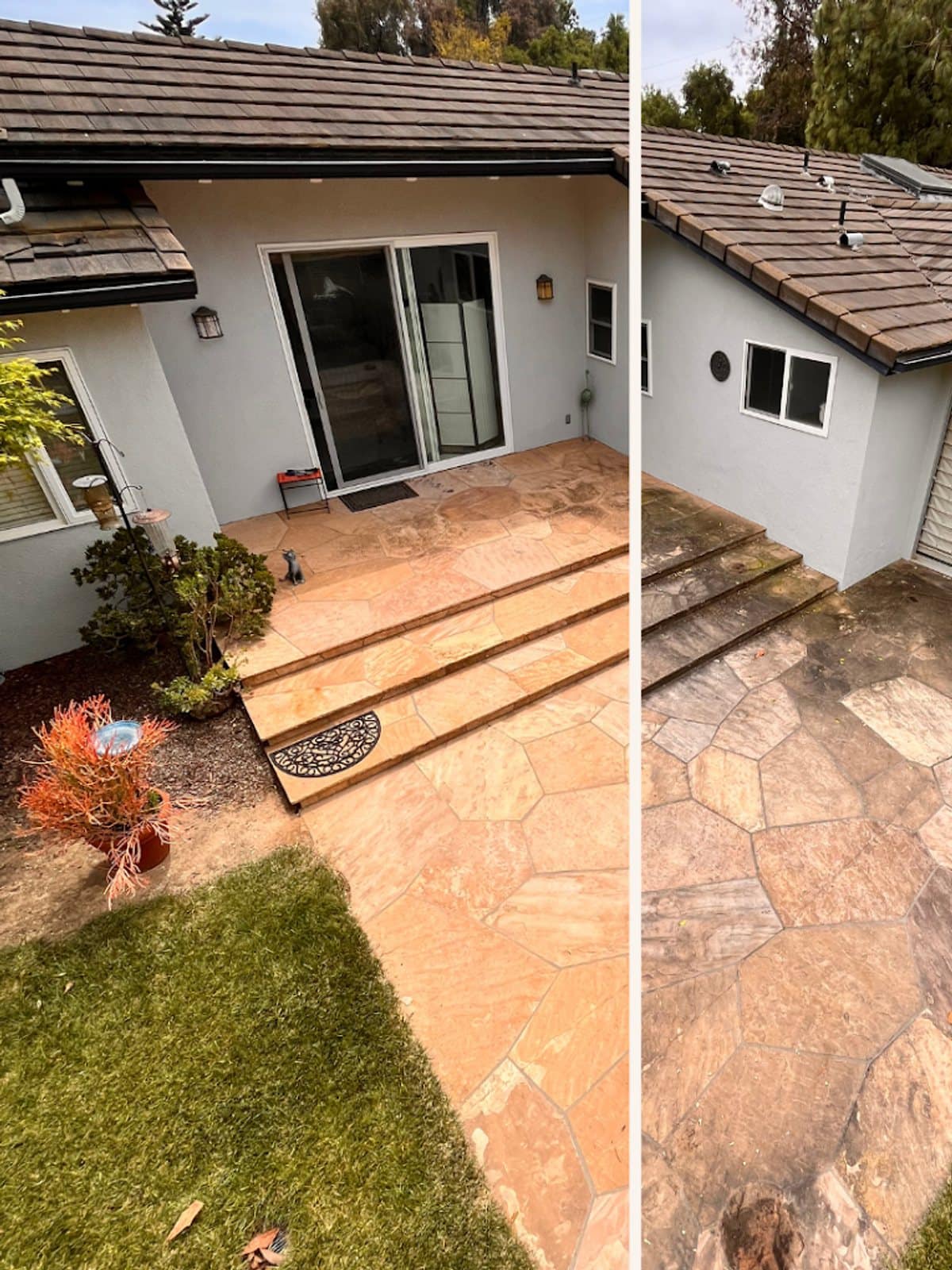
Painting a house often means dropped paint, drips on concrete and tracks across the patio. Concrete is tougher than siding, but it can still be marked by aggressive washing. Test a hidden spot first, as we explain in our post on avoiding patio pressure washing damage. Fresh paint spatter is easier to remove before it hardens, so deal with it right away with a scraper or plain water rather than a hard blast.

How long concrete takes to dry after washing depends on sun, shade and humidity. A shaded slab on a foggy week can stay dark far longer than a sunny one. Wait until it is evenly light in color before sealing or coating it. If you have a fence to wash too, here’s how to pressure wash a fence without ruining it.
Our perspective
I’ve seen a lot of homeowners spend good money on a repaint and then, a month later, reach for a pressure washer because the house looks a little dusty. That’s the moment the paint is most vulnerable, and it’s an avoidable mistake.
Our approach is soft washing: low pressure paired with specialized solutions that remove algae, moss, grime and dirt without gouging the surface. On Santa Barbara County’s coastal homes, where fog and salt air keep things damp, that matters. Traditional high-pressure washing can strip shingles and harm delicate surfaces, and painted siding is no different.
Our advice is simple. Let the paint cure, ask your painter for the product’s cure time, and call us when it’s ready for its first wash. The crew that gives you the quote is the same crew that does the work, we’re fully insured, and every job comes with a 100% satisfaction guarantee.
Grant K.
Get your house washed the right way
If your house is freshly painted, or about to be, we can help at either end. Before painting, a gentle wash gives the paint a clean surface to bond to. After the cure period, a soft wash keeps the finish bright and extends the life of the surfaces underneath.
Our house washing service runs $250-$500 per job, depending on the size and condition of the home. We serve Goleta, Santa Barbara, Montecito, Summerland and the Eastern Goleta Valley. You can see local pages for Santa Barbara, Goleta and Montecito.

Tell us when your painter finishes and which paint was used, and we’ll plan the first wash for after it has fully cured. Start at goletapressurewashing.com.
FAQ
How long after painting can I pressure wash my house?
For latex or water-based paint, wait at least 60 days, according to a paint-washing bulletin from TK Products. Your specific paint’s data sheet may give a different cure time. When the time comes, choose a low-pressure soft wash over a pressure blast.
How long after power washing can I paint?
Wait until the siding is fully dry, not just dry on the surface. Painters often wait a few days, but wood and shaded stucco can take longer, and a moisture meter gives the most reliable answer. Ask your painter to confirm before they start.
Can rain ruin fresh paint?
It can. Waterborne coatings can be washed out by rain until the film has set. Rain-resistance times differ by product, so check the label and the forecast before you paint.
Is it safe to pressure wash my house at all?
Yes, with the right method. Keep the pressure moderate, point the spray downward, and be careful around windows, doors, outlets and faucets, as Florida Paints advises. Soft washing reduces the risk further because it relies on solution rather than force.
Sources
- TK Products, Washing Paints bulletin
- American Coatings Association, Early Rain Resistance for Exterior Architectural Coatings
- American Coatings Association, Early Rain Resistance and Surfactant Leaching Resistant Binder
- Florida Paints, Cleaning & Painting Vinyl Siding
- Pressure Washing Shingles: Why It Damages Your Roof
Recommended
Ready for a quote?
Roof cleaning, house washing, and pressure washing across Goleta, Santa Barbara, Montecito & Summerland.
Get a fast quote →